Apart from an introductory chapter giving a brief summary of Newtonian and Lagrangian mechanics, this book consists entirely of questions and solutions on topics in classical mechanics that will be encountered in undergraduate and graduate courses.
The main goal of this work is to familiarize the reader with a tool, the path integral, that offers an alternative point of view on quantum mechanics, but more important, under a generalized form, has become the key to a deeper understanding of quantum field theory and its applications, which extend from particle physics to phase transitions or properties of quantum gases.
Hydrogen bond (H-bond) effects are known: it makes sea water liquid, joins cellulose microfibrils in trees, shapes DNA into genes and polypeptide chains into wool, hair, muscles or enzymes.
Physics was the leading science of the twentieth century and the book retraces important discoveries, made between 1895 and 2001, in 100 self-contained episodes.
The subject of this book is the Casimir effect, a manifestation of zero-point oscillations of the quantum vacuum resulting in forces acting between closely spaced bodies.
Over the last thirty years, the study of liquids containing polymers, surfactants, or colloidal particles has developed from a loose assembly of facts into a coherent discipline with substantial predictive power.
Atomic force microscopy (AFM) is an amazing technique that allies a versatile methodology (that allows measurement of samples in liquid, vacuum or air) to imaging with unprecedented resolution.
Recent years have shown important and spectacular convergences between techniques traditionally used in theoretical physics and methods emerging from modern mathematics (combinatorics, probability theory, topology, algebraic geometry, etc).
While systems at equilibrium are treated in a unified manner through the partition function formalism, the statistical physics of out-of-equilibrium systems covers a large variety of situations that are often without apparent connection.
This text focuses on the practical aspects of crystal structure analysis, and provides the necessary conceptual framework for understanding and applying the technique.
Hydrogen bond (H-bond) effects are known: it makes sea water liquid, joins cellulose microfibrils in trees, shapes DNA into genes and polypeptide chains into wool, hair, muscles or enzymes.
In each generation, scientists must redefine their fields: abstracting, simplifying and distilling the previous standard topics to make room for new advances and methods.
Physics was the leading science of the twentieth century and the book retraces important discoveries, made between 1895 and 2001, in 100 self-contained episodes.
Modelling of heterogeneous processes, such as electrochemical reactions, extraction or ion-exchange, usually requires solving the transport problem associated to the process.
The name "e;random walk"e; for a problem of a displacement of a point in a sequence of independent random steps was coined by Karl Pearson in 1905 in a question posed to readers of "e;Nature"e;.
Computational complexity is one of the most beautiful fields of modern mathematics, and it is increasingly relevant to other sciences ranging from physics to biology.
This is the first book to provide a comprehensive treatment of theories and applications in the rapidly expanding field of the crystallography of modular materials.
The first systematic experiments in neutron scattering were carried out in the late 1940s using fission reactors built for the nuclear power programme.
There is a continuing growth of interest in the computer simulation of materials at the atomic scale, using a variety of academic and commercial computer programs.
This book provides a systematic description of the molecular structures and bonding in simple compounds of the main group elements with particular emphasis on bond distances, bond energies and coordination geometries.
Microfluidics is a young and rapidly expanding scientific discipline, which deals with fluids and solutions in miniaturized systems, the so-called lab-on-a-chip systems.
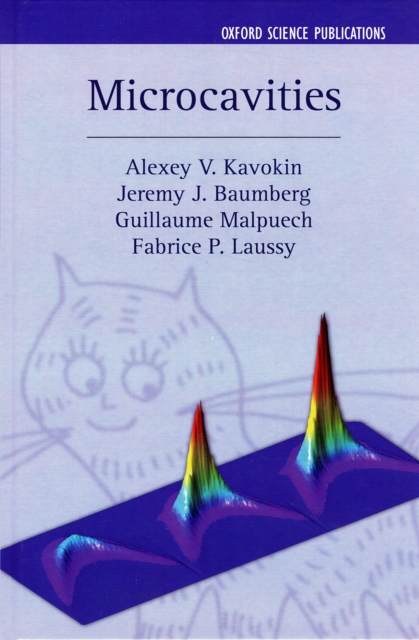
Rapid development of microfabrication and assembly of nanostructures has opened up many opportunities to miniaturize structures that confine light, producing unusual and extremely interesting optical properties.
This work tries to provide an elementary introduction to the notions of continuum limit and universality in statistical systems with a large number of degrees of freedom.
Tomography provides three-dimensional images of heterogeneous materials or engineering components, and offers an unprecedented insight into their internal structure.
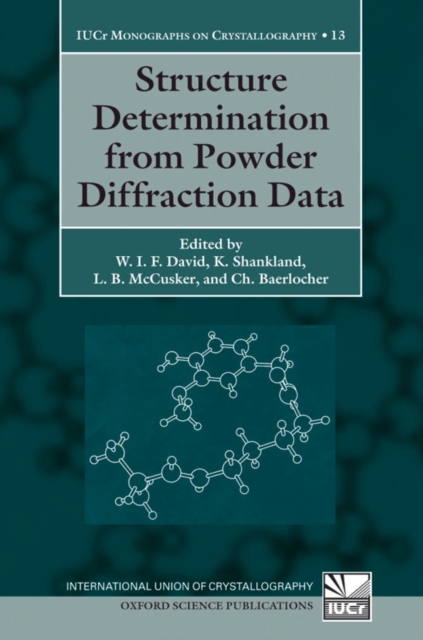
The art of solving a structure from powder diffraction data has developed rapidly over the last ten years to the point where numerous crystal structures, both organic and inorganic, have been solved directly from powder data.
For hundreds of years, models of magnetism have been pivotal in the understanding and advancement of science and technology, from the Earth's interpretation as a magnetic dipole to quantum mechanics, statistical physics, and modern nanotechnology.