This handbook presents the data of 5-component metallic amorphous alloys, including a large number of specimen obtained by adding a 5-th component to a quaternary alloy, some were obtained by starting from lower component base alloys, and there are a few examples of so-called high-entropy alloys.
This textbook lays out the fundamentals of electronic materials and devices on a level that is accessible to undergraduate engineering students with no prior coursework in electromagnetism and modern physics.
The Handbook of Porous Silicon brings together the expertise of a large, international team of almost 100 academic researchers, engineers and product developers from industry across electronics, medicine, nutrition and consumer care to summarize the field in its entirety with 150 chapters and 5000 references.
This book addresses to the materials scientists, physicists, chemists, biologists, and electrical engineers engaged in fundamental and applied research or technical investigations on such materials.
This handbook provides a comprehensive review of the entire field of laser micro and nano processing, including not only a detailed introduction to individual laser processing techniques but also the fundamentals of laser-matter interaction and lasers, optics, equipment, diagnostics, as well as monitoring and measurement techniques for laser processing.
This book introduces readers to the physics governing electron emission under high voltages and temperatures, and highlights recent modeling and numerical developments for describing these phenomena.
This book starts with an introduction to the basic concepts of multistability, then illustrates how multistability arises in different systems and explains the main mechanisms of multistability emergence.
What we know about dark matter and what we have yet to discoverAstronomical observations have confirmed dark matter's existence, but what exactly is dark matter?
This book discusses nanotechnology, its benefits and risks affecting the environment we live in today, and is divided into three parts: Part-I dealing with Sustainability, Part-II describing Toxicological Impacts, and Part-III discussing Nanomaterial-based Adsorbents.
A sound understanding of magnetism, transport theory, spin relaxation mechanisms, and magnetization dynamics is necessary to engage in spintronics research.
This book presents the lecture notes and exercises corresponding to the course "e;Quantum Field Theoretical Methods in Condensed Matter"e; that the authors imparted for several years as part of the masters program on Condensed Matter and Biological Systems at the Autonoma University of Madrid.
The introduction of quantum field theory methods has led to a kind of 'revolution' in condensed matter theory, resulting in the increased importance of Feynman diagrams or diagram technique.
This book highlights emerging trends in terahertz engineering and system technologies, mainly, devices, advanced materials, and various applications in THz technology.
The book is devoted to advancing and developing the frontiers of superconductivity; in particular, the theory of the Diagrammatic Iteration Approach (DIA), described in Chapter 1, is unique in the community of superconductivity.
The importance of the effective mass (EM) is already well known since the inception of solid-state physics and this first-of-its-kind monograph solely deals with the quantum effects in EM of heavily doped (HD) nanostructures.
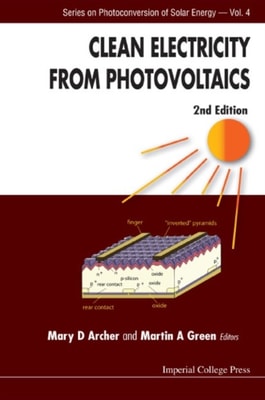
The second edition of Clean Electricity from Photovoltaics, first published in 2001, provides an updated account of the underlying science, technology and market prospects for photovoltaics.
This book presents selected contributions to the Symposium of Aeronautical and Aerospace Processes, Materials and Industrial Applications of the XXV International Materials Research Congress (IMRC).
This book is the third volume of review papers on advanced problems of phase transitions and critical phenomena, following the success of the first two volumes in 2004 and in 2007.
This is a monograph written for the young and advanced researcher who is entering the field of wet granular matter and keen to understand the basic physical principles governing this state of soft matter.
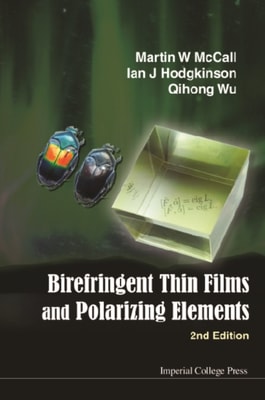
Birefringent Thin Films and Polarizing Elements (2nd Edition) includes the significant advances that have been made since the first book on tilted-columnar films was published.
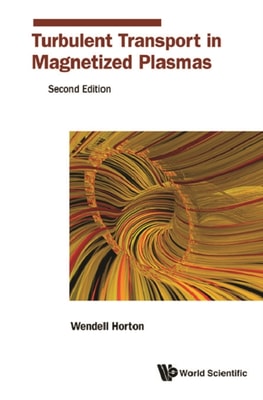
For a few seconds with large machines, scientists and engineers have now created the fusion power of the stars in the laboratory and at the same time find the rich range of complex turbulent electromagnetic waves that transport the plasma confinement systems.
Reflecting the fast pace of research in the field, the Second Edition of Bulk Metallic Glasses has been thoroughly updated and remains essential reading on the subject.
The dynamical projectors method proves to reduce a multicomponent problem to the simplest one-component problem with its solution determined by specific initial or boundary conditions.
This book includes high-quality research papers presented at the 1st International Conference on Wireless Sensor Networks, Ubiquitous Computing and Applications (ICWSNUCA, 2021), which is held at Gokaraju Rangaraju Institute of Engineering and Technology, Hyderabad, India, during 26-27 February, 2021.
In this book, the bases of imaging and diffraction in transmission electron microscopy (TEM) and scanning transmission electron microscopy (STEM) are explained in the style of a textbook.
This book highlights the latest advances in chemical and physical methods for thin-film deposition and surface engineering, including ion- and plasma-assisted processes, focusing on explaining the synthesis/processing-structure-properties relationship for a variety of thin-film systems.
This book discusses modern approaches and challenges of computer-aided design (CAD) of quantum circuits with a view to providing compact representations of quantum functionality.
This thesis develops novel numerical techniques for simulating quantum transport in the time domain and applies them to pertinent physical systems such as flying qubits in electronic interferometers and superconductor/semiconductor junctions hosting Majorana bound states (the key ingredient for topological quantum computing).