This book explores mathematics in a wide variety of applications, ranging from problems in electronics, energy and the environment, to mechanics and mechatronics.
This textbook develops Special Relativity in a systematic way and offers problems with detailed solutions to empower students to gain a real understanding of this core subject in physics.
This unique textbook offers a mathematically rigorous presentation of the theory of relativity, emphasizing the need for a critical analysis of the foundations of general relativity in order to best study the theory and its implications.
This book offers a collection of original peer-reviewed contributions presented at the 8th International Congress on Design and Modeling of Mechanical Systems (CMSM'2019), held in Hammamet, Tunisia, from the 18th to the 20th of March 2019.
This book presents a new and original method for the solution of boundary value problems in angles for second-order elliptic equations with constant coefficients and arbitrary boundary operators.
This monograph focuses on the partial regularity theorem, as developed by Caffarelli, Kohn, and Nirenberg (CKN), and offers a proof of the upper bound on the Hausdorff dimension of the singular set of weak solutions of the Navier-Stokes inequality, while also providing a clear and insightful presentation of Scheffer's constructions showing their bound cannot be improved.
This book offers a review of the vibrant areas of geometric representation theory and gauge theory, which are characterized by a merging of traditional techniques in representation theory with the use of powerful tools from algebraic geometry, and with strong inputs from physics.
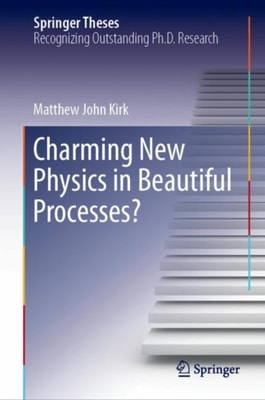
Astrophysical observations implying the existence of Dark Matter and Dark Energy, which are not described by the Standard Model (SM) of particle physics, have led to extensions of the SM predicting new particles that could be directly produced at the Large Hadron Collider (LHC) at CERN.
This book provides beginning graduate or senior-level undergraduate students in materials disciplines with a primer of the fundamental and quantitative ideas on kinetic processes in solid materials.
This book highlights the benefits of Non-Destructive Testing (NDT) methods and their applications on several cultural heritage sites including the Holy Selphuchre Monitoring System in Jerusalem.
This thesis offers a fascinating journey through various non-perturbative aspects of Conformal Theories, in particular focusing on the Conformal Bootstrap Programme and its extensions to theories with various degrees of symmetry.
Quantum Chromodynamics (QCD) describes the interactions between elementary quarks and gluons as they compose the nucleons at the heart of atomic structure.
This thesis provides the first comprehensive theoretical overview of the electronic and optical properties of two dimensional (2D) Indium Selenide: atomically thin films of InSe ranging from monolayers to few layers in thickness.
This book describes the direct and inverse problems of the multidimensional Schrodinger operator with a periodic potential, a topic that is especially important in perturbation theory, constructive determination of spectral invariants and finding the periodic potential from the given Bloch eigenvalues.
The work presented in this book is based on the proton-proton collision data from the Large Hadron Collider at a centre-of-mass energy of 13 TeV recorded by the ATLAS detector in 2015 and 2016.
Intended for a one- or two-semester course, this text applies basic, one-variable calculus to analyze the motion both of planets in their orbits as well as interplanetary spacecraft in their trajectories.
This thesis documents the measurement of lifetime, width, mass, and couplings to two electroweak bosons of the recently-discovered Higgs boson using data from the CMS experiment at the Large Hadron Collider.
This thesis makes significant advances in the quantitative understanding of two intrinsically linked yet technically very different phenomena in quantum chromodynamics (QCD).
The correlations between physical systems provide significant information about their collective behaviour - information that is used as a resource in many applications, e.
Granular forms of common materials such as metals and ceramics, sands and soils, porous energetic materials (explosives, reactive mixtures), and foams exhibit interesting behaviors due to their heterogeneity and critical length scale, typically commensurate with the grain or pore size.
Close Encounters of Art and Physics is a voyage in time through the abstract ideas harboured in the minds of humans, starting from the graffiti art of cave dwellers and extending to the street art of contemporary men and women.
This book addresses the peculiarities of nonlinear wave propagation in waveguides and explains how the stratification depends on the waveguide and confinement.
This book gathers contributions presented at the 10th Workshop on Cyclostationary Systems and Their Applications, held in Grodek nad Dunajcem, Poland in February 2017.
This accessible textbook offers a novel, concept-led approach to superconducting electronics, using the COMSOL Multiphysics software to help describe fundamental principles in an intuitive manner.
The focus of these conference proceedings is on research, development, and applications in the fields of numerical geometry, scientific computing and numerical simulation, particularly in mesh generation and related problems.
The revised edition of this established work presents an extended overview of recent applications of symmetry to the description of atomic nuclei, including a pedagogical introduction to symmetry concepts using simple examples.
With relevant, timely topics, this book gathers carefully selected, peer-reviewed scientific works and offers a glimpse of the state-of-the-art in disaster prevention research, with an emphasis on challenges in Latin America.
This book highlights a major advance in low-energy scattering theory: the Multi-Channel Algebraic Scattering (MCAS) theory, which represents an attempt to unify structure and reaction theory.
Impurities, disorder or amorphous systems - ill-condensed matter - are mostly considered inconveniences in the study of materials, which is otherwise heavily based on idealized perfect crystals.
In two volumes, this book presents a detailed, systematic treatment of electromagnetics with application to the propagation of transient electromagnetic fields (including ultrawideband signals and ultrashort pulses) in dispersive absorptive media.
In two volumes, this book presents a detailed, systematic treatment of electromagnetics with application to the propagation of transient electromagnetic fields (including ultrawideband signals and ultrashort pulses) in dispersive attenuative media.
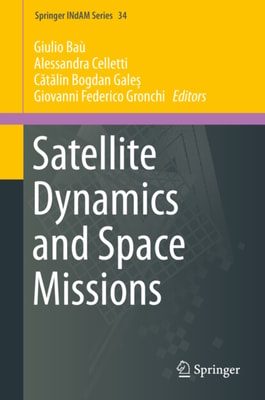
This book discusses the design of new space missions and their use for a better understanding of the dynamical behaviour of solar system bodies, which is an active field of astrodynamics.
This book is designed to serve as a textbook for a course on ordinary differential equations, which is usually a required course in most science and engineering disciplines and follows calculus courses.
This volume compiles eight recent surveys that present state-of-the-art results in the field of active matter at different scales, modeled by agent-based, kinetic, and hydrodynamic descriptions.
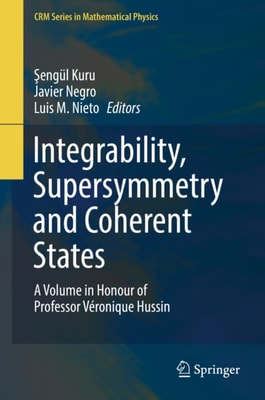
This volume shares and makes accessible new research lines and recent results in several branches of theoretical and mathematical physics, among them Quantum Optics, Coherent States, Integrable Systems, SUSY Quantum Mechanics, and Mathematical Methods in Physics.