The Center for Theoretical Studies of the University of Miami has been the host of annual winter conferences whose content has expanded from the particular topic of symmetry principles in high energy physics to encompass the bases and relationships of many branches of know- ledge.
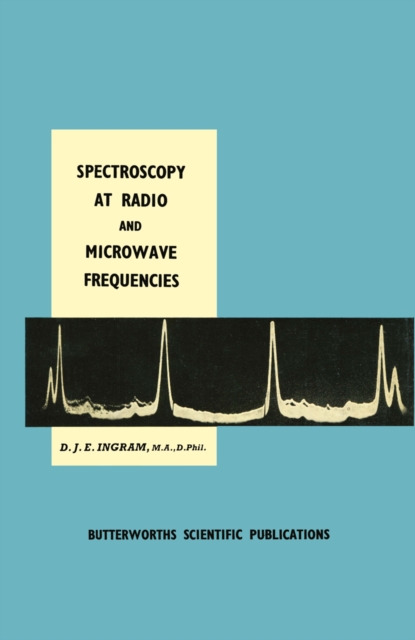
IN view of the growing interest in spectroscopy at radio and micro- wave frequencies, and the increasing number of its applications to both physics and chemistry, it was thought that a general outline of the subject for non-specialists might be of some value.
The Relativity Conference in the Midwest was held in Cincin- nati from June 2-6, 1969 and was sponsored jointly by the Aerospace Research Laboratories and the University of Cincinnati.
This collection contains survey articles dealing with the following topics: The Mach principle and its role in the general theory of relativity, the modern conception of the vacuum, new methods in the theory of Lie group representations, the coherent state method and its application to physical problems, and the Newman-Penrose method and its application to problems in general relativity theory.
This IMA Volume in Mathematics and its Applications CHAOTIC PROCESSES IN THE GEOLOGICAL SCIENCES is based on the proceedings of a workshop which was an integral part of the 1989- 90 IMA program on "e;Dynamical Systems and their Applications"e;.
The last decade has seen a considerable renaissance in the realm of classical dynamical systems, and many things that may have appeared mathematically overly sophisticated at the time of the first appearance of this textbook have since become the everyday tools of working physicists.
Physicists firmly believe that the differential equations of nature should be hyperbolic so as to exclude action at a distance; yet the equations of irreversible thermodynamics - those of Navier-Stokes and Fourier - are parabolic.
Following on the foundations laid in his earlier book "e;Introduction to Superstrings"e;, Professor Kaku discusses such topics as the classification of conformal string theories, the non-polynomial closed string field theory, matrix models, and topological field theory.
The study of nonlinear dynamics is a fascinating question which is at the very heart of the understanding of many important problems of the natural sciences.
"e;I do not think at all that I am able to present here any procedure of investiga- tion that was not perceived long ago by aZl men of talent; and I do not promise at all that you can find here anything quite new of this kind.
Mathematics is playing an ever more important role in the physical and biological sciences, provoking a blurring of boundaries between scientific disciplines and a resurgence bf interest in the modern as well as the clas- sical techniques of applied mathematics.
In the course of 30 years as a practicing crystallographer I have frequently been faced with the necessity of finding out a little bit about some general branch of mathematics with which I was previously unfamiliar.
How to Use This Handbook The Maple Handbook is a complete reference tool for the Maple language, and is written for all Maple users, regardless of their dis- cipline or field(s) of interest.
Philosophy of the Text This text has been designed to be an introductory survey of the basic concepts and applied mathematical methods of nonlinear science.
Am Ende des Zweiten Weltkriegs wurde Albert Einstein eingeladen, seine intellektuelle Autobiografie für die Library of Living Philosophers zu schreiben.
Mobile manipulators combine the advantages of mobile platforms and robotic arms, extending their operational range and functionality to large spaces and remote, demanding, and/or dangerous environments.
Although group theory has played a significant role in the development of various disciplines of physics, there are few recent books that start from the beginning and then build on to consider applications of group theory from the point of view of high energy physicists.
Aritmtica bsica y lgebra elemental Loling facilita tu aprendizaje de las Matemticas durante el tiempo que lo estudies, con la seguridad de que te resultar interesante y hasta divertido, pero sobre todo de gran utilidad y aplicacin en tu vida.
The fourth course of the International School on Physics with Low Energy Antiprotons was held in Erice, Sicily, at the Ettore Majorana Centre for Scientific Culture from 25 to 31 January, 1990.
Work on the unification of the fundamental particle interac- tions has continued vigorously since the first Europhysics study Conference on this subject.
In August 1978 a group of 80 physicists from 51 laboratories of 15 countries met in Erice to attend the 16th Course of the International School of Subnuclear Physics.
Volumes 30 and 31 of this series, dealing with "e;Many Degrees of Freedom,"e; contain the proceedings of the 1976 International Summer Institute of Theoretical Physics, held at the university of Bielefeld from August 23 to September 4, 1976.
The subject matter of this Advanced Study Institute, which has been rendered possible by the generous support of NATO, gratefully acknow- ledged here, is of central importance to quantum field theory today.
The present work is the first volume of a substantially enlarged version of the mimeographed notes of a course of lectures first given by me in the Indian Statistical Institute, Calcutta, India, during 1964-65.
This volume records the lectures given at a NATO Advanced Study Institute on Methods in Computational Molecular Physics held in Bad Windsheim, Germany, from 22nd July until 2nd.
Nature is full of spidery patterns: lightning bolts, coastlines, nerve cells, termite tunnels, bacteria cultures, root systems, forest fires, soil cracking, river deltas, galactic distributions, mountain ranges, tidal patterns, cloud shapes, sequencing of nucleotides in DNA, cauliflower, broccoli, lungs, kidneys, the scraggly nerve cells that carry signals to and from your brain, the branching arteries and veins that make up your circulatory system.
Physics-Based Deformable Models presents a systematic physics-based framework for modeling rigid, articulated, and deformable objects, their interactions with the physical world, and the estimate of their shape and motion from visual data.
At present, there is an increasing interest in the prediction of properties of classical and new materials such as substitutional alloys, their surfaces, and metallic or semiconductor multilayers.
Neural Networks and Fuzzy Systems: Theory and Applications discusses theories that have proven useful in applying neural networks and fuzzy systems to real world problems.
Intelligent Hybrid Systems: Fuzzy Logic, Neural Networks, and Genetic Algorithms is an organized edited collection of contributed chapters covering basic principles, methodologies, and applications of fuzzy systems, neural networks and genetic algorithms.
This volume of research papers comprises the proceedings of the first International Conference on Mathematics of Neural Networks and Applications (MANNA), which was held at Lady Margaret Hall, Oxford from July 3rd to 7th, 1995 and attended by 116 people.