Studying the complex physical systems of stellar jets necessitates the incorporation of nonlinear effects which occur on a wide variety of length and timescales.
After some decades of work a satisfactory theory of quantum gravity is still not available; moreover, there are indications that the original field theoretical approach may be better suited than originally expected.
Based on eight extensive lectures selected from those given at the renowned Chris Engelbrecht Summer School in Theoretical Physics in South Africa, this text on the theoretical foundations of quantum information processing and communication covers an array of topics, including quantum probabilities, open systems, and non-Markovian dynamics and decoherence.
Quantum trajectory theory is largely employed in theoretical quantum optics and quantum open system theory and is closely related to the conceptual formalism of quantum mechanics (quantum measurement theory).
Many large-scale projects for detecting gravitational radiation are currently being developed, all with the aim of opening a new window onto the observable Universe.
Based on class-tested notes, this text offers an introduction to Conformal Field Theory with a special emphasis on computational techniques of relevance for String Theory.
The principal aim of the book is to give a comprehensive account of the variety of approaches to such an important and complex concept as Integrability.
In the modern world of gigantic datasets, which scientists and practioners of all fields of learning are confronted with, the availability of robust, scalable and easy-to-use methods for pattern recognition and data mining are of paramount importance, so as to be able to cope with the avalanche of data in a meaningful way.
This lecture notes in physics volume mainly focuses on the semi classical and qu- tum aspects of percolation and breakdown in disordered, composite or granular s- tems.
Everything is more simple than one thinks but at the same time more complex than one can understand Johann Wolfgang von Goethe To reach the point that is unknown to you, you must take the road that is unknown to you St.
Of the three lecture courses making up the CIME summer school on Fluid Dynamics at Cetraro in 2005 reflected in this volume, the first, due to Sergio Albeverio describes deterministic and stochastic models of hydrodynamics.
The study of the mechanisms that govern origin and propagation of stellar jets involves the treatment of many concurrent physical processes such as gravitation, hydrodynamics and magnetohydrodynamics, atomic physics and radiation.
Based on several recent courses given to mathematical physics students, this volume is an introduction to bundle theory with the aim to provide newcomers to the field with solid foundations in topological K-theory.
This volume on spin glasses, structural glasses and biological macromolecules collects pedagogically written lecture notes of internationally renowned - perts from eight countries, who work on di?
The apparent contradiction of the results of the Fermi-Pasta-Ulam experiment conducted in 1953 and 1954 with the hypothesis that essentially any nonlinearity would lead to a system exhibiting ergodic behaviour has become known as the Fermi-Pasta-Ulam Problem.
Reinvigorated by advances and insights, in particular from the active fields of quantum information and computing, the quantum theory of irreversible processes has recently attracted growing attention.
The Augmented Spherical Wave (ASW) method is one of the most powerful approaches for handling the requirements of finite basis sets in DFT calculations.
By definition, gauge theories - among the cornerstones of fundamental theoretical physics - involve more degrees of freedom than required by the underlying physics.
Homological Mirror Symmetry, the study of dualities of certain quantum field theories in a mathematically rigorous form, has developed into a flourishing subject on its own over the past years.
This book gives a self-contained introduction to the subject of asymptotic approximation for multivariate integrals for both mathematicians and applied scientists.
In recent years the subject of relativistic fluid dynamics has found substantial applications in astrophysics and cosmology (theories of gravitational collapse, models of neutron stars, galaxy formation), as well as in plasma physics (relativistic fluids have been considered as models for relativistic particle beams) and nuclear physics (relativistic fluids are currently used in the analysis of the heavy ion reactions).
This volume represents a part of the main result obtained bya group of French probabilists, together with thecontributions of a number of colleagues, mainly from the USAand Japan.
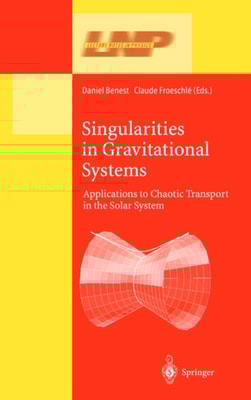
Chaos theory plays an important role in modern physics and related sciences, but -, the most important results so far have been obtained in the study of gravitational systems applied to celestial mechanics.
Inspired by the general configuration characteristics of automatic production lines, the author discusses the modelisation of important sectors of a factory.
The authors study dynamical effects of incidentcompressional and distortional elastic waves on a layer ofplanar, cylindrical, or spherical geometry, especiallyfocusing on the stress fields surrounding the layer.