Nuclear physics began one century ago during the "e;miraculous decade"e; - tween 1895 and 1905 when the foundations of practically all modern physics were established.
Radioactivity: History, Science, Vital Uses and Ominous Peril, Third Edition provides an introduction to radioactivity, the building blocks of matter, the fundamental forces in nature, and the role of quarks and force carrier particles.
An Introduction to Elementary Particles, Second Edition aims to give an introduction to the theoretical methods and ideas used to describe how elementary particles behave, as well as interpret some of the phenomena associated with it.
Particle Physics: An Introduction provides information pertinent to particle physics, including symmetries, quantum mechanics, particle kinematics, and wave equations.
High Energy Physics, Volume V is a collection of papers that discusses photo- and electro-production processes, Reggae phenomenology, and quantum electrodynamics.
Excitons: Their Properties and Uses presents the fundamental properties of excitons and emphasizes the extensive use of excitons as a tool in understanding the properties of materials.
Particle Accelerator Design: Computer Programs describes some of the most important computer programs applicable to the design of particle accelerators.
Elementary Particles: Science, Technology, and Society is a comprehensive review of some important developments in science and technology in relation to the study of particle physics.
Subnuclear Phenomena, Part B is the second part of the compilation of the proceedings of the seventh Course of the International School of Physics, held in July 1969 in Erice, Italy.
Subnuclear Phenomena, Part A is the first part of the compilation of the proceedings of the seventh Course of the International School of Physics, held in July 1969 in Erice, Italy.
Evolution of Particle Physics is concerned with the birth of particle physics and its maturation as a scientific field, with emphasis on advances in both theory and experiment.
Electron Scattering from Complex Nuclei, Part B is a three-chapter text that explores the excitation of the nucleus to bound levels and the nucleus breakup through particle emission from continuum states.
The Dosimetry of Ionizing Radiation, Volume I focuses on the development in radiation dosimetry, which has its origin in the medical application of ionizing radiation with the discovery of X-rays.
Elementary Processes at High Energy, Part B documents the proceedings of the eighth Course of the International School of Subnuclear Physics, held in Erice, Italy in July 1970.
Nuclear Spectroscopy and Reactions, Part A covers information regarding the development of nuclear spectroscopy and its reactions, while emphasizing in-beam spectroscopy.
Elementary Processes at High Energy, Part A covers the proceedings of the eighth Course of The International School of Subnuclear Physics held in Erice, Italy, in July 1970.
Liquid Scintillation Counting: Recent Developments presents the Proceedings of the International Symposium on Liquid Scintillation Counting, held in Sydney, Australia, on August 20-22, 1973.
Nuclear Spectroscopy and Reactions, Part B covers information regarding the development of nuclear spectroscopy and its reactions, while emphasizing in-beam spectroscopy.
Hadrons and Their Interactions: Current and Field Algebra, Soft Pions, Supermultiplets, and Related Topics focuses on formulas, principles, and interactions involved in the study of physics.
Nuclear, Particle, and Many Body Physics, Volume I is a collection of scientific papers dedicated to the memory of Amos de-Shalit, a distinguished physicist.
Internal Conversion Processes documents the proceedings of the International Conference on the Internal Conversion Process held at Vanderbilt University, Nashville, Tennessee on May 10-13, 1965.
Accelerator Health Physics tackles the importance of health physics in the field of nuclear physics, especially to those involved with the use of particle accelerators.
Nuclear Spectroscopy and Reactions, Part C covers information regarding the development of nuclear spectroscopy and its reactions, while emphasizing in-beam spectroscopy.
Neutron Cross Sections, Volume 2: Neutron Cross Section Curves presents data for total reaction cross sections and related fission parameters as a function of incident-neutron energy.
Organic Scintillation and Liquid Scintillation Counting covers the proceeding of The International Conference on Organic Scintillators and Liquid Scintillation Counting, which was held on July 7-10, 1970 at the University of California, San Francisco.
In addition to the extensive list of detailed individual resonance parameters for each isotope, this book contains thermal cross sections and average resonance parameters, as well as a short survey of the physics of thermal and resonance neutrons with emphasis on evaluation methods.
A shocking expos from the most powerful insider in nuclear regulation about how the nuclear energy industry endangers our livesand why Congress does nothing to stop it.
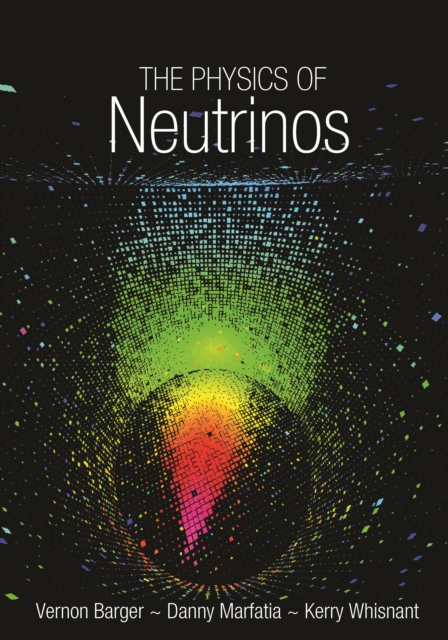
The physics of neutrinos--uncharged elementary particles that are key to helping us better understand the nature of our universe--is one of the most exciting frontiers of modern science.
Neutron Scattering: Applications in Chemistry, Materials Science and Biology, Volume 49, provides an in-depth overview of the applications of neutron scattering in the fields of physics, materials science, chemistry, biology, the earth sciences, and engineering.
The story of the Higgs boson - the so-called 'God particle' - and the man who thought of itIn the summer of 1964, a reclusive young professor at the University of Edinburgh wrote two scientific papers which have come to change our understanding of the most fundamental building blocks of matter and the nature of the universe.
High-performance alloys that can withstand operation in hazardous nuclear environments are critical to presentday in-service reactor support and maintenance and are foundational for reactor concepts of the future.