This book provides the first comprehensive, up-to-date and self-contained introduction to the emergent field of Programmable Integrated Photonics (PIP).
Physics on Your Feet (2nd Edition) is a significantly expanded collection of physics problems covering the broad range of topics in classical and modern physics that were, or could have been, asked at oral PhD exams at University of California at Berkeley.
This book tells the human story of one of man's greatest intellectual adventures - how it came to be understood that light travels at a finite speed, so that when we look up at the stars, we are looking back in time.
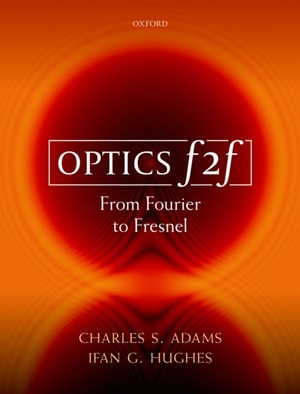
This textbook reduces the complexity of the coverage of optics to allow a student with only elementary calculus to learn the principles of optics and the modern Fourier theory of diffraction and imaging.
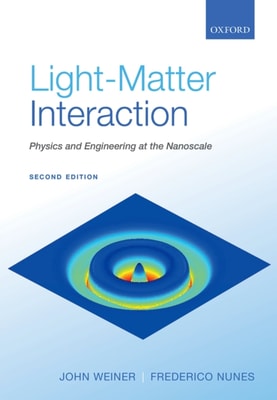
Light-matter interaction is pervasive throughout the disciplines of optical and atomic physics, condensed matter physics, electrical engineering, and now increasingly in biology and medicine with frequency and length scales extending over many orders of magnitude.
Polymer electronics is the science behind many important new developments in technology, such as the flexible electronic display (e-ink) and many new developments in transistor technology.
Using a selection of key experiments performed over the past 30 years or so, we present a discussion of the strikingly counter-intuitive phenomena of the quantum world that defy explanation in terms of everyday "e;common sense"e; reasoning, and we provide the corresponding quantum mechanical explanations with a very elementary use of associated formalism.
Animal Eyes provides a comparative account of all known types of eye in the animal kingdom, outlining their structure and function with an emphasis on the nature of the optical systems and the physical principles involved in image formation.
Animal Eyes provides a comparative account of all known types of eye in the animal kingdom, outlining their structure and function with an emphasis on the nature of the optical systems and the physical principles involved in image formation.
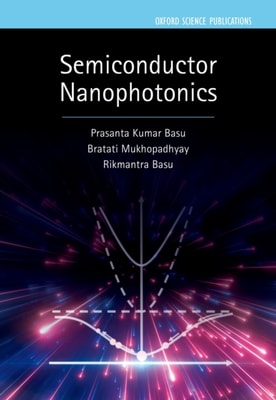
Rapid development of microfabrication and assembly of nanostructures has opened up many opportunities to miniaturize structures that confine light, producing unusual and extremely interesting optical properties.
Rapid development of microfabrication and assembly of nanostructures has opened up many opportunities to miniaturize structures that confine light, producing unusual and extremely interesting optical properties.
In two volumes, this book presents a detailed, systematic treatment of electromagnetics with application to the propagation of transient electromagnetic fields (including ultrawideband signals and ultrashort pulses) in dispersive attenuative media.
This book describes the state-of-the-art in the emerging field of optical trapping of ions, as well as the most recent advances enabling the use of this technique as a versatile tool for novel investigations in atomic physics.
Nanometre sized structures made of semiconductors, insulators, and metals and grown by modern growth technologies or by chemical synthesis exhibit novel electronic and optical phenomena due to the confinement of electrons and photons.
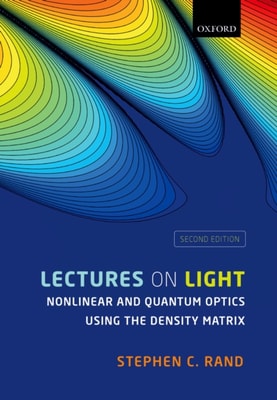
This book attempts to bridge in one step the enormous gap between introductory quantum mechanics and the research front of modern optics and scientific fields that make use of light.
The semiconductor laser, invented over 50 years ago, has had an enormous impact on the digital technologies that now dominate so many applications in business, commerce and the home.
Lasers are employed throughout science and technology, in fundamental research, the remote sensing of atmospheric gases or pollutants, communications, medical diagnostics and therapies, and the manufacturing of microelectronic devices.
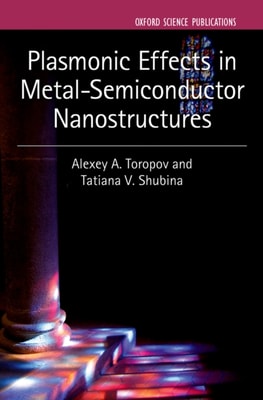
Metal-semiconductor nanostructures represent an important new class of materials employed in designing advanced optoelectronic and nanophotonic devices, such as plasmonic nanolasers, plasmon-enhanced light-emitting diodes and solar cells, plasmonic emitters of single photons, and quantum devices operating in infrared and terahertz domains.