There has been a lot of innovation in systems engineering and some fundamental advances in the fields of optics, imaging, lasers, and photonics that warrant attention.
A consideration of the development of photochemical systems with functions as optical sensors or switches, discussing materials and chemical systems, technology, and applications for target molecules and optical signal multiplexing.
Reflecting changes in the field in the ten years since the publication of the first edition, The Handbook of Photonics, Second Edition explores recent advances that have affected this technology.
One of the Top Selling Physics Books according to YBP Library ServicesMagnetic Anisotropies in Nanostructured Matter presents a compact summary of all the theoretical means to describe magnetic anisotropies and interlayer exchange coupling in nanosystems.
This book covers the basic concepts of UV communication, the analysis of UV channel characteristics, the organize media access protocols, and routing protocols, etc.
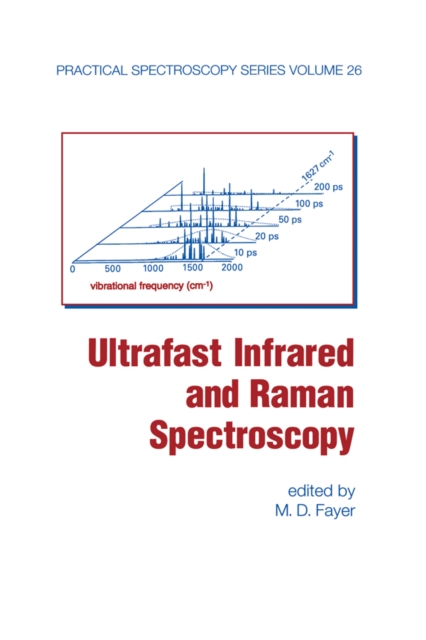
The advent of laser-based sources of ultrafast infrared pulses has extended the study of very fast molecular dynamics to the observation of processes manifested through their effects on the vibrations of molecules.
This book covers the basic concepts of UV communication, the analysis of UV channel characteristics, the organize media access protocols, and routing protocols, etc.
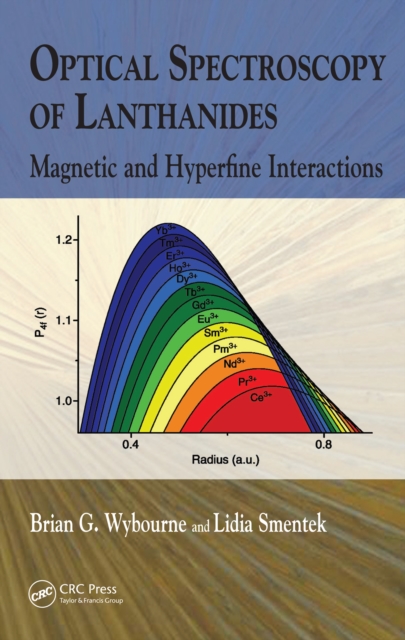
Optical Spectroscopy of Lanthanides: Magnetic and Hyperfine Interactions represents the sixth and final book by the late Brian Wybourne, an accomplished pioneer in the spectroscopy of rare earth ions, and Lidia Smentek, a leading theoretical physicist in the field.
Focusing on the applied and basic aspects of confined liquid crystals, this book provides a current treatise of the subject matter and places it in the broader context of electrooptic applications.
A description of procedures for probing bond activation, H-bonded systems, molecular dynamical mechanisms, vibrational dephasing, simple liquids, and proteins and energy flow effects using ultrafast vibrational spectroscopy experiments.
Remarkable developments in the spectroscopy field regarding ultrashort pulse generation have led to the possibility of producing light pulses ranging from 50 to5 fs and frequency tunable from the near infrared to the ultraviolet range.
Spurred on by extensive research in recent years, organic semiconductors are now used in an array of areas, such as organic light emitting diodes (OLEDs), photovoltaics, and other optoelectronics.
Two-Dimensional Optical Spectroscopy discusses the principles and applications of newly emerging two-dimensional vibrational and optical spectroscopy techniques.
"e;Alberto Diaspro has been choreographing light's dance for over 20 years, and in Nanoscopy and Multidimensional Optical Fluorescence Microscopy, he has assembled a diverse group of experts to explain the methods they use to coax light to reveal biology's secrets.
Helping you better understand the processes, instruments, and methods of aerosol spectroscopy, Fundamentals and Applications in Aerosol Spectroscopy provides an overview of the state of the art in this rapidly developing field.
The term 'nonclassical states' refers to the quantum states that cannot be produced in the usual sources of light, such as lasers or lamps, rather than those requiring more sophisticated apparatus for their production.
This volume presents a complete and thorough examination of advances in the instrumentation, evaluation, and implementation of UV technology for reliable and efficient data acquisition and analysis.
Commentaries by the editors to this comprehensive anthology in the area of physics-based vision put the papers in perspective and guide the reader to a thorough understanding of the basics of the field.
The First Book on CRS MicroscopyCompared to conventional Raman microscopy, coherent Raman scattering (CRS) allows label-free imaging of living cells and tissues at video rate by enhancing the weak Raman signal through nonlinear excitation.
Since their development in the 1990s, it has been discovered that diluted nitrides have intriguing properties that are not only distinct from those of conventional semiconductor materials, but also are conducive to various applications in optoelectronics and photonics.
Fluctuations in scattered waves limit the performance of imaging and remote sensing systems that operate on all wavelengths of the electromagnetic spectrum.
This book focuses on the integration of intelligent communication systems, control systems, and devices related to all aspects of engineering and sciences.
This book combines classical optics with some of the latest developments in the field to provide an appreciation and understanding of advanced research topics.
With the ongoing, worldwide installation of 40 Gbit/s fiber optic transmission systems, there is an urgency to learn more about the photonic devices supporting this technology.
This book focuses on the integration of intelligent communication systems, control systems, and devices related to all aspects of engineering and sciences.
Discussing the principles of physical and geometrical optics from an engineering point of view, this book explains current optical technology and the applications of optical methods in a wide variety of fields, from astronomy and agriculture to medicine and semiconductors.
The technical development of optical tweezers, along with their application in the biological and physical sciences, has progressed significantly since the demonstration of an optical trap for micron-sized particles based on a single, tightly focused laser beam was first reported more than twenty years ago.
Edited and expanded to keep pace with the digital revolution, the new edition of this highly popular and critically acclaimed work provides a comprehensive exploration of imaging science.
The study of the biological effects of ultraviolet and visible light on the skin has expanded rapidly over the last 20 years, recognizing the clinical significance of light sensitive skin disorders.
Diffractional Optics of Millimetre Waves combines those elements of diffraction theory normally associated with optics, including Gaussian beams, lenses, and mirrors, and extends them into the micro- and millimetre wavelength range.
Ever since the first experimental demonstration was reported in 2000, the interest in metamaterials and left-handed media that exhibit a negative refractive index has increased exponentially.