Strongly Coupled Plasma Physics covers the proceedings of the 24th Yamada Conference on Strongly Coupled Plasma Physics, held from August 29 to September 2, 1989 at Hotel Mount Fuji near Lake Yamanaka on the outskirts of Tokyo.
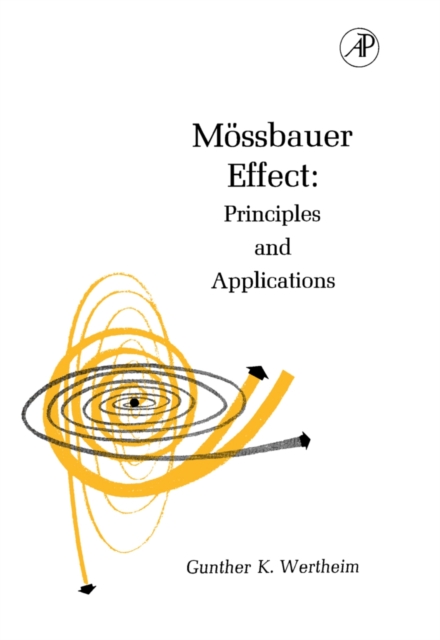
Mossbauer Effect: Principles and Applications focuses on the processes, methodologies, and reactions involved in Mossbauer effect, as well as atomic motion, use of the effect in studying hyperfine structures, quadropole coupling, and isomer shift.
Spectrometric Techniques, Volume II provides information pertinent to vacuum ultraviolet techniques to complete the demonstration of the diversity of methods available to the spectroscopist interested in the ultraviolet visible and infrared spectral regions.
Fifth International Congress for Electron Microscopy, Volume 2: Biology focuses on the processes, methodologies, approaches, and principles involved in electron microscopy.
Diffraction: Coherence in Optics presents a detailed account of the course on Fraunhofer diffraction phenomena, studied at the Faculty of Science in Paris.
Introduction to the Theory of Atomic Spectra is a systematic presentation of the theory of atomic spectra based on the modern system of the theory of angular momentum.
Polarized Light and Optical Measurement is a five-chapter book that begins with a self-consistent conceptual picture of the phenomenon of polarization.
Some Aspects of Vacuum Ultraviolet Radiation Physics presents some data on the state of research in vacuum ultraviolet radiation in association with areas of physics.
Coherent Raman Spectroscopy provides a unified and general account of the fundamental aspects of nonlinear Raman spectroscopy, also known as coherent Raman spectroscopy.
Tables of Wavenumbers for the Calibration of Infrared Spectrometers, Second Edition is a compilation of tables of wavenumber values for the calibration of infrared spectrometers.
Applications of Holography and Optical Data Processing contains the proceedings of the International Conference on Applications of Holography and Optical Data Processing, held in Jerusalem in August 1976.
International Conference on Infrared Physics (CIRP) is a collection of papers from the proceedings of a conference held in Zurich on August 11-15, 1975.
BASIC Molecular Spectroscopy discusses the utilization of the Beginner's All-purpose Symbolic Instruction Code (BASIC) programming language in molecular spectroscopy.
Optics: Ninth Edition Optics: Ninth Edition covers the work necessary for the specialization in such subjects as ophthalmic optics, optical instruments and lens design.
Photoelectron Spectroscopy: An Introduction to Ultraviolet Photoelectronspectroscopy in the Gas Phase, Second Edition Photoelectron Spectroscopy: An Introduction to Ultraviolet PhotoelectronSpectroscopy in the Gas Phase, Second Edition aims to give practical approach on the subject of photoelectron spectroscopy, as well as provide knowledge on the interpretation of the photoelectron spectrum.
The birth of quantum electronics in the middle of the 20th century and the subsquent discovery of the laser led to new trends in physics and a number of photonic technolgies.
Since their development in the 1990s, it has been discovered that diluted nitrides have intriguing properties that are not only distinct from those of conventional semiconductor materials, but also are conducive to various applications in optoelectronics and photonics.
A consideration of the development of photochemical systems with functions as optical sensors or switches, discussing materials and chemical systems, technology, and applications for target molecules and optical signal multiplexing.
The term 'nonclassical states' refers to the quantum states that cannot be produced in the usual sources of light, such as lasers or lamps, rather than those requiring more sophisticated apparatus for their production.
Based on more than 30 years of research on differential theories of gratings, this book describes developments in differential theory for applications in spectroscopy, acoustics, X-ray instrumentation, optical communication, information processing, photolithography, high-power lasers, high-precision engineering, and astronomy.
"e;a very valuable book for graduate students and researchers in the field of Laser Spectroscopy, which I can fully recommend"e;-Wolfgang Demtroder, Kaiserslautern University of TechnologyHow would it be possible to provide a coherent picture of this field given all the techniques available today?
Continuing in the steps of its predecessors, the fourth edition of Practical Holography provides the most comprehensive and up-to-date resource available.
High brightness metal vapor lasers have become the most bright and powerful in the visible spectral range among all existing laser types, resulting in numerous applications ranging from purely fundamental research to practical application in large-scale commercial problems such as isotope selection.
This book combines classical optics with some of the latest developments in the field to provide an appreciation and understanding of advanced research topics.
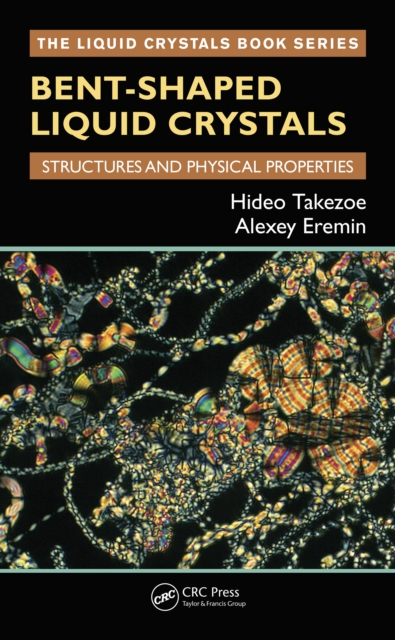
Bent-Shaped Liquid Crystals: Structures and Physical Properties provides insight into the latest developments in the research on liquid crystals formed by bent-shaped mesogens.
Odyssey of Light in Nonlinear Optical Fibers: Theory and Applications presents a collection of breakthrough research portraying the odyssey of light from optical solitons to optical rogue waves in nonlinear optical fibers.
Laser-Based Optical Detection of Explosives offers a comprehensive review of past, present, and emerging laser-based methods for the detection of a variety of explosives.
This second edition of Digital Optical Communications provides a comprehensive treatment of the modern aspects of coherent homodyne and self-coherent reception techniques using algorithms incorporated in digital signal processing (DSP) systems and DSP-based transmitters to overcome several linear and nonlinear transmission impairments and frequency mismatching between the local oscillator and the carrier, as well as clock recovery and cycle slips.