The Advanced Study Institute on Molecular Electro-Optics was held on the campus of the Rensselaer Polytechnic Institute, Troy, New York, USA, from July 14 through July 24, 1980.
Now that holography has matured (wIth Dennis Gabor having received the Nobel Prize In 1971) and that coherent optics has proved to be even more powerful than originally imagined, in open- ing the new field of "e;optical computing,"e; it is particularlyappropri- ate to make available to English-speaking readers the translation of a uniquely outstanding text which presents the general and per- manent foundations of the field.
Although much work has been performed on measure- ments and interpretation of light absorption by opaque or nearly opaque solids, it is surprising to note that until recently relatively little reliable experimental data, and much less theoretical work was available on the nature of transparent solids.
The existence of liquid crystals has been known for nearly a centu- ry; yet it is only in the last ten years that their unique optical, electri- cal, electro-optic, and thermal properties have been exploited to any significant extent in such technological applications as digital d~- plays and thermography.
The material presented in this volume is based on a series of lectures presented at an annual short course entitled "e;Integrated Optics"e; sponsored by the University of Cali- fornia, Santa Barbara, in March of 1973.
The emergence of fibre optics as a commercially viable technology oc- curred barely ten years ago; in this time it has become an established field with a variety of applications.
When Faraday performed the very first experiments on electromagnetic effects, which form the very foundation of modern civilization since virtually everything electrical utilizes them, he was asked of what use his experiments were.
This volume is based on material prepared by the contributors to the symposium on "e;Progress in Gas Dynamic Research by Optical Methods"e;, held on May 25-26, 1970 in the Department of Mechanical and Aerospace Engineering at Syracuse University.
This book provides an account of modern aspects relating far infrared radiation to properties of solids; it encompasses both theoretical and experimental considerations.
This volume contains the lectures and seminars presented at the NATO Advanced Study Institute on "e;Applied Laser Spectroscopy"e; the fourteenth course of the Europhysics School of Quantum Electronics, held under the supervision of the Quantum Electronics Division of the European Physical Society.
The behavior of light in small scale optics or nano/micro optical devices has shown promising results, which can be used for basic and applied research, especially in nanoelectronics.
In addition to explaining and modeling unexplored phenomena in nature and society, chaos uses vital parts of nonlinear dynamical systems theory and established chaotic theory to open new frontiers and fields of study.
"e;a very valuable book for graduate students and researchers in the field of Laser Spectroscopy, which I can fully recommend"e;-Wolfgang Demtroder, Kaiserslautern University of TechnologyHow would it be possible to provide a coherent picture of this field given all the techniques available today?
This textbook offers an introduction to the foundations of spectroscopic methods and provides a bridge between basic concepts and experimental applications in fields as diverse as materials science, biology, solar energy conversion, and environmental science.
This textbook offers an introduction to the foundations of spectroscopic methods and provides a bridge between basic concepts and experimental applications in fields as diverse as materials science, biology, solar energy conversion, and environmental science.
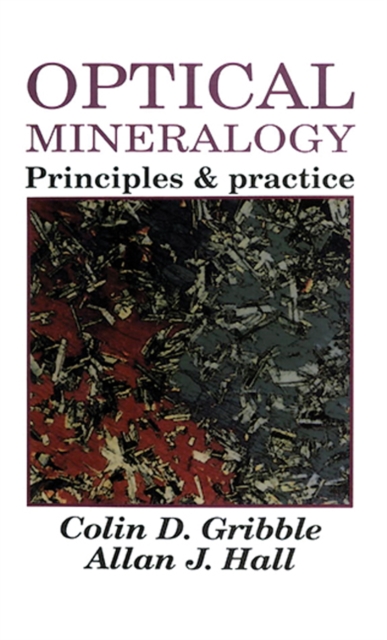
Covering theory and practice, this wide-ranging introductory textbook covers the main optical properties of rock-forming minerals that can be recognized under the polarizing microscope.
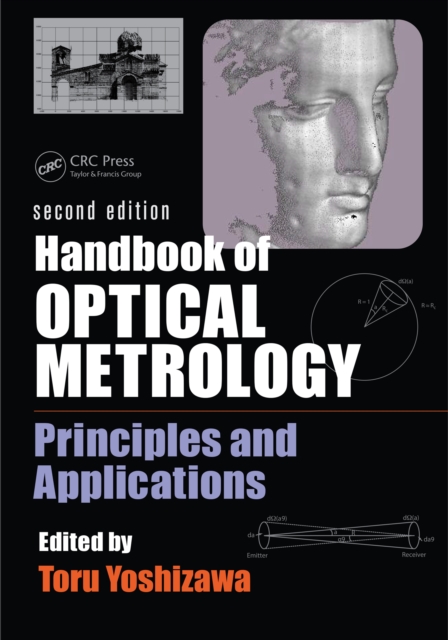
Handbook of Optical Metrology: Principles and Applications begins by discussing key principles and techniques before exploring practical applications of optical metrology.
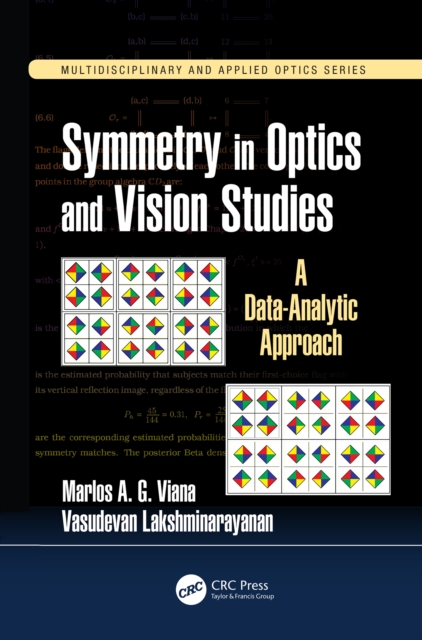
This book presents an introduction to the foundations, interpretations, and data-analytic applications of symmetry studies with an emphasis on applications in optical sciences.
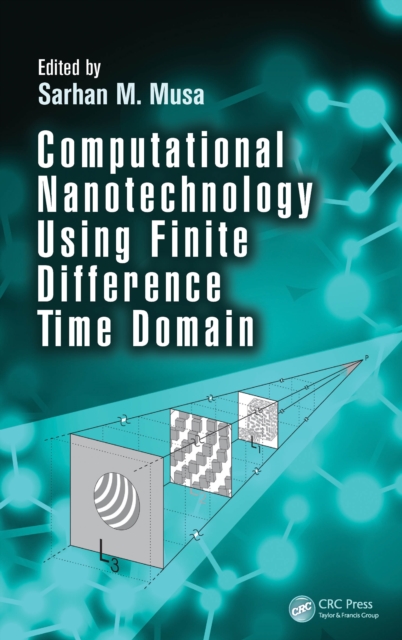
The Finite Difference Time Domain (FDTD) method is an essential tool in modeling inhomogeneous, anisotropic, and dispersive media with random, multilayered, and periodic fundamental (or device) nanostructures due to its features of extreme flexibility and easy implementation.
Offering a fresh take on laser engineering, Laser Modeling: A Numerical Approach with Algebra and Calculus presents algebraic models and traditional calculus-based methods in tandem to make concepts easier to digest and apply in the real world.
"e;This engagingly written text provides a useful pedagogical introduction to an extensive class of geometrical phenomena in the optics of polarization and phase, including simple explanations of much of the underlying mathematics.
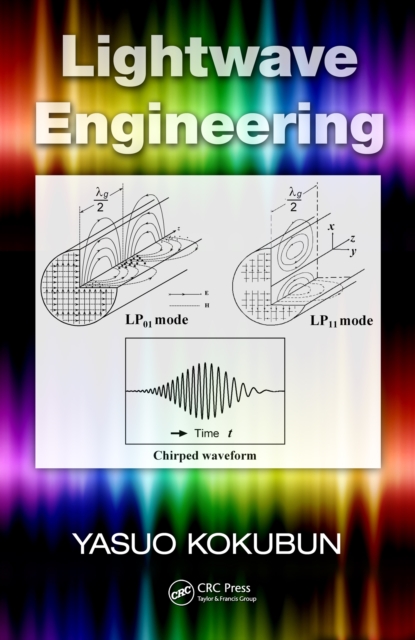
Suitable as either a student text or professional reference, Lightwave Engineering addresses the behavior of electromagnetic waves and the propagation of light, which forms the basis of the wide-ranging field of optoelectronics.
A number of applications including scientific spectroscopy, security screening, and medical imaging have benefitted from the development and utilization of new and emerging terahertz (THz) generation and detection techniques.
Discover a Modern Approach to the Study of Molecular SymmetryClassroom-tested from an author experienced in teaching a course on condensed matter spectroscopy, and introductory spectroscopy and lasers, Condensed Matter Optical Spectroscopy: An Illustrated Introduction contains over 200 color illustrations and provides a clear overview of the field.
This book introduces the key concepts of nanoscale spectroscopy methods used in nanotechnologies in a manner that is easily digestible for a beginner in the field.
The bright colour of haemoglobin has, from the very beginning, played a significant role in both the investigation of this compound as well as in the study of blood oxygen transport.
Suitable as either a student text or professional reference, Lightwave Engineering addresses the behavior of electromagnetic waves and the propagation of light, which forms the basis of the wide-ranging field of optoelectronics.
Causal Physics: Photons by Non Interactions of Waves redefines the mathematical Superposition Principle as an operational Superposition Effect; which is the measurable physical transformation experienced by a detector due to stimulations induced by multiple waves simultaneously acting on the detecting dipoles.
Focusing on control and manipulation of plasmons at nanometer dimensions, nanoplasmonics combines the strength of electronics and photonics, and is predicted to replace existing integrated circuits and photonic devices.
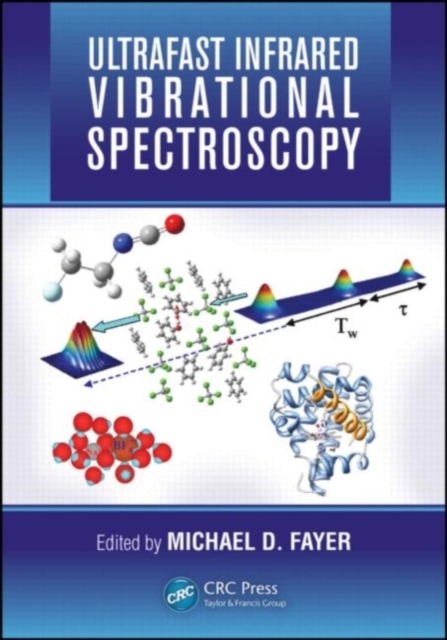
The advent of laser-based sources of ultrafast infrared pulses has extended the study of very fast molecular dynamics to the observation of processes manifested through their effects on the vibrations of molecules.
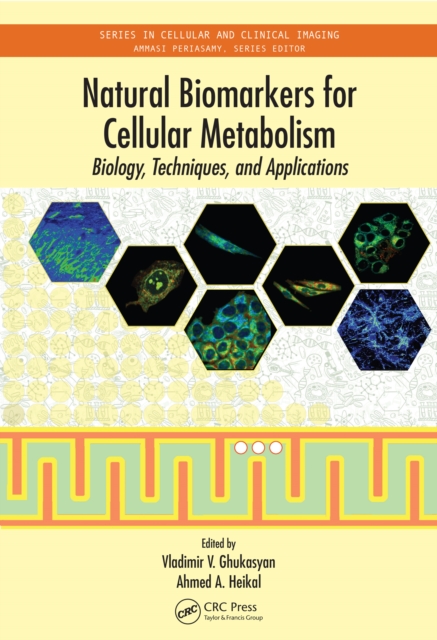
From the Lab to Clinical Settings-Advances in Quantitative, Noninvasive Optical DiagnosticsNoninvasive fluorescence imaging techniques, novel fluorescent labels, and natural biomarkers are revolutionizing our knowledge of cellular processes, signaling and metabolic pathways, the underlying mechanisms for health problems, and the identification of n
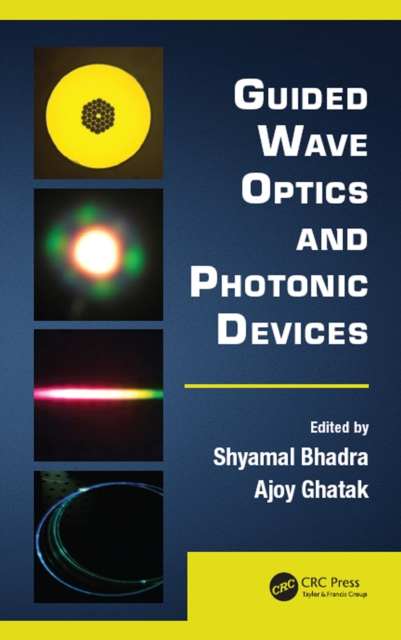
Guided Wave Optics and Photonic Devices introduces readers to a broad cross-section of topics in this area, from the basics of guided wave optics and nonlinear optics to biophotonics.