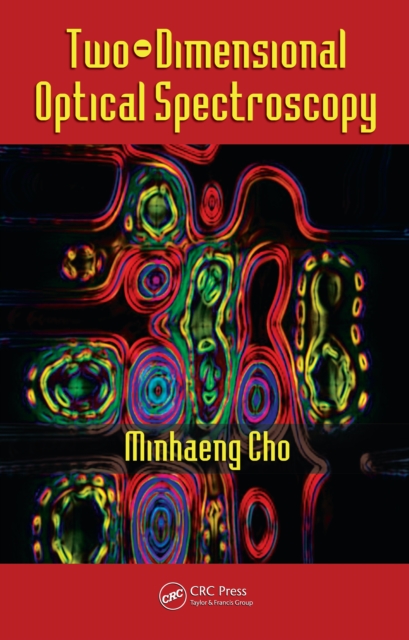
Two-Dimensional Optical Spectroscopy discusses the principles and applications of newly emerging two-dimensional vibrational and optical spectroscopy techniques.
The spectroscopy of highly charged ions plays a key role in numerous areas of physics, from quantum electrodynamics (QED) and parity nonconservation (PNC) testing to fusion and plasma physics to x-ray astronomy.
"e;Alberto Diaspro has been choreographing light's dance for over 20 years, and in Nanoscopy and Multidimensional Optical Fluorescence Microscopy, he has assembled a diverse group of experts to explain the methods they use to coax light to reveal biology's secrets.
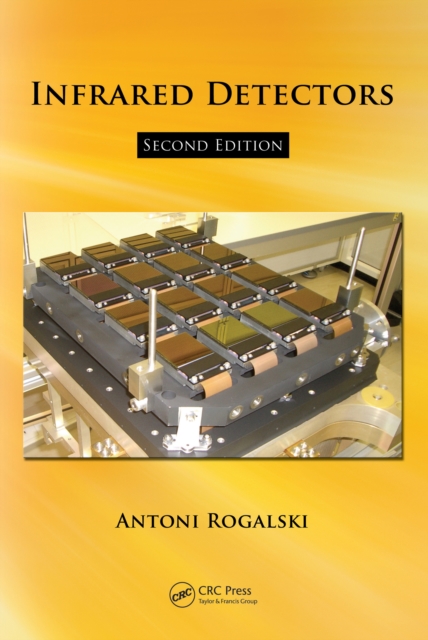
Completely revised and reorganized while retaining the approachable style of the first edition, Infrared Detectors, Second Edition addresses the latest developments in the science and technology of infrared (IR) detection.
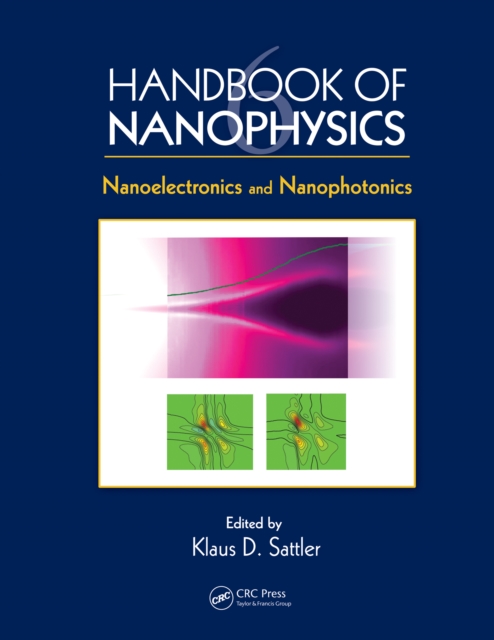
Many bottom-up and top-down techniques for nanomaterial and nanostructure generation have enabled the development of applications in nanoelectronics and nanophotonics.
One of the Top Selling Physics Books according to YBP Library ServicesMagnetic Anisotropies in Nanostructured Matter presents a compact summary of all the theoretical means to describe magnetic anisotropies and interlayer exchange coupling in nanosystems.
Reflecting the myriad changes and advancements in the technologies involved in FTIR, particularly the development of diamond ATRs, this second edition of Fundamentals of Fourier Transform Infrared Spectroscopy has been extensively rewritten and expanded to include new topics and figures as well as updates of existing chapters.
Ever since the first experimental demonstration was reported in 2000, the interest in metamaterials and left-handed media that exhibit a negative refractive index has increased exponentially.
Although chemists, biochemists, biologists, and material scientists are often interested in using nonlinear optical techniques for characterizing their samples, they seldom have the necessary background to exploit these methods.
Spurred on by extensive research in recent years, organic semiconductors are now used in an array of areas, such as organic light emitting diodes (OLEDs), photovoltaics, and other optoelectronics.
Photoacoustics promises to revolutionize medical imaging and may well make as dramatic a contribution to modern medicine as the discovery of the x-ray itself once did.
The compact size, reliability, and low cost of diode lasers lead to applications throughout modern technology-most importantly in modern optical telecommunication systems.
Drawn from the second edition of the best-selling Phosphor Handbook, Practical Applications of Phosphors outlines methods for the production of various phosphors and discusses a broad spectrum of applications.
Drawing from the second edition of the best-selling Handbook of Phosphors, Fundamentals of Phosphors covers the principles and mechanisms of luminescence in detail and surveys the primary phosphor materials as well as their optical properties.
Diffractional Optics of Millimetre Waves combines those elements of diffraction theory normally associated with optics, including Gaussian beams, lenses, and mirrors, and extends them into the micro- and millimetre wavelength range.
Since its development in the late 1970s, the Moire Fringe method has become a standard technique for the measurement of the behavior of materials and structures.
An entertaining, instructive, diverse, and unusual book, Light and Dark: An Exploration in Science, Nature, Art and Technology encompasses a wide range of topics not normally found in one book.
Stimulated Brillouin scattering (SBS) is the most important example of a stimulated scattering process-light scattering that occurs when the intensity of the light field itself affects the propagating medium.
Since the invention of the first working laser in 1960, development of these devices has progressed at an unprecedented rate, to the extent that the laser is now a common part of everyday life, from the semiconductor laser used in CD players and telecommunication systems to the high power eximer lasers used in manufacturing processes.
Information on recent progress in laser remote sensor (LIDAR) technology can be found scattered throughout numerous journal articles and conference proceedings, but until now there has been no work that summarizes recent advancements and achievements in the field in a detailed format.
Organic Nonlinear Optical Materials provides an extensive description of the preparation and characterization of organic materials for applications in nonlinear and electro-optics.
Addressing the growing demand for larger capacity in information technology, VLSI Micro- and Nanophotonics: Science, Technology, and Applications explores issues of science and technology of micro/nano-scale photonics and integration for broad-scale and chip-scale Very Large Scale Integration photonics.
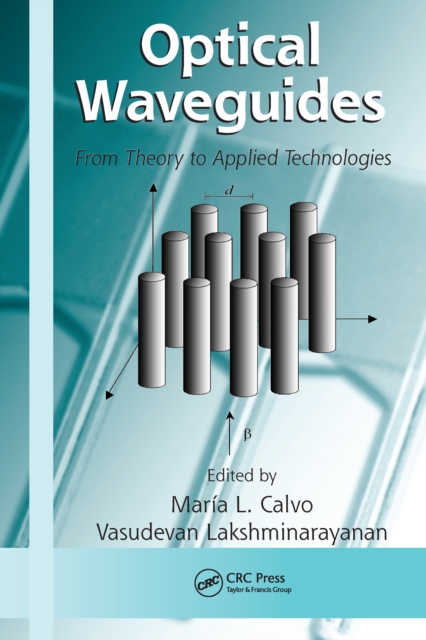
Although the theory and principles of optical waveguides have been established for more than a century, the technologies have only been realized in recent decades.
Optical Methods of Measurement: Wholefield Techniques, Second Edition provides a comprehensive collection of wholefield optical measurement techniques for engineering applications.
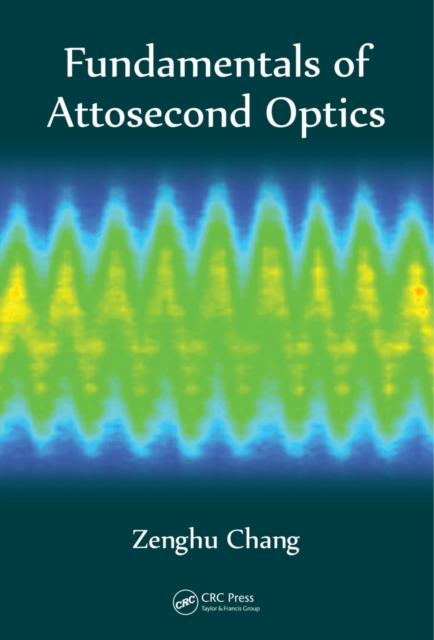
Remarkable developments in the spectroscopy field regarding ultrashort pulse generation have led to the possibility of producing light pulses ranging from 50 to5 fs and frequency tunable from the near infrared to the ultraviolet range.
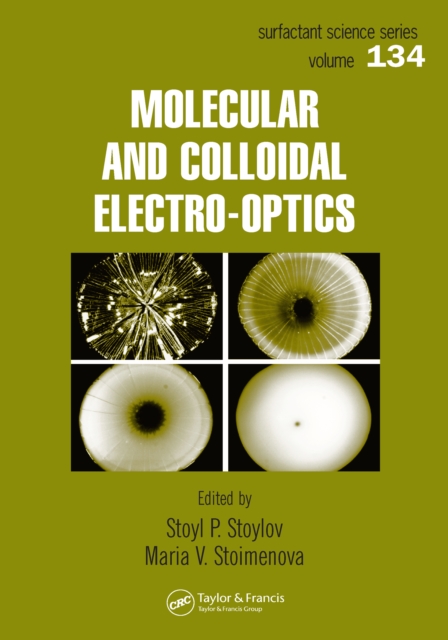
Molecular and Colloidal Electro-Optics presents cohesive coverage from internationally recognized experts on new approaches and developments in both theoretical and experimental areas of electro-optic science.
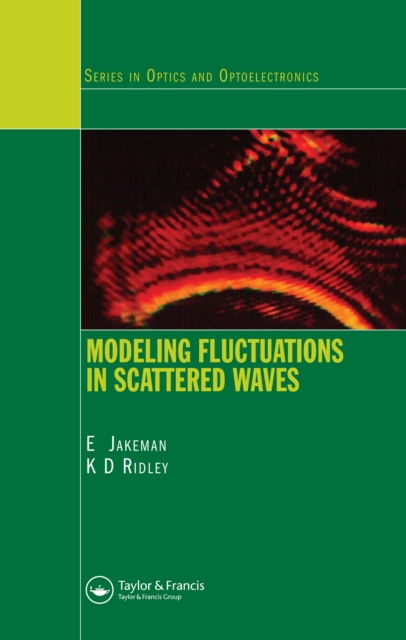
Fluctuations in scattered waves limit the performance of imaging and remote sensing systems that operate on all wavelengths of the electromagnetic spectrum.
With the ongoing, worldwide installation of 40 Gbit/s fiber optic transmission systems, there is an urgency to learn more about the photonic devices supporting this technology.
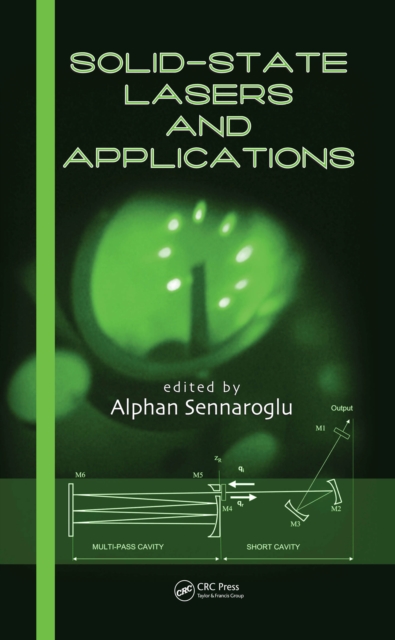
Because of the favorable characteristics of solid-state lasers, they have become the preferred candidates for a wide range of applications in science and technology, including spectroscopy, atmospheric monitoring, micromachining, and precision metrology.