This book aims to provide an overview of several topics in advanced differential geometry and Lie group theory, all of them stemming from mathematical problems in supersymmetric physical theories.
Dieses Buch bietet eine ausführliche Darstellung der Astroteilchenphysik und der kosmischen Strahlung mit den dazugehörigen Messmethoden in der Forschung.
This thesis describes the experimental work that finally led to a successful measurement of coherent elastic neutrino-nucleus scattering-a process proposed forty-three years ago.
This book narrates the history of the initiation and development of elementary particle physics in India and by Indians, focusing on the first half of the twentieth century.
This book gives an intermediate level treatment of quantum field theory, appropriate to a reader with a first degree in physics and a working knowledge of special relativity and quantum mechanics.
This thesis offers a fascinating journey through various non-perturbative aspects of Conformal Theories, in particular focusing on the Conformal Bootstrap Programme and its extensions to theories with various degrees of symmetry.
This thesis describes the use of the angular distributions of the most energetic dijets in data recorded by the ATLAS experiment, at CERN's Large Hadron Collider (LHC), the goal of which is to search for phenomena beyond what the current theory of Particle Physics (the Standard Model) can describe.
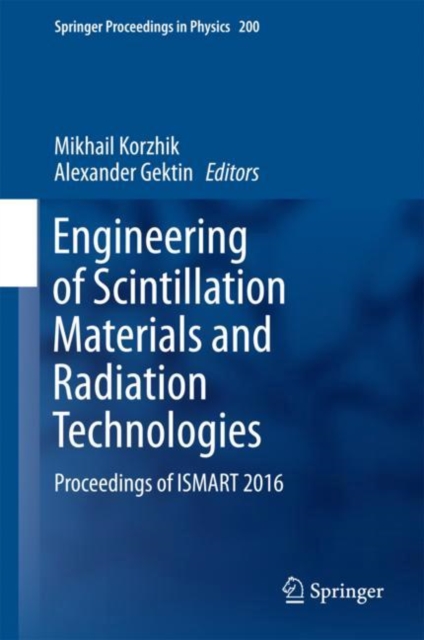
This volume provides a broad overview of the latest achievements in scintillator development, from theory to applications, and aiming for a deeper understanding of fundamental processes, as well as the discovery and availability of components for the production of new generations of scintillation materials.
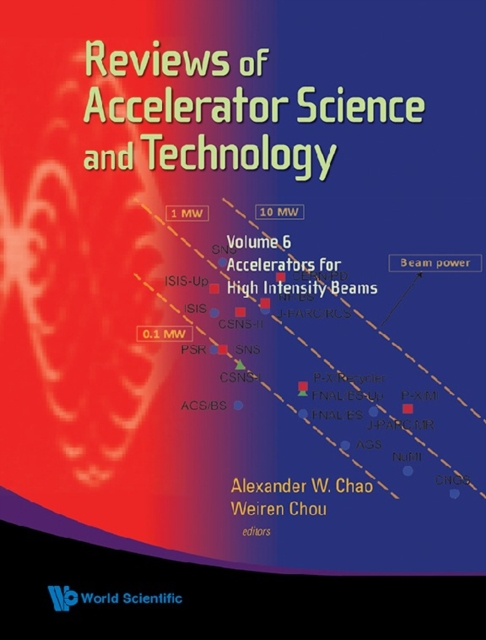
As particle accelerators strive forever increasing performance, high intensity particle beams become one of the critical demands requested across the board by a majority of accelerator users (proton, electron and ion) and for most applications.
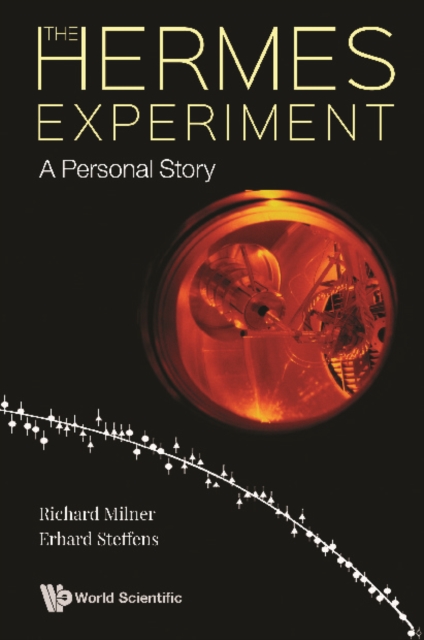
This book describes the story of how a collaboration of several hundred physicists from Europe and North America formed in 1988 to design, construct, install, commission and operate, for the years 1995-2007 the technically innovative HERMES experiment at the DESY laboratory in Hamburg, Germany to study the spin structure of the fundamental structure of matter.
Based on a two-semester course held at the University of Heidelberg, Germany, this book provides a solid basis for postgraduate students wishing to obtain a more profound understanding of the foundations of Quantum Field Theory.
Quantum Chromodynamics is the theory of strong interactions: a quantum field theory of colored gluons (Yang-Mills gauge fields) coupled to quarks (Dirac fermion fields).
This volume is a compilation of lectures delivered at the TASI 2015 summer school, 'New Frontiers in Fields and Strings', held at the University of Colorado Boulder in June 2015.
The exploration of the subnuclear world is done through increasingly complex experiments covering a wide range of energy and performed in a large variety of environments ranging from particle accelerators, underground detectors to satellites and the space laboratory.
The book "e;Leptons and Quarks"e; was first published in the early 1980s, when the program of the experimental search for the intermediate bosons W and Z and Higgs boson H was formulated.
This book provides extended versions of the talks given at the memorial Pomeranchuk-100 Conference, June 5-6, held in the Institute of Theoretical and Experimental Physics, Moscow, Russia and the review of the 2013 Pomeranchuk Prize Winner - Mikhail Shifman.
This book aims to present the history and developments of particle physics from the introduction of the notion of particles by the Ionian school until the discovery of the Higgs boson at LHC in 2012.
This proceedings volume, for the symposium in honor of Junwen Wang's 70th anniversary, is dedicated to his many important achievements in the field of accelerator physics.
After an extensive overview of the Standard Model and of the theory and phenomenology of Supersymmetry, this book describes the recent development of the ATLAS Particle Flow algorithm, a hadronic reconstruction technique aiming at enhancing the sensitivity of the experiment to new physics through the combination of the information from different ATLAS sub-detectors.
In this undergraduate textbook, now in its 2nd edition, the author develops the quantum theory from first principles based on very simple experiments: a photon traveling through beam splitters to detectors, an electron moving through magnetic fields, and an atom emitting radiation.
This thesis presents the complete chain from specifications to real-life deployment of the Read Out Controller (ROC) ASIC for the ATLAS Experiment at LHC, including the design of the FPGA-based setup used for prototype validation and mass testing of the approximately 6000 chips.
This book systematically discusses the algorithms and principles for achieving stable and optimal beam (or products of the beam) parameters in particle accelerators.
This thesis presents research on novel laboratory-scale synchrotron X-ray sources based on inverse Compton scattering and applications of their X-ray radiation using the Munich Compact Light Source (MuCLS) as an example.
Estas notas han sido elaboradas con el fin de que los estudiantes puedan acceder y contar con una herramienta pedagógica que contribuya al mejoramiento de la enseñanza-aprendizaje de la física moderna.