We extend to gravitation our previous study of a quantum wave for all particles and antiparticles of each generation (electron + neutrino + u and d quarks for instance).
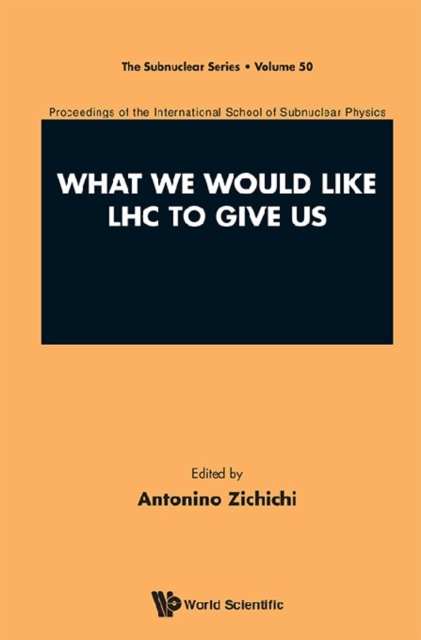
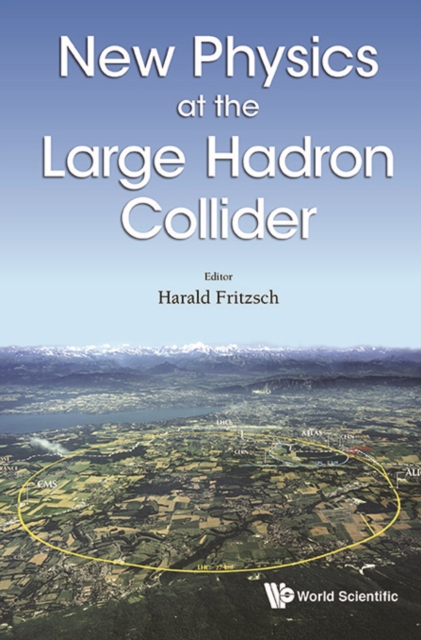
The remarkable recent discovery of the Higgs boson at the CERN Large Hadron Collider completed the Standard Model of particle physics and has paved the way for understanding the physics which may lie beyond it.
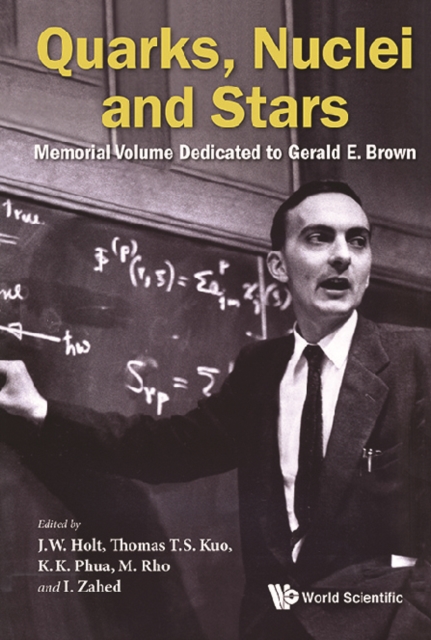
This memorial volume is dedicated to physicist Gerald E Brown (1926-2013) or 'Gerry' as he was known to his many students, postdocs, colleagues and friends.
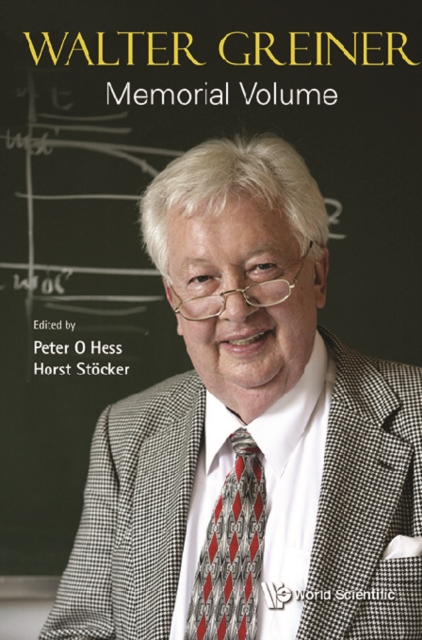
Walter Greiner (1935-2016) was a German physicist of the Goethe University, Frankfurt, well-known for his many contributions in scientific research and developments, in particular the field of nuclear physics.
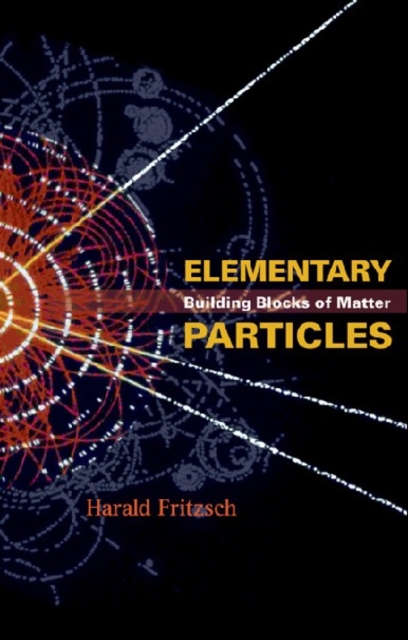
This book takes the reader from some elementary ideas about groups to the essence of the Standard Model of particle physics along a relatively straight and intuitive path.
This book revisits many of the problems encountered in introductory quantum mechanics, focusing on computer implementations for finding and visualizing analytical and numerical solutions.
This book introduces the reader to how fundamental topics in particle physics can be studied with the largest neutrino telescopes currently in operation.
A timely presentation of new results, challenges, and opportunities in the quickly developing field of nuclear cluster physics, presented by an international group of eminent theoretical and experimental scientists active in the field.
This book furnishes a brief introduction to classical mirror symmetry, a term that denotes the process of computing Gromov-Witten invariants of a Calabi-Yau threefold by using the Picard-Fuchs differential equation of period integrals of its mirror Calabi-Yau threefold.
Professor Chen Ning Yang, an eminent contemporary physicist, was Professor at the Institute for Advanced Study, Princeton, New Jersey, from 1955 to 1966, and Albert Einstein Professor of Physics at the State University of New York at Stony Brook until his retirement in 1999.
This book examines the topics of magnetohydrodynamics and plasma oscillations, in addition to the standard topics discussed to cover courses in electromagnestism, electrodynamics, and fundamentals of physics, to name a few.
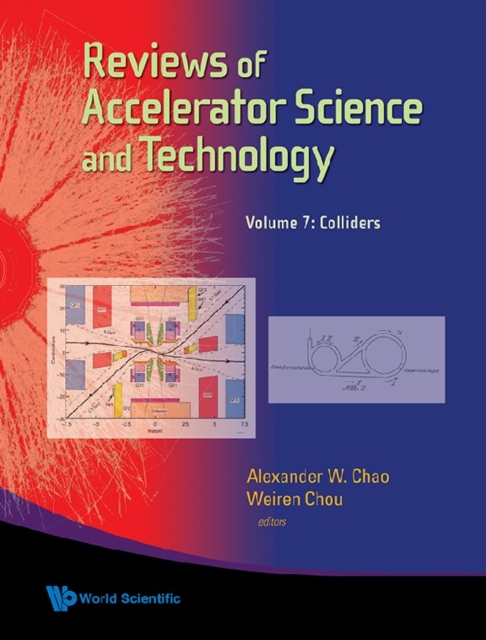
As accelerator science and technology progressed over the past several decades, the accelerators themselves have undergone major improvements in multiple performance factors: beam energy, beam power, and beam brightness.
In the 25 years since their introduction, Higgs bundles have seen a surprising number of interactions within different areas of mathematics and physics.
This book presents, in the form of reviews by world's leading physicists in wide-ranging fields in theoretical physics, the influence and prescience of Skyrme's daring idea of 1960, originally conceived for nuclear physics, that fermions can arise from bosons via topological solitons, pervasively playing a powerful role in wide-ranging areas of physics, from nuclear/astrophysics, to particle physics, to string theory and to condensed matter physics.
Written by a former Olympiad student, Wang Jinhui, and a Physics Olympiad national trainer, Bernard Ricardo, Competitive Physics delves into the art of solving challenging physics puzzles.
The Standard Theory of Particle Physics describes successfully the observed strong and electroweak interactions, but it is not a final theory of physics, since many aspects are not understood: (1) How can gravity be introduced in the Standard Theory?
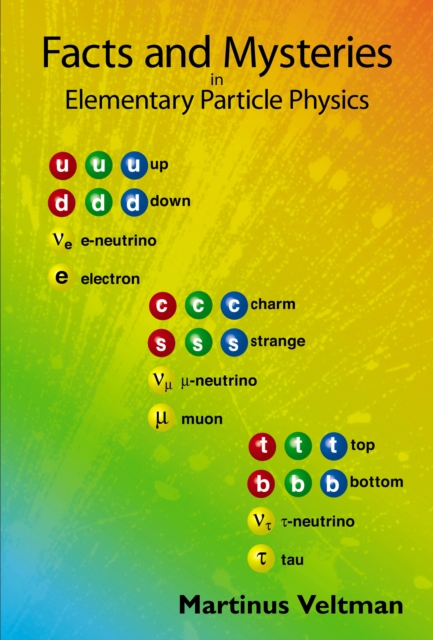
New Edition: Facts and Mysteries in Elementary Particle Physics (Revised Edition)This book provides a comprehensive overview of modern particle physics accessible to anyone with a true passion for wanting to know how the universe works.
The idea of colliding two particle beams to fully exploit the energy of accelerated particles was first proposed by Rolf Wideroe, who in 1943 applied for a patent on the collider concept and was awarded the patent in 1953.
These proceedings are devoted to a wide variety of items, both in theory and experiment, of particle physics such as neutrino and astroparticle physics, tests of the standard model and beyond, and hadron physics.
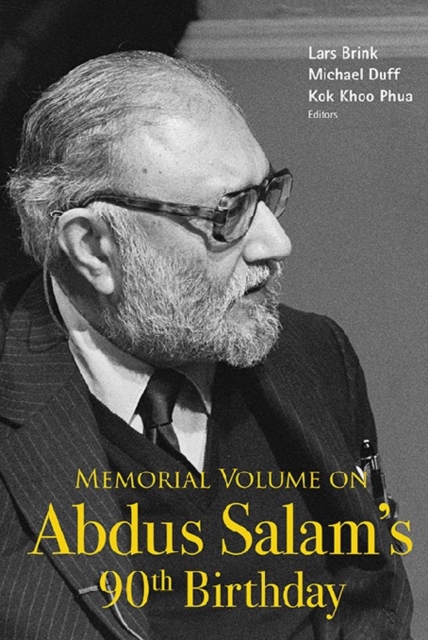
'This book presents a timely set of academic and intellectual views on Salams scientific passion, contribution and personality, and will be of great interest to academics in the fields of particle physics, high energy physics and scientific history of the developing world.
This informative and entertaining book provides a broad look at the fascinating history of CERN, and the physicists working in different areas at CERN who were active in the discovery of the Higgs Boson.
This volume contains contributions which are largely focused on strong coupling gauge theories and the search of theories beyond the standard model, as well as new aspects in hot and dense QCD - particularly in view of the LHC experiments and the lattice studies of conformal fixed point.
This book provides advanced students and postdocs, as well as current practitioners of any field of nuclear physics involving fission an understanding of the nuclear fission process.
This book studies using string-net models to accomplish a direct, purely two-dimensional, approach to correlators of two-dimensional rational conformal field theories.