This graduate-level primer presents a tutorial introduction to and overview of N = 2 supergravity theories - with 8 real supercharges and in 4, 5 and 6 dimensions.
This book is written by two world-recognized experts in radio frequency (RF) systems for particle accelerators and is based on many years of experience in dealing with the multipactor phenomenon.
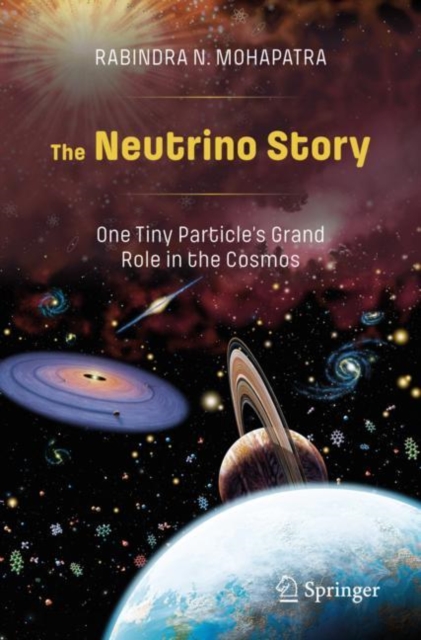
Every second of every day, we are exposed to billions of neutrinos emitted by the Sun, and yet they seem to pass straight through us with no apparent effect at all.
The advent of high-precision antihydrogen spectroscopy has opened up the possibility of direct tests with unprecedented accuracy of some of the most fundamental principles of physics, notably Lorentz and CPT symmetry and the Einstein equivalence principle.
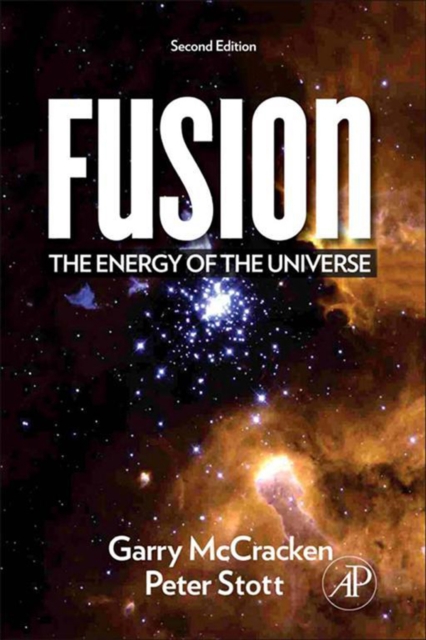
Fusion: The Energy of the Universe, 2e is an essential reference providing basic principles of fusion energy from its history to the issues and realities progressing from the present day energy crisis.
This book presents a selection of advanced lectures from leading researchers, providing recent theoretical results on strongly coupled quantum field theories.
Helping readers understand the complicated laws of nature, Advanced Particle Physics Volume II: The Standard Model and Beyond explains the calculations, experimental procedures, and measuring methods of particle physics, particularly quantum chromodynamics (QCD).
'The authors provide an up-to-date, well-organised background and essential elements of supergravity notions as well as all relevant aspects of Chern-Simons forms in gravitation.
This book presents, in the form of reviews by world's leading physicists in wide-ranging fields in theoretical physics, the influence and prescience of Skyrme's daring idea of 1960, originally conceived for nuclear physics, that fermions can arise from bosons via topological solitons, pervasively playing a powerful role in wide-ranging areas of physics, from nuclear/astrophysics, to particle physics, to string theory and to condensed matter physics.
We extend to gravitation our previous study of a quantum wave for all particles and antiparticles of each generation (electron + neutrino + u and d quarks for instance).
These proceedings are devoted to a wide variety of items, both in theory and experiment, of particle physics such as neutrino and astroparticle physics, tests of the standard model and beyond, and hadron physics.
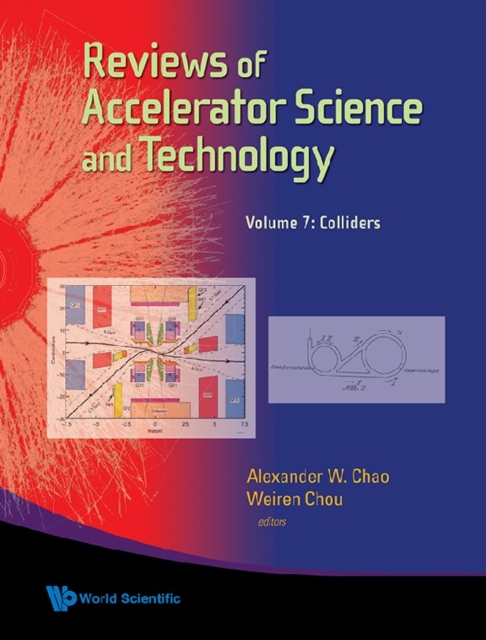
The idea of colliding two particle beams to fully exploit the energy of accelerated particles was first proposed by Rolf Wideroe, who in 1943 applied for a patent on the collider concept and was awarded the patent in 1953.
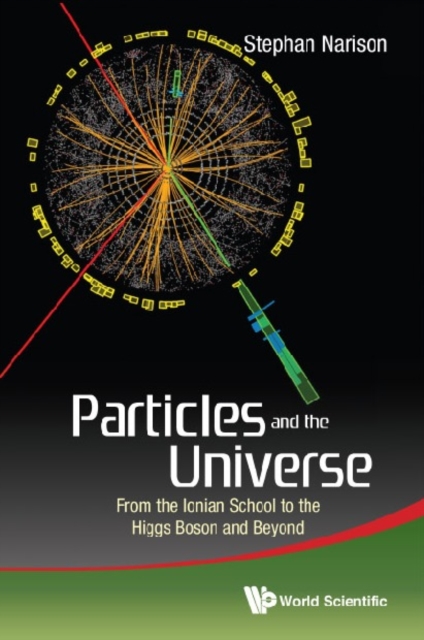
This book aims to present the history and developments of particle physics from the introduction of the notion of particles by the Ionian school until the discovery of the Higgs boson at LHC in 2012.
These proceedings consist of plenary rapporteur talks covering topics of major interest to the high energy physics community and parallel sessions papers which describe recent research results and future plans.
According to the current view, the basic building blocks of matter are quarks and leptons, which interact with one another through the intermediaries of Yang-Mills gauge fields.
This informative and entertaining book provides a broad look at the fascinating history of CERN, and the physicists working in different areas at CERN who were active in the discovery of the Higgs Boson.
'Harald Fritzsch and Murray Gell-Mann, the two fathers of quantum chromodynamics, look back at the events that led to the discovery, and eventually acceptance, of quarks as constituent particles .
This book provides extended versions of the talks given at the memorial Pomeranchuk-100 Conference, June 5-6, held in the Institute of Theoretical and Experimental Physics, Moscow, Russia and the review of the 2013 Pomeranchuk Prize Winner - Mikhail Shifman.
Understanding and manipulating the properties of materials naturally occurring in our world and artificially produced by modern technologies requires detailed information on their properties on the atomic scale.
This volume contains the most important lecture notes by experts from condensed matter, particle physics and cosmology and is a MUST for young researchers and graduate students.