This volume, containing selected papers presented during the COSMEX '89 meeting, provides readers with integrative and innovative articles on many aspects on many aspects of stochastic methods and their applications to experimental sciences.
The proceedings presents in a systematic way Top searches, Jets, Gauge Boson production, precision tests of electroweak theory, Ln s Physics, heavy Flavours and exotics.
The proceedings are a compilation of formal papers and informal discussion on the practical concerns in operating and improving electrostatic accelerators and their boosters.
This workshop is intended to review the projects of large future accelerators and to analyze the problems related to the nonlinearities of the magnetic lattice due to superconducting magnets.
The Theoretical Advanced Study Institute (TASI) has become the major summer school for advanced students in elementary particle theory in the United States, offering courses in particle theory, phenomenology, and mathematical physics.
The aim of the proceedings is to give, in a comprehensive way, an introduction to the main topics in Elementary Particle Physics as well as to present current research activities on both theoretical and experimental subjects.
This volume focuses on the following topics: DIS at small x and structure functions, diffractive events and the nature of the Pomeron, hadronic final states, photoproduction and DIS at low Q2 and vector meson production.
The exploration of the subnuclear world is done through increasingly complex experiments covering a wide range of energy and performed in a large variety of environments ranging from particle accelerators, underground detectors to satellites and the space laboratory.
The book "e;Leptons and Quarks"e; was first published in the early 1980s, when the program of the experimental search for the intermediate bosons W and Z and Higgs boson H was formulated.
High precision measurements of weak neutral current and charged current processes and of the properties of the Z and W bosons have established the standard electroweak model as correct down to a distance scale of 10-16 cm, and are a sensitive probe of possible underlying physics.
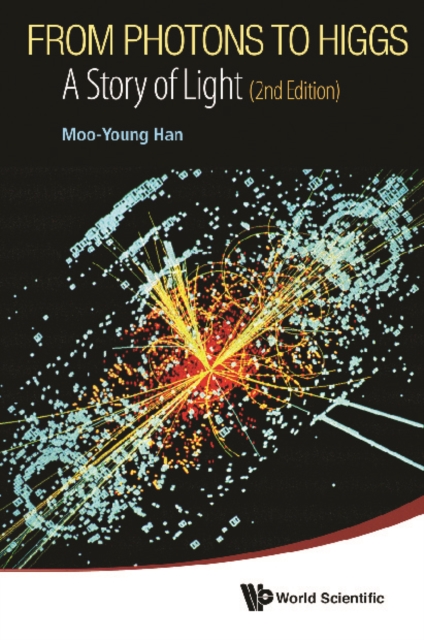
The remarkable recent discovery of the Higgs boson at the CERN Large Hadron Collider completed the Standard Model of particle physics and has paved the way for understanding the physics which may lie beyond it.
The subject of Quantum Cosmology is concerned with providing a quantum mechanical description of the universe as a whole and, within that description, to constructing a theory of the universe's initial condition whose predictions can be compared with observation.
This proceedings volume, for the symposium in honor of Junwen Wang's 70th anniversary, is dedicated to his many important achievements in the field of accelerator physics.
Quantum electrodynamics is an essential building block and an integral part of the gauge theory of unified electromagnetic, weak, and strong interactions, the so-called standard model.
This volume reviews the physics studied at the CERN proton-antiproton collider during its first phase of operation, from the first physics run in 1981 to the last one at the end of 1985.
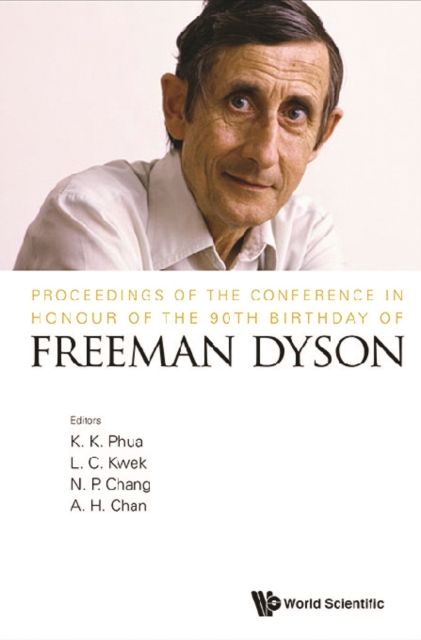
Professor Freeman Dyson, a great physicist, thinker and futurist, has been very active in scientific, literary and public policy activities throughout his career.
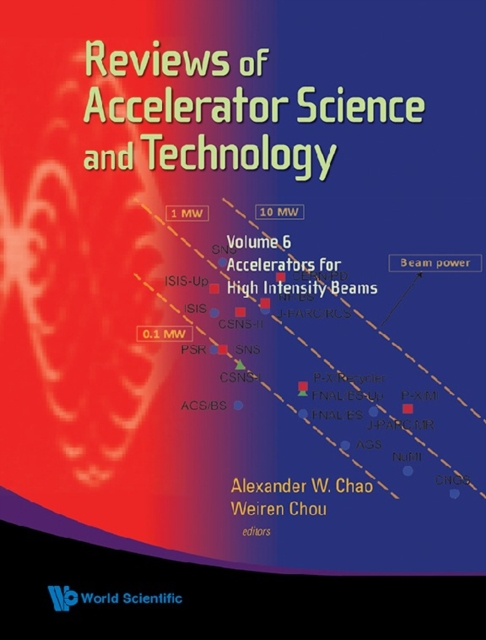
As particle accelerators strive forever increasing performance, high intensity particle beams become one of the critical demands requested across the board by a majority of accelerator users (proton, electron and ion) and for most applications.
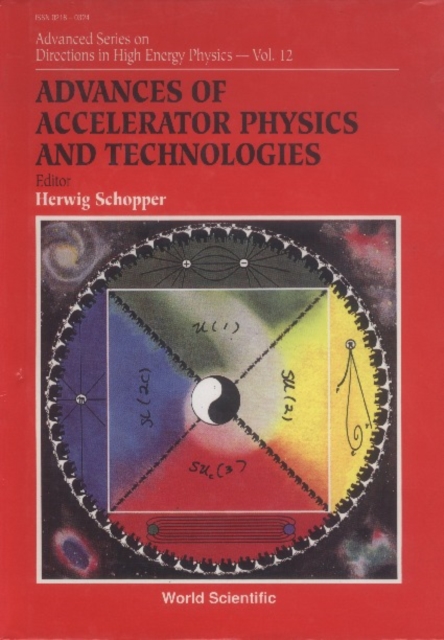
This volume, consisting of articles written by experts with international repute and long experience, reviews the state of the art of accelerator physics and technologies and the use of accelerators in research, industry and medicine.
This volume contains contributions which are largely focused on strong coupling gauge theories and the search of theories beyond the standard model, as well as new aspects in hot and dense QCD - particularly in view of the LHC experiments and the lattice studies of conformal fixed point.