Among resummation techniques for perturbative QCD in the context of collider and flavor physics, soft-collinear effective theory (SCET) has emerged as both a powerful and versatile tool, having been applied to a large variety of processes, from B-meson decays to jet production at the LHC.
This fourteenth volume in the Poincare Seminar Series is devoted to Niels Bohr, his foundational contributions to understanding atomic structure and quantum theory and their continuing importance today.
This Thesis describes the first measurement of, and constraints on, Higgs boson production in the vector boson fusion mode, where the Higgs decays to b quarks (the most common decay channel), at the LHC.
This volume gathers the content of the courses held at the Third IDPASC School, which took place in San Martino Pinario, Hospederia and Seminario Maior, in the city of Santiago de Compostela, Galiza, Spain, from January 21st to February 2nd, 2013.
Beginning with an overview of the theory of black holes by the editor, this book presents a collection of ten chapters by leading physicists dealing with the variety of quantum mechanical and quantum gravitational effects pertinent to black holes.
Despite its long history and stunning experimental successes, the mathematical foundation of perturbative quantum field theory is still a subject of ongoing research.
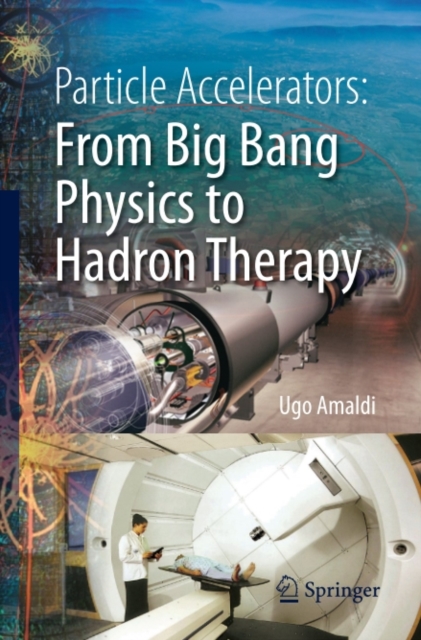
Rather than focusing on the contributions of theoretical physicists to the understanding of the subatomic world and of the beginning of the universe - as most popular science books on particle physics do - this book is different in that, firstly, the main focus is on machine inventors and builders and, secondly, particle accelerators are not only described as discovery tools but also for their contributions to tumour diagnosis and therapy.
Understanding the dynamics of gauge theories is crucial, given the fact that all known interactions are based on the principle of local gauge symmetry.
This thesis establishes an exciting new beginning for Laser Plasma Accelerators (LPAs) to further develop toward the next generation of compact high energy accelerators.
With ever increasing computational resources and improvements in algorithms, new opportunities are emerging for lattice gauge theory to address key questions in strongly interacting systems, such as nuclear matter.
A dense sheet of electrons accelerated to close to the speed of light can act as a tuneable mirror that can generate bright bursts of laser-like radiation in the short wavelength range simply via the reflection of a counter-propagating laser pulse.
This thesis reports on the final measurement of the flavor-mixing phase in decays of strange-bottom mesons (B_s) into J/psi and phi mesons performed in high-energy proton-antiproton collisions recorded by the Collider Experiment at Fermilab.
This thesis describes searches for new particles predicted by the super symmetry (SUSY) theory, a theory extending beyond the current Standard Model of particle physics, using the ATLAS detector at the CERN Large Hadron Collider.
The first part of this thesis presents the measurement of the inclusive cross-section for electron production from heavy-flavour decays in the electron transverse momentum range 7 GeV < pT < 26 GeV using 1.
With this thesis the author contributes to the development of a non-mainstream but long-standing approach to electroweak symmetry breaking based on an analogy with superconductivity.
Over the course of the last century it has become clear that both elementary particle physics and relativity theories are based on the notion of symmetries.
This book offers a self-contained introduction to the theory of electroweak interactions based on the semi-classical approach to relativistic quantum field theory, with thorough discussion of key aspects of the field.
With the discovery of the Higgs boson, the LHC experiments have closed the most important gap in our understanding of fundamental interactions, confirming that such interactions between elementary particles can be described by quantum field theory, more specifically by a renormalizable gauge theory.
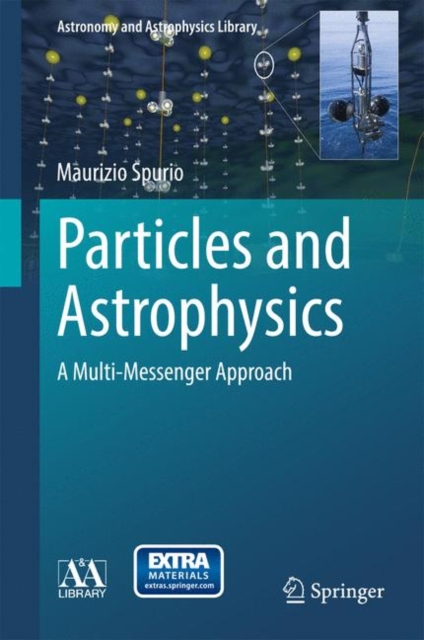
Neutrinos can arguably be labeled as the most fascinating elementary particles known as their small but non-zero rest mass points to new mass generating mechanisms beyond the Standard Model, and also assigns primordial neutrinos from the Big Bang a distinct role in shaping the evolution of large-scale structures in the universe.
The work presented in this thesis spans a wide range of experimental particle physics subjects, starting from level-1 trigger electronics to the final results of the search for Higgs boson decay and to tau lepton pairs.
This is the seventh volume in a series on the general topics of supersymmetry, supergravity, black objects (including black holes) and the attractor mechanism.
Before any kind of new physics discovery could be made at the LHC, a precise understanding and measurement of the Standard Model of particle physics' processes was necessary.
Neutrinos continue to be the most mysterious and, arguably, the most fascinating particles of the Standard Model as their intrinsic properties such as absolute mass scale and CP properties are unknown.
Several of the very foundations of the cosmological standard model - the baryon asymmetry of the universe, dark matter, and the origin of the hot big bang itself - still call for an explanation from the perspective of fundamental physics.
The theoretical foundations of the Standard Model of elementary particles relies on the existence of the Higgs boson, a particle which has been revealed for the first time by the experiments run at the Large Hadron Collider (LHC) in 2012.
This thesis explores the idea that the Higgs boson of the Standard Model and the cosmological inflation are just two manifestations of one and the same scalar field - the Higgs-inflation.
This thesis provides an introduction to the physics of the Standard Model and beyond, and to the methods used to analyse Large Hadron Collider (LHC) data.
It has been suggested that local parity violation (LPV) in Quantum Chromodynamics (QCD) would lead to charge separation of quarks by the Chiral Magnetic Effect (CME) in heavy ion collisions.