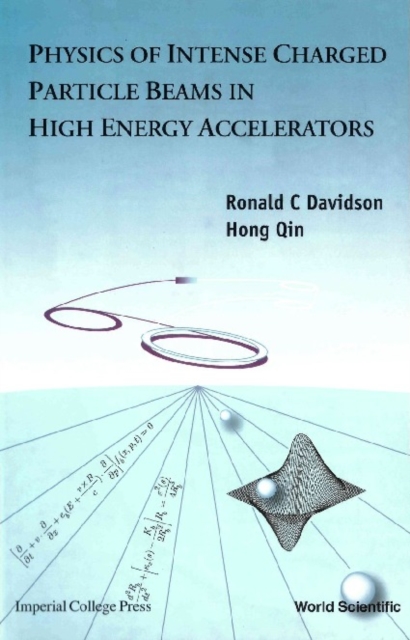
Physics of Intense Charged Particle Beams in High Energy Accelerators is a graduate-level text - complete with 75 assigned problems - which covers a broad range of topics related to the fundamental properties of collective processes and nonlinear dynamics of intense charged particle beams in periodic focusing accelerators and transport systems.
These proceedings comprise current statistical issues in analyzing data in particle physics, astrophysics and cosmology, as discussed at the PHYSTAT05 conference in Oxford.
This invaluable book provides a quick introduction to the rudiments of perturbative string theory and a detailed introduction to the more current topic of D-brane dynamics.
At Les Houches in January 2015, experts in the field of charged particle trapping came together for the Second Winter School on Physics with Trapped Charged Particles.
This volume contains the proceedings of a meeting held at Imperial College which is devoted to recent developments in string theory, supersymmetry and quantum gravity.
Particle accelerators are essential tools for scientific research in fields as diverse as high energy physics, materials science and structural biology.
By the end of the 1970s, it was clear that all the known forces of nature (including, in a sense, gravity) were examples of gauge theories, characterized by invariance under symmetry transformations chosen independently at each position and each time.
This book presents a practical guide to the analysis of materials and includes a thorough description of the underlying theories and instrumental aberrations caused by real experiments.
This invaluable book provides a quick introduction to the rudiments of perturbative string theory and a detailed introduction to the more current topic of D-brane dynamics.
The definitive, behind-the-scenes account of the greatest science story of our time Winner of the Royal Society Winton Prize for Science Books A Best Science Book of the Year for the Guardian, Financial Times, and New Scientist It was the universe's most elusive particle, the linchpin for everything scientists dreamed up to explain how physics works.
Gaining notoriety as the science behind the controversial experiments of the Large Hadron Collider, particle physics explores our most fundamental and mind-blowing problems: How did the Universe start?
This book presents the lecture notes and exercises corresponding to the course "e;Quantum Field Theoretical Methods in Condensed Matter"e; that the authors imparted for several years as part of the masters program on Condensed Matter and Biological Systems at the Autonoma University of Madrid.
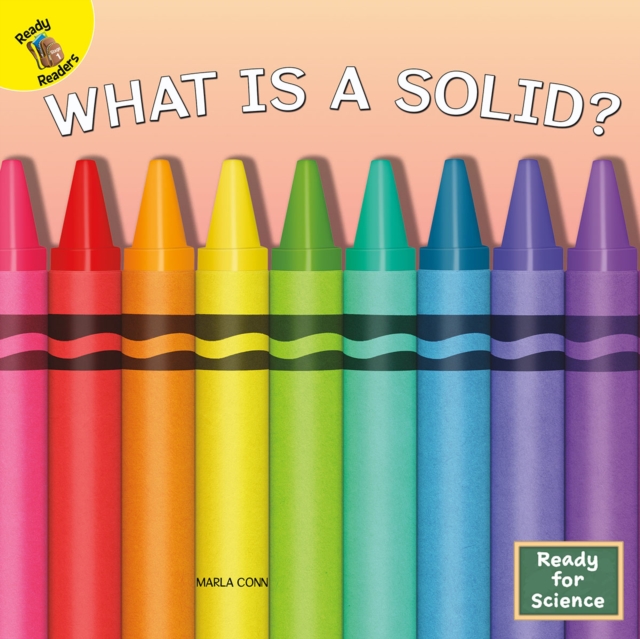
Book Features:* Ages 4-8, Grades PreK-2* 16 pages, 8 inches x 8 inches* Simple, patterned Spanish text with full-color pictures* Includes comprehension questions, writing prompts, and high frequency words* Graphic organizers and photo glossary includedBring Learning to Life: In Listos para las Ciencias: !
Book Features:* Ages 4-8, Grades PreK-2* 16 pages, 8 inches x 8 inches* Simple, patterned Spanish text with full-color pictures* Includes comprehension questions, writing prompts, and high frequency words* Graphic organizers and photo glossary includedBring Learning to Life: In Listos para las Ciencias: !
Book Features:* Ages 4-7, PreK-Grade 2, Guided Reading Level B, Lexile 50L* 16 pages, 8 inches x 8 inches* Vibrant, full-color photographs* Includes a photo glossary, high-frequency vocabulary list, and review activity* Reading/teaching tips includedReady For Science: In Make it Move, preschoolers through second graders are introduced to basic yet fascinating physics concepts of motion and force!
Book Features:* Ages 4-7, PreK-Grade 2, Guided Reading Level B, Lexile 50L* 16 pages, 8 inches x 8 inches* Vibrant, full-color photographs* Includes a photo glossary, high-frequency vocabulary list, and review activity* Reading/teaching tips includedReady For Science: In Make it Move, preschoolers through second graders are introduced to basic yet fascinating physics concepts of motion and force!
Ready for Science series, Emergent Reader, non fiction narrative, strong picture support, Text features: Picture glossary, labels, Comprehension strategies: Identify main idea and details, ask and answer questions, and make text to self and text to world connections.
Ready for Science series, Emergent Reader, non fiction narrative, strong picture support, Text features: Picture glossary, labels, Comprehension strategies: Identify main idea and details, ask and answer questions, and make text to self and text to world connections.
Ready for Science series, Emergent Reader, non fiction narrative, strong picture support, Text features: Picture glossary, labels, Comprehension strategies: Identify main idea and details, ask and answer questions, and make text to self and text to world connections.
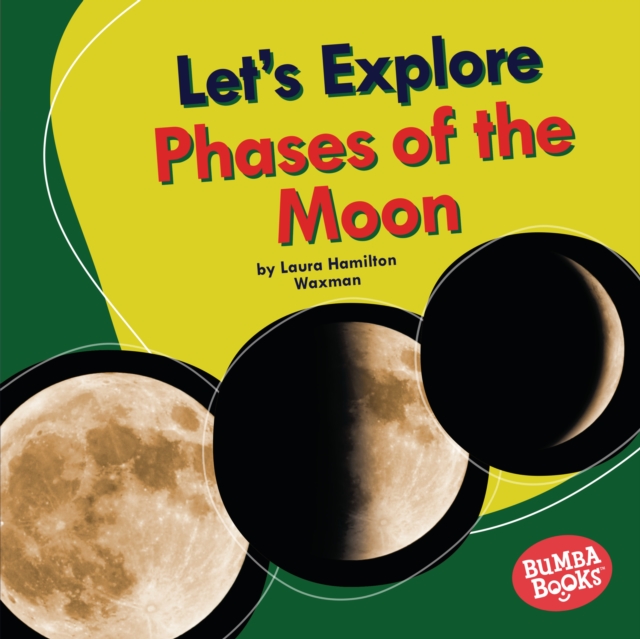
Readers follow along as the moon shifts from new to full and back again, learning the words for each lunar phase and how the sun's light creates the moon shapes they see in the sky.