This volume is devoted to the theory of superfluid quantum liquids, describing the Landau theory of a neutral Fermi liquid in order to illustrate, in comparatively elementary fashion, the way both quantum statistics and particle interaction determine system behavior.
This updated edition of Collider Physics surveys the major developments in theoretical and experimental particle physics and uses numerous illustrations to show how the Standard Model explains the experimental results.
Graduate students in both theoretical and experimental physics will find this third edition of Intermediate Quantum Mechanics , refined and updated in 1986, indispensable.
This text material constitutes notes on the third of a three-semester course in quantum mechanics given at the California Institute of Technology in 1953, presenting the main results and calculational procedures of quantum electrodynamics.
This book is a very early systematic treatment of the application of the field-theoretical methods developed after the Second World War to the quantum mechanical many-body problem at finite temperature.
This book is concerned with a single group of quantum liquids, normal Fermi liqztids, discussing the nature of elementary excitations, the central concept of response functions.
This book considers the basic ideas of quantum mechanics, treating the concept of amplitude and discusses relativity and the idea of anti-particles and explains quantum electrodynamics.
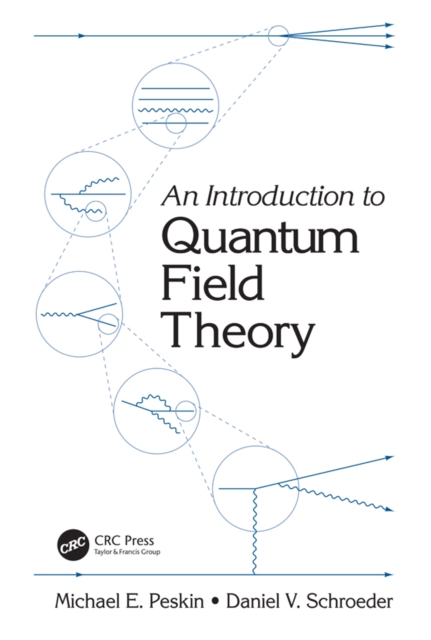
An Introduction to Quantum Field Theory is a textbook intended for the graduate physics course covering relativistic quantum mechanics, quantum electrodynamics, and Feynman diagrams.
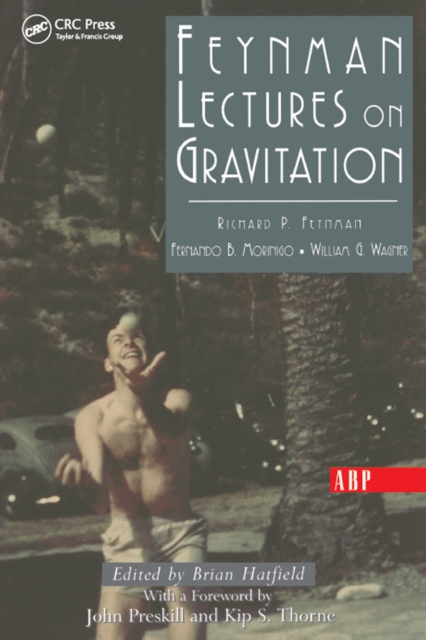
The Feynman Lectures on Gravitation are based on notes prepared during a course on gravitational physics that Richard Feynman taught at Caltech during the 1962-63 academic year.
This book provides an introduction to transport theory, the kinetic equation approach and shows the utility of Feynman diagrams in non-equilibrium quantum statistical mechanics.
This book attempts to convey to the reader that semiclassical physics can be fun, as well as useful for understanding quantum fluctuations in interacting many-body systems.
Conceptual Foundations of Quantum Mechanics provides a detailed view of the conceptual foundations and problems of quantum physics, and a clear and comprehensive account of the fundamental physical implications of the quantum formalism.
This text continues to fill the need to communicate the present view of a solid as a system of interacting particles which, under suitable circumstances, behaves like a collection of nearly independent elementary excitations.
This classic, the first of three volumes, presents techniques that emphasize the unity of high-energy particle physics with electrodynamics, gravitational theory, and many-particle cooperative phenomena.
This book focuses on the most important questions of philosophy of physics, offering a sufficiently concise and clear treatment of the issues to lead the interested reader through the sometimes labyrinthian paths taken by the central debates.
This unique book, written by a leading Soviet theorist, is not a textbook of quantum mechanics but rather a compendium of the "e;tricks of the trade"e;-the methods that all practicing theoretical physicists use but few have set down in writing.
This book explains the fundamental concepts and theoretical techniques used to understand the properties of quantum systems having large numbers of degrees of freedom.
Drawn from the author's introductory course at the University of Orsay, Superconductivity of Metals and Alloys is intended to explain the basic knowledge of superconductivity for both experimentalists and theoreticians.
This monograph presents thirty research papers dealing with the classification of strongly interacting particles and their interaction according to the eightfold way.
This volume is devoted to the theory of superfluid quantum liquids, describing the Landau theory of a neutral Fermi liquid in order to illustrate, in comparatively elementary fashion, the way both quantum statistics and particle interaction determine system behavior.
This updated edition of Collider Physics surveys the major developments in theoretical and experimental particle physics and uses numerous illustrations to show how the Standard Model explains the experimental results.
Graduate students in both theoretical and experimental physics will find this third edition of Intermediate Quantum Mechanics , refined and updated in 1986, indispensable.
This text material constitutes notes on the third of a three-semester course in quantum mechanics given at the California Institute of Technology in 1953, presenting the main results and calculational procedures of quantum electrodynamics.
This book is a very early systematic treatment of the application of the field-theoretical methods developed after the Second World War to the quantum mechanical many-body problem at finite temperature.
This book is concerned with a single group of quantum liquids, normal Fermi liqztids, discussing the nature of elementary excitations, the central concept of response functions.
This book considers the basic ideas of quantum mechanics, treating the concept of amplitude and discusses relativity and the idea of anti-particles and explains quantum electrodynamics.
In this book emphasis is laid on laser including its operation, different types, properties like coherence and monochromaticity, beam propagation, theoretical treatment of atom-field interaction, semi-classical laser theory, non-linear effects, quantum properties, photon concept and coherent states etc.