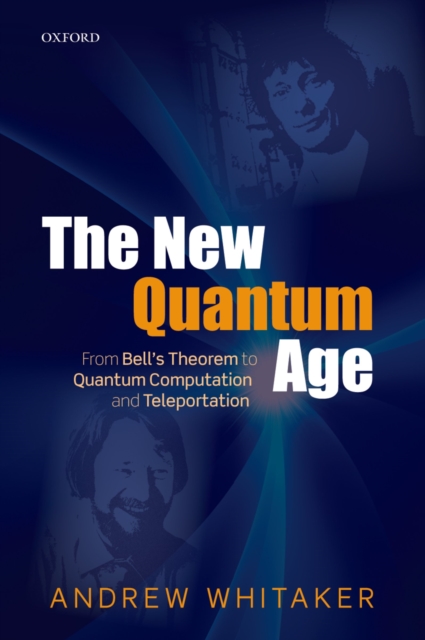
John Stewart Bell (1928-1990) was one of the most important figures in twentieth-century physics, famous for his work on the fundamental aspects of the century's most important theory, quantum mechanics.
Starting from first principles, this book introduces the closely related phenomena of Bose condensation and Cooper pairing, in which a very large number of single particles or pairs of particles are forced to behave in exactly the same way, and explores their consequences in condensed matter systems.
The importance and the beauty of modern quantum field theory resides in the power and variety of its methods and ideas, which find application in domains as different as particle physics, cosmology, condensed matter, statistical mechanics and critical phenomena.
Volume 2 of Novel Superfluids continues the presentation of recent results on superfluids, including novel metallic systems, superfluid liquids, and atomic/molecular gases of bosons and fermions, particularly when trapped in optical lattices.
As an introductory account of the theory of phase transitions and critical phenomena, this book reflects lectures given by the authors to graduate students at their departments and is thus classroom-tested to help beginners enter the field.
Recent experimental progress has enabled cold atomic gases to be studied at nano-kelvin temperatures, creating new states of matter where quantum degeneracy occurs - Bose-Einstein condensates and degenerate Fermi gases.
Since the first edition of this highly successful book the field saw many great developments both in experimental and theoretical studies of electrical properties of non-crystalline solids.
This book is aimed at providing a coherent, essentially self-contained, rigorous and comprehensive abstract theory of Feynman's operational calculus for noncommuting operators.
This book is aimed at providing a coherent, essentially self-contained, rigorous and comprehensive abstract theory of Feynman's operational calculus for noncommuting operators.
While quantum theory has been used to study the physical universe with great profit, both intellectual and financial, ever since its discovery eighty-five years ago, over the last fifty years we have found out more and more about the theory itself, and what it tells us about the universe.
This book provides an accessible introduction to loop quantum gravity and some of its applications, at a level suitable for undergraduate students and others with only a minimal knowledge of college level physics.
In spite of the increasing importance of microcavities, device physics or the observable phenomena in optical microcavities such as enhanced or inhibited spontaneous emission and its relation with the laser oscillation has not been systematically well-described-until now.
Around 1900, physicists started to discover particles like electrons, protons, and neutrons, and with these discoveries believed they could predict the internal behavior of the atom.
Around 1900, physicists started to discover particles like electrons, protons, and neutrons, and with these discoveries believed they could predict the internal behavior of the atom.
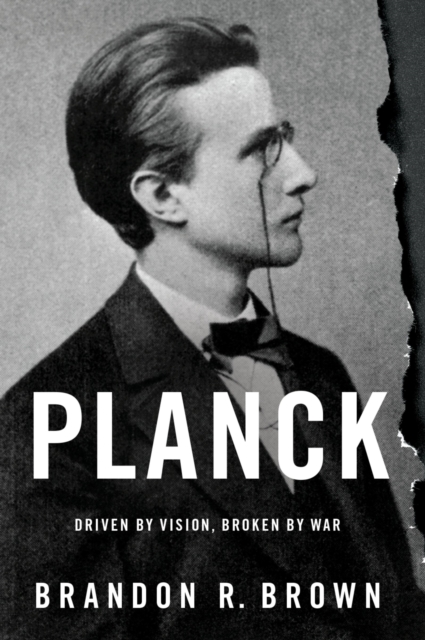
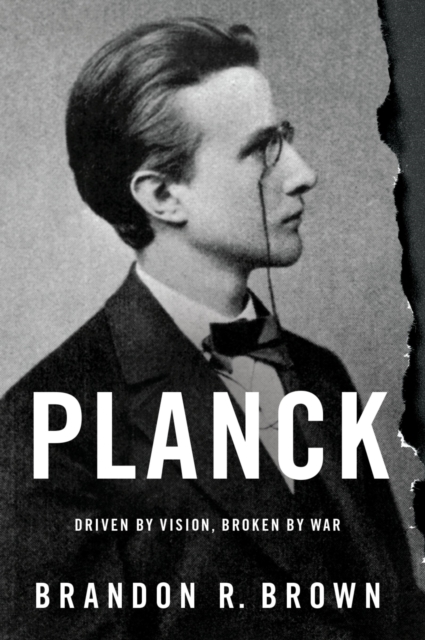
Max Planck is credited with being the father of quantum theory, and his work was described by his close friend Albert Einstein as "e;the basis of all twentieth-century physics.
Max Planck is credited with being the father of quantum theory, and his work was described by his close friend Albert Einstein as "e;the basis of all twentieth-century physics.
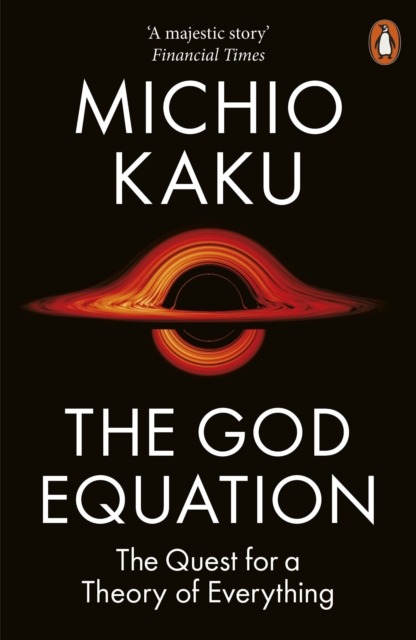
'A majestic story' David Bodanis, Financial Times From the international bestselling author of Physics of the Impossible and Physics of the FutureThis is the story of a quest: to find a Theory of Everything.
The Quantum Universe brings together two authors on a brilliantly ambitious mission to show that everyone can understand the deepest questions of science.
Quantum Information Processing and Quantum Error Correction is a self-contained, tutorial-based introduction to quantum information, quantum computation, and quantum error-correction.
This book highlights the importance of Electron Statistics (ES), which occupies a singular position in the arena of solid state sciences, in heavily doped (HD) nanostructures by applying Heisenberg's Uncertainty Principle directly without using the complicated Density-of-States function approach as given in the literature.
This book contains exclusively invited contributions from collaborators of Maximilian Kreuzer, giving accounts of his scientific legacy and original articles from renowned theoretical physicists and mathematicians, including Victor Batyrev, Philip Candelas, Michael Douglas, Alexei Morozov, Joseph Polchinski, Peter van Nieuwenhuizen, and Peter West.
These pages offer a simple, analytic, functional approach to non-perturbative QFT, using a frequently overlooked functional representation of Fradkin to explicitly calculate relevant portions of the Schwinger Generating Functional (GF).
Professor Freeman Dyson, a great physicist, thinker and futurist, has been very active in scientific, literary and public policy activities throughout his career.
This book describes the direct and inverse problems of the multidimensional Schrodinger operator with a periodic potential, a topic that is especially important in perturbation theory, constructive determination of spectral invariants and finding the periodic potential from the given Bloch eigenvalues.
This textbook presents the basics of philosophy that are necessary for the student and researcher in science in order to better understand scientific work.