Both a history and a metahistory, Representing Electrons focuses on the development of various theoretical representations of electrons from the late 1890s to 1925 and the methodological problems associated with writing about unobservable scientific entities.
Among the current books that celebrate the discovery of the Higgs boson, Cracking the Particle Code of the Universe is a rare objective treatment of the subject.
Over a period of fifty years, the quantum-classical or semi-classical theories have been among the most popular for calculations of rates and cross sections for many dynamical processes: energy transfer, chemical reactions, photodissociation, surface dynamics, reactions in clusters and solutions, etc.
A rival to Isaac Newton in mathematics and physics, Gottfried Wilhelm Leibniz believed that our world--the best of all possible worlds--must be governed by a principle of optimality.
A rival to Isaac Newton in mathematics and physics, Gottfried Wilhelm Leibniz believed that our world--the best of all possible worlds--must be governed by a principle of optimality.
Since the development of natural philosophy in Ancient Greece, scientists have been concerned with determining the nature of matter's smallest constituents and the interactions among them.
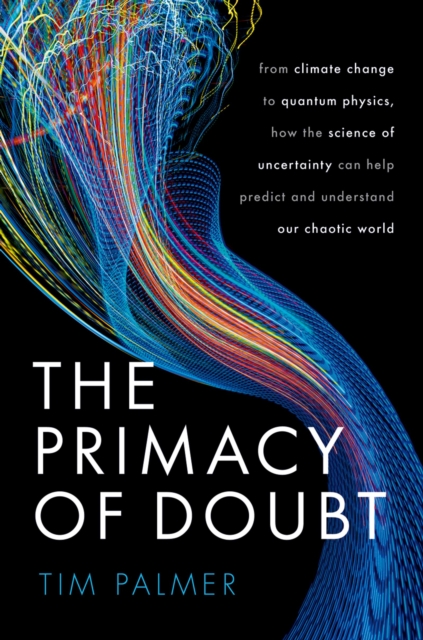
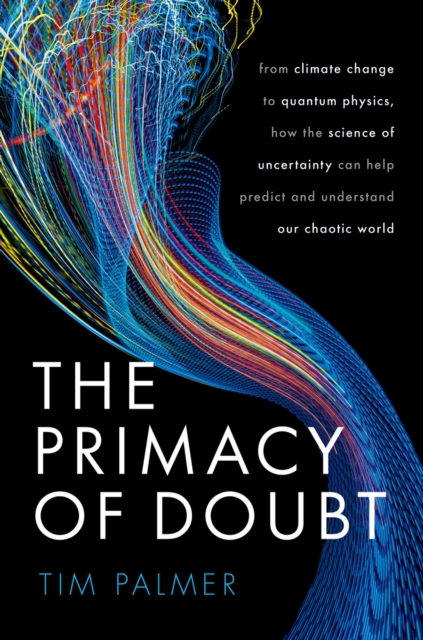
A bold, visionary, and mind-bending exploration of how the geometry of chaos can explain our uncertain world-from weather and pandemics to quantum physics and free will Covering a breathtaking range of topics from climate change to the foundations of quantum physics, from economic modelling to conflict prediction, from free will to consciousness and spirituality The Primacy of Doubt takes us on a unique journey through the science of uncertainty.
A bold, visionary, and mind-bending exploration of how the geometry of chaos can explain our uncertain world-from weather and pandemics to quantum physics and free will Covering a breathtaking range of topics from climate change to the foundations of quantum physics, from economic modelling to conflict prediction, from free will to consciousness and spirituality The Primacy of Doubt takes us on a unique journey through the science of uncertainty.
Recent advances in quantum technology - from quantum computers and simulators to secure communication and metrology - have not only opened up a whole new world of practical applications but also changed our understanding of quantum theory itself.
The theory of thermodynamics has been one of the bedrocks of 19th-century physics, and thermodynamic problems have inspired Planck's quantum hypothesis.
Applications of quantum field theoretical methods to gravitational physics, both in the semiclassical and the full quantum frameworks, require a careful formulation of the fundamental basis of quantum theory, with special attention to such important issues as renormalization, quantum theory of gauge theories, and especially effective action formalism.
This book gathers the lecture notes of courses given at Session CVII of the summer school in physics, entitled "e;Current Trends in Atomic Physics"e; and held in July, 2016 in Les Houches, France.
Antimatter explores a strange mirror world, where particles have identical yet opposite properties to those that make up the familiar matter we encounter everyday; where left becomes right, positive becomes negative; and where, should matter and antimatter meet, the two annihilate in a blinding flash of energy that makes even thermonuclear explosions look feeble by comparison.
Antimatter explores a strange mirror world, where particles have identical yet opposite properties to those that make up the familiar matter we encounter everyday; where left becomes right, positive becomes negative; and where, should matter and antimatter meet, the two annihilate in a blinding flash of energy that makes even thermonuclear explosions look feeble by comparison.