Quantum Physics: An Introduction guides you through the profound revolution in scientific thinking that overthrew classical physics in favor of quantum physics.
Quantum mechanical tunneling plays important roles in a wide range of natural sciences, from nuclear and solid-state physics to proton transfer and chemical reactions in chemistry and biology.
Topics in the Theory of Solid Materials provides a clear and rigorous introduction to a wide selection of topics in solid materials, overlapping traditional courses in both condensed matter physics and materials science and engineering.
With a unique approach and presenting an array of new and intriguing topics, Mathematical Quantization offers a survey of operator algebras and related structures from the point of view that these objects are quantizations of classical mathematical structures.
One of the first books to thoroughly examine the subject, Quantum Computing Devices: Principles, Designs, and Analysis covers the essential components in the design of a "e;real"e; quantum computer.
As a record of an international meeting devoted to the physical and mathematical aspects of group theory, GROUP 24: Physical and Mathematical Aspects of Symmetries provides an important selection of informative articles describing recent advances in the field.
Commutation Relations, Normal Ordering, and Stirling Numbers provides an introduction to the combinatorial aspects of normal ordering in the Weyl algebra and some of its close relatives.
Assuming an elementary knowledge of quantum and statistical physics, this book provides a comprehensive guide to principal physical properties of condensed matter, as well as the underlying theory necessary for a proper understanding of their origins.
The path integral approach has proved extremely useful for the understanding of the most complex problems in quantum field theory, cosmology, and condensed matter physics.
Written by eminent researchers in the field, this text describes the theory of superconductivity and superfluidity starting from liquid helium and a charged Bose-gas.
Two-Dimensional Optical Spectroscopy discusses the principles and applications of newly emerging two-dimensional vibrational and optical spectroscopy techniques.
The term 'nonclassical states' refers to the quantum states that cannot be produced in the usual sources of light, such as lasers or lamps, rather than those requiring more sophisticated apparatus for their production.
Covers the State of the Art in Superfluidity and SuperconductivitySuperfluid States of Matter addresses the phenomenon of superfluidity/superconductivity through an emergent, topologically protected constant of motion and covers topics developed over the past 20 years.
This volume provides a general field-theoretical picture of critical phenomena and stochastic dynamics and helps readers develop a practical skill for calculations.
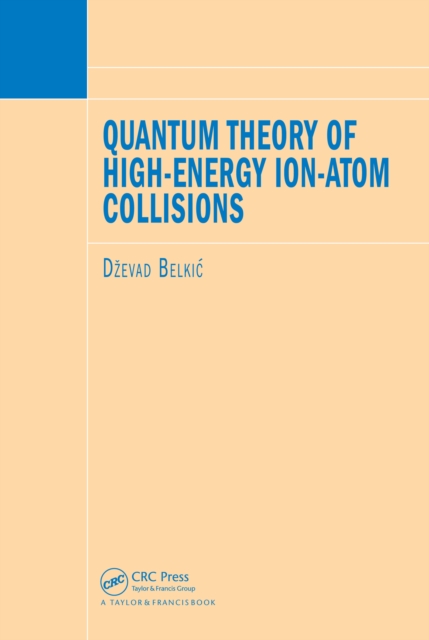
One of the Top Selling Physics Books according to YBP Library ServicesSuitable for graduate students, experienced researchers, and experts, this book provides a state-of-the-art review of the non-relativistic theory of high-energy ion-atom collisions.
Bringing geometric algebra to the mainstream of physics pedagogy, Geometric Algebra and Applications to Physics not only presents geometric algebra as a discipline within mathematical physics, but the book also shows how geometric algebra can be applied to numerous fundamental problems in physics, especially in experimental situations.
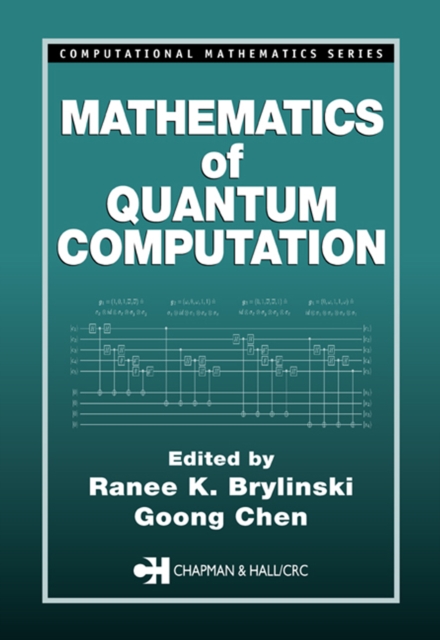
Research and development in the pioneering field of quantum computing involve just about every facet of science and engineering, including the significant areas of mathematics and physics.
While the macroscopic phenomenon of superconductivity is well known and in practical use worldwide, the current theoretical paradigm for superconductivity suffers from a number of limitations.
Quantum electrodynamics (QED) is the branch of relativistic quantum field theory that deals specifically with the interactions between charged particles.
Get Up to Speed on PhysicsUpdated and expanded with new topics, The Physics Companion, 2nd Edition offers a unique and educational approach to learning physics at a level suitable for first-year science students.
Perturbation theory is a powerful tool for solving a wide variety of problems in applied mathematics, a tool particularly useful in quantum mechanics and chemistry.
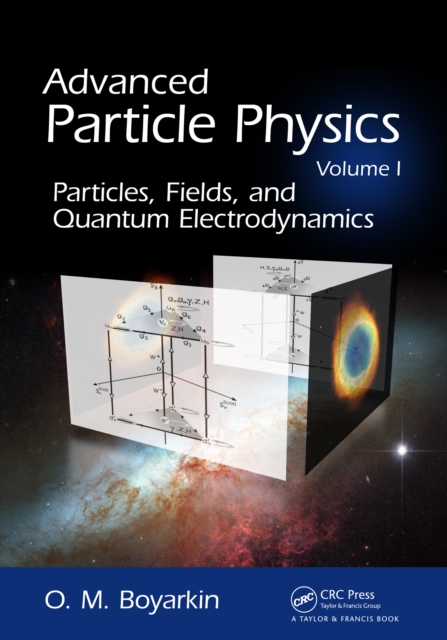
Helping readers understand the complicated laws of nature, Advanced Particle Physics Volume I: Particles, Fields, and Quantum Electrodynamics explains the calculations, experimental procedures, and measuring methods of particle physics.
Materials where electrons show nearly localized rather than itinerant behaviour, such as the high-temperature superconducting copper oxides, or manganate oxides, are attracting interest due to their physical properties and potential applications.
This volume records the proceedings of an international conference that explored recent developments and the interaction between mathematical theory and physical phenomena.
The application of quantum mechanics to many-particle systems has been an active area of research in recent years as researchers have looked for ways to tackle difficult problems in this area.
For graduate students unfamiliar with particle physics, An Introductory Course of Particle Physics teaches the basic techniques and fundamental theories related to the subject.
Path Integrals in Physics: Volume I, Stochastic Processes and Quantum Mechanics presents the fundamentals of path integrals, both the Wiener and Feynman type, and their many applications in physics.
The spectroscopy of highly charged ions plays a key role in numerous areas of physics, from quantum electrodynamics (QED) and parity nonconservation (PNC) testing to fusion and plasma physics to x-ray astronomy.
This book critiques conventional parapsychological viewpoints about extrasensory perception (ESP) and psychokinesis (PK), collectively referred to as 'psi'.