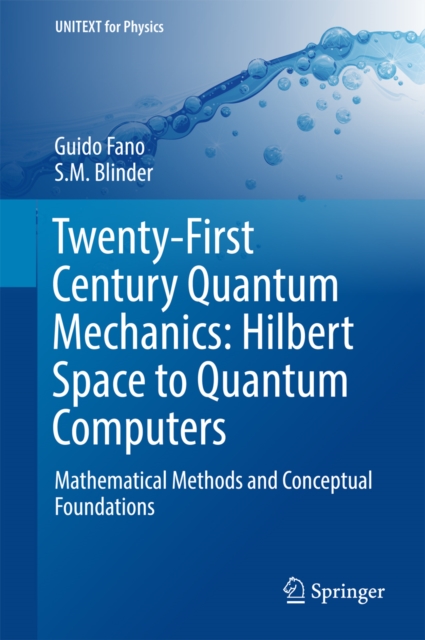
This introduction to quantum mechanics is intended for undergraduate students of physics, chemistry, and engineering with some previous exposure to quantum ideas.
This book presents the basic elements of theoretical physics in a highly accessible, captivating way for university students in the third year of a degree in physics.
This advanced course, a sequel to the first volume of this lecture series on topos quantum theory, delves deeper into the theory, addressing further technical aspects and recent advances.
This book focuses on the assessment of different coal gasification technologies for the utilization of Russian coals with analyses of economically feasible process chains for preparation of marketable products from high-ash coals.
This SpringerBrief covers the main scales of description of matter, starting at its finest level, the quantum scale, moving through ab-initio, molecular dynamics, coarse grained approaches, to finish at the scale of kinetic theory models that allows a nice compromise between the rich but expensive microscopic descriptions and the computationally cheap but sometimes too coarse macroscopic descriptions.
This thesis unites the fields of optical atomic clocks and ultracold molecular science, laying the foundation for optical molecular measurements of unprecedented precision.
One of the most important questions concerning the foundations of physics, especially since the discovery of relativity and quantum theory, is the nature and role of time.
This book discusses key conceptual aspects and explores the connection between triangulated manifolds and quantum physics, using a set of case studies ranging from moduli space theory to quantum computing to provide an accessible introduction to this topic.
The aim of this book is the pedagogical exploration of the basic principles of quantum-statistical thermodynamics as applied to various states of matter - ranging from rare gases to astrophysical matter with high-energy density.
This book provides a unique survey displaying the power of Riccati equations to describe reversible and irreversible processes in physics and, in particular, quantum physics.
Permeated by the author's delightful humor, this little book explains, with nearly no mathematics, the main conceptual issues associated with quantum mechanics: The issue of determinism.
Authored by an acclaimed teacher of quantum physics and philosophy, this textbook pays special attention to the aspects that many courses sweep under the carpet.
This text systematically presents the basics of quantum mechanics, emphasizing the role of Lie groups, Lie algebras, and their unitary representations.
This book focuses on the assessment of different coal gasification technologies for the utilization of Russian coals with analyses of economically feasible process chains for preparation of marketable products from high-ash coals.
This clearly written thesis discusses the development of a highly innovative single-photon source that uses active optical switching, known as multiplexing, to increase the probability of delivering photons into a single mode.
This book discusses modern approaches and challenges of computer-aided design (CAD) of quantum circuits with a view to providing compact representations of quantum functionality.
This textbook offers a clear and comprehensive introduction to methods and applications in quantum mechanics, one of the core components of undergraduate physics courses.
Providing an introduction to current research topics in functional analysis and its applications to quantum physics, this book presents three lectures surveying recent progress and open problems.
This undergraduate textbook discusses the nature of the microscopic universe from a modern perspective, based on Einstein's notions of relativity and Noether's proof of the emergence of conservation laws from symmetries of the equations of motion.
This monograph provides an introductory discussion of evanescent waves and plasmons, describes their properties and uses, and shows how they are fundamental when operating with nanoscale optics.
This book offers an account of a number of aspects of operator theory, mainly developed since the 1980s, whose problems have their roots in quantum theory.
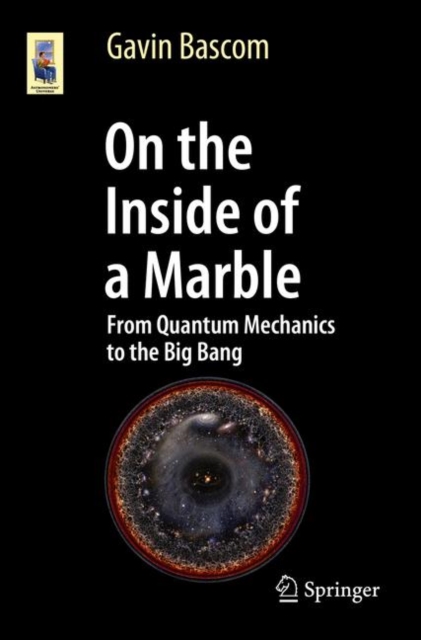
Keeping in mind that we can only see the universe from the comfort of our home galaxy, Bascom begins his text by meticulously laying the necessary groundwork to understand the Big Bang's mathematics without using any equations.
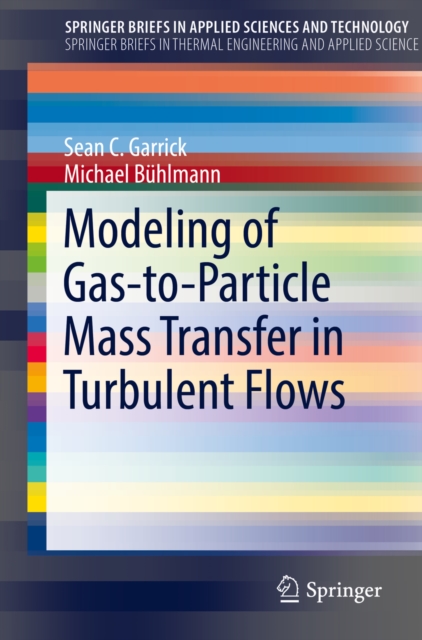
This Brief focuses on the dispersion of high-porosity particles, their entrainment into the vapor-laden stream, and the condensation of vapor onto the particles.
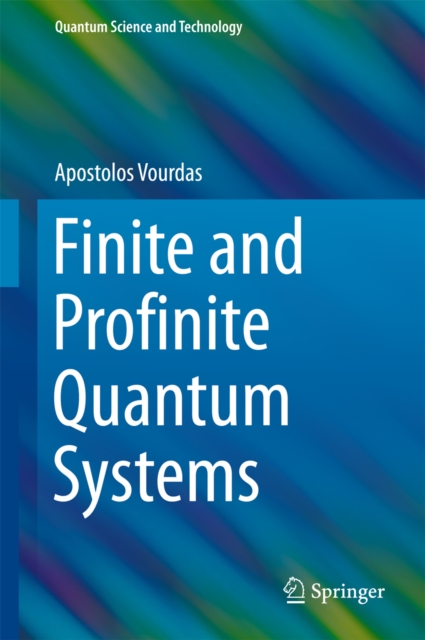
This monograph provides an introduction to finite quantum systems, a field at the interface between quantum information and number theory, with applications in quantum computation and condensed matter physics.
This book is designed to make accessible to nonspecialists the still evolving concepts of quantum mechanics and the terminology in which these are expressed.
This book describes the endeavour to relate the particle spectrum with representations of operational electroweak spacetime, in analogy to the atomic spectrum as characterizing representations of hyperbolic space.
Graduate students who wish to become familiar with advanced computational strategies in classical and quantum dynamics will find in this book both the fundamentals of a standard course and a detailed treatment of the time-dependent oscillator, Chern-Simons mechanics, the Maslov anomaly and the Berry phase, to name just a few topics.
Mitten in Europa ist eine der größten und komplexesten Maschinen in Betrieb gegangen, die wir Menschen je gebaut haben: der Large Hadron Collider (kurz LHC).
This textbook offers a clear and comprehensive introduction to the basics of quantum mechanics, one of the core components of undergraduate physics courses.