This thesis is a tour-de-force combination of analytic and computational results clarifying and resolving important questions about the nature of quantum phase transitions in one- and two-dimensional magnetic systems.
This book presents the first established experimental results of an emergent field: 2-dimensional materials as platforms for quantum technologies, specifically through the optics of quantum-confined excitons.
This volume of lecture notes briefly introduces the basic concepts needed in any computational physics course: software and hardware, programming skills, linear algebra, and differential calculus.
In this book, the equilibrium and nonequilibrium properties of continuous phase transitions are studied in various systems, with a special emphasis on understanding how well-established universal traits at equilibrium may be extended into the dynamic realm, going beyond the paradigmatic Kibble-Zurek mechanism of defect formation.
This book addresses problems in three main developments in modern condensed matter physics- namely topological superconductivity, many-body localization and strongly interacting condensates/superfluids-by employing fruitful analogies from classical mechanics.
In the last several decades, the quantum Hall effect has provided a remarkable platform for manipulating one-dimensional electronic modes and investigating fundamental physical phenomena.
This book provides a general survey of the main concepts, questions and results that have been developed in the recent interactions between quantum information, quantum computation and logic.
Comment le jeune enfant qui vivait à Constantine et à Alger dans les années 1930, dans une famille confrontée à une situation particulièrement difficile, a-t-il pu surmonter toutes ces épreuves et parvenir, soixante ans plus tard, à obtenir le prix Nobel de physique ?
This book is an expanded form of the monograph, Dropwise Condensation on Inclined Textured Surfaces, Springer, 2013, published earlier by the authors, wherein a mathematical model for dropwise condensation of pure vapor over inclined textured surfaces was presented, followed by simulations and comparison with experiments.
This thesis deals with topological orders from two different perspectives: from a condensed matter point of view, where topological orders are considered as breakthrough phases of matter; and from the emerging realm of quantum computation, where topological quantum codes are considered the most appealing platform against decoherence.
This book, based on classroom-tested lecture notes, provides a self-contained one semester undergraduate course on quantum optics, accessible to students (and other readers) who have completed an introductory quantum mechanics course and are familiar with Dirac notation and the concept of entanglement.
The 2nd edition of this textbook features more than 100 pages of new material, including four new chapters, as well as an improved discussion of differential geometry concepts and their applications.
NATIONAL BOOK AWARD LONGLISTNPR BEST BOOKS OF THE YEAR SELECTIONNEW YORK TIMES EDITORS CHOICE A virtuosic debut from a gifted violinist searching for a new mode of artistic becomingHow does time shape consciousness and consciousness, time?
This book presents a quantum framework for understanding inelastic light scattering which is consistent with the classical descriptions of Raman phenomena and Rayleigh scattering, thus creating a unified theoretical picture of light scattering.
In this book the author gives a comprehensive picture of the physical laws that appear to regulate the functioning of the Universe from the atomic to the cosmic world.
This book provides the reader with an explanation of the origin and establishment of quantum mechanics, with the mathematics in a digestible form, together with a descriptive survey of later developments up to the present day.
The solution of the Dirac equation for an electron in a Coulomb field is systematically treated here by utilizing new insights provided by supersymmetry.
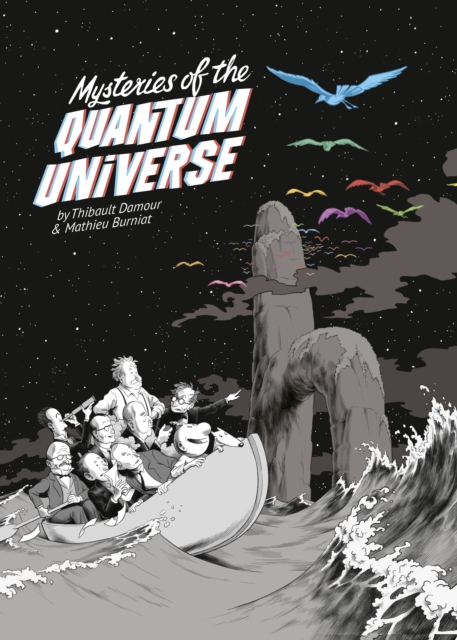
The bestselling French graphic novel about the wonders of quantum physicsJoin Bob the explorer and his dog Rick on a rip-roaring trip through the quantum universe as they meet Max Planck, Albert Einstein, Erwin Schr dinger and many other scientists who encourage them to uncover the mysteries of physics with the help of pancakes, cats, mice and all kinds of optical illusions.
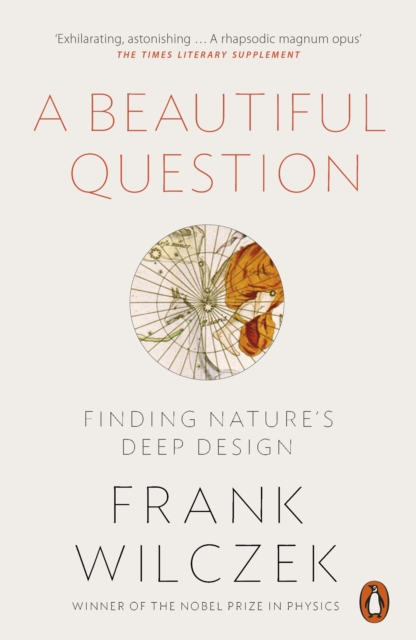
In this scientific tour de force, world-class physicist Frank Wilczek argues that beauty is at the heart of the logic of the universe, a principle that has guided his pioneering work in quantum physics.
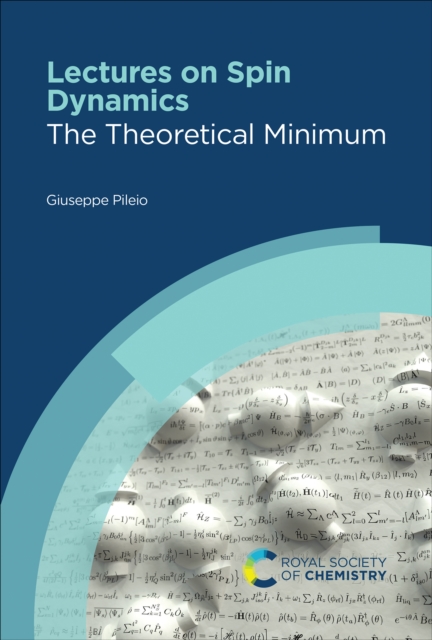
This book consists of a series of lectures introducing what the author believes to be the theoretical minimum for the understanding of nuclear spin dynamics, the branch of physics underpinning magnetic resonance techniques such as NMR and MRI.
This self-contained monograph provides a mathematically simple and physically meaningful model which unifies gravity, electromagnetism, optics and even some quantum behavior.