Tables of Coefficients for the Analysis of Triple Angular Correlations of Gamma-Rays from Aligned Nuclei presents illustrations and discussions of such tables.
Neutron Physics and Nuclear Data in Science and Technology, Volume 3: Neutron Radiative Capture discusses topics that help bridge the gap between experimental and theoretical scientists and applications scientists and engineers.
Nuclear Physics is concerned primarily with low-energy nuclear physics rather than high-energy or elementary particle physics, although examples from particle physics are used where appropriate.
Contemporary Models of the Atomic Nucleus discusses nuclear structure and properties, expounding contemporary theoretical concepts of the low-energy nuclear processes underlying in nuclear models.
Stopping Cross-Sections for Energetic Ions in All Elements shows the stopping cross-sections of energetic ions in various elements in both solid and gas phase targets.
Solid State Nuclear Track Detection: Principles, Methods and Applications is the second book written by the authors after Nuclear Tracks in Solids: Principles and Applications.
Progress in Nuclear Physics, Volume 12, Part 1: K Meson Leptonic Decay: The Anomalous Magnetic Moment of the Muon and Related Topics focuses on K Meson leptonic decay.
International Series of Monographs in Natural Philosophy, Volume 5: Weak Interaction of Elementary Particles focuses on the composition, properties, and reactions of elementary particles and high energies.
Electron Transfer Reactions deals with the mechanisms of electron transfer reactions between metal ions in solution, as well as the electron exchange between atoms or molecules in either the gaseous or solid state.
Passivity of Metals and Semiconductors covers the proceedings of the Fifth International Symposium on Passivity, held in Bombannes, France on May30 - June3, 1983.
Hydrogen: Stopping Powers and Ranges in All Elements, Volume 3 of The Stopping and Ranges of Ions in Matter, provides a nearly complete presentation of absolute experimental energy loss data for hydrogen over the energy range 10 keV < (E/amu) < 20 MeV.
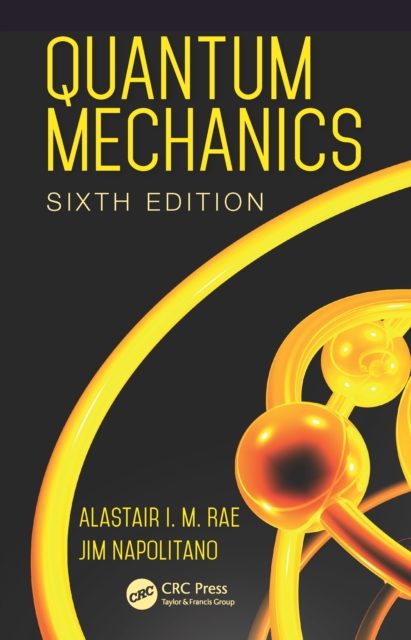
A Thorough Update of One of the Most Highly Regarded Textbooks on Quantum MechanicsContinuing to offer an exceptionally clear, up-to-date treatment of the subject, Quantum Mechanics, Sixth Edition explains the concepts of quantum mechanics for undergraduate students in physics and related disciplines and provides the foundation necessary for other
The birth of quantum electronics in the middle of the 20th century and the subsquent discovery of the laser led to new trends in physics and a number of photonic technolgies.
Materials where electrons show nearly localized rather than itinerant behaviour, such as the high-temperature superconducting copper oxides, or manganate oxides, are attracting interest due to their physical properties and potential applications.
Quantum Theory of Solids presents a concisely-structured tour of the theory relating to chemical bonding and its application to the three most significant topics in solid state physics: semiconductors, magnetism, and superconductivity--topics that have seen major advances in recent years.
The application of field theoretic techniques to problems in condensed matter physics has generated an array of concepts and mathematical techniques to attack a range of problems such as the theory of quantum phase transitions, the quantum Hall effect, and quantum wires.
Path Integrals in Physics: Volume I, Stochastic Processes and Quantum Mechanics presents the fundamentals of path integrals, both the Wiener and Feynman type, and their many applications in physics.
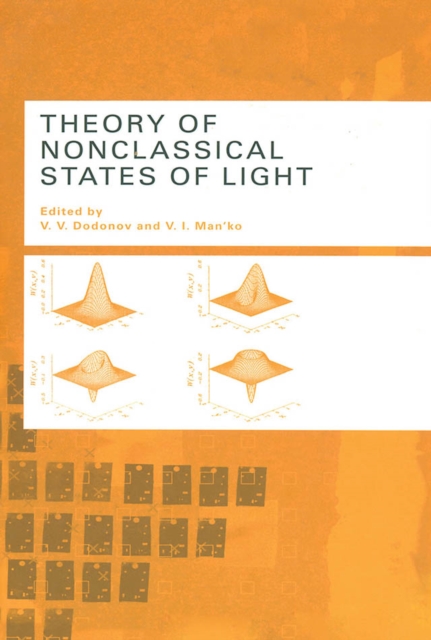
The term 'nonclassical states' refers to the quantum states that cannot be produced in the usual sources of light, such as lasers or lamps, rather than those requiring more sophisticated apparatus for their production.
Written by eminent researchers in the field, this text describes the theory of superconductivity and superfluidity starting from liquid helium and a charged Bose-gas.
As a record of an international meeting devoted to the physical and mathematical aspects of group theory, GROUP 24: Physical and Mathematical Aspects of Symmetries provides an important selection of informative articles describing recent advances in the field.
The path integral approach has proved extremely useful for the understanding of the most complex problems in quantum field theory, cosmology, and condensed matter physics.
Topics in the Theory of Solid Materials provides a clear and rigorous introduction to a wide selection of topics in solid materials, overlapping traditional courses in both condensed matter physics and materials science and engineering.
Quantum Physics: An Introduction guides you through the profound revolution in scientific thinking that overthrew classical physics in favor of quantum physics.
We have seen remarkable progress in our detailed understanding of the physical world, from the smallest constituents of atoms to the remotest distances seen by telescopes.
Introduction to Spintronics provides an accessible, organized, and progressive presentation of the quantum mechanical concept of spin and the technology of using it to store, process, and communicate information.
Physics World's 'Book of the Year' for 2016 An Entertaining and Enlightening Guide to the Who, What, and Why of String Theory, now also available in an updated reflowable electronic format compatible with mobile devices and e-readers.
For graduate students unfamiliar with particle physics, An Introductory Course of Particle Physics teaches the basic techniques and fundamental theories related to the subject.
In 1905, Albert Einstein offered a revolutionary theory - special relativity - to explain some of the most troubling problems in current physics concerning electromagnetism and motion.
Since 1983 I have been delivering lectures at Budapest University that are mainly attended by chemistry students who have already studied quantum chem- istry in the amount required by the (undergraduate) chemistry curriculum of the University, and wish to acquire deeper insight in the field, possibly in prepara- tion of a master's or Ph.
This book is motivated by the very favorable reception given to the previous editions as well as by the considerable range of new developments in the laser field since the publication of the third edition in 1989.