This book introduces the phenomenology and theory of hadron form factors in a consistent manner, deriving step-by-step the key equations, defining the form factors from the matrix elements of hadronic transitions and deriving their symmetry relations.
This book introduces the phenomenology and theory of hadron form factors in a consistent manner, deriving step-by-step the key equations, defining the form factors from the matrix elements of hadronic transitions and deriving their symmetry relations.
At the close of the nineteenth century, we stood on the threshold of one of the greatest periods of science, in which the entire world and understanding of science would be shaken to the core and greatly modified.
At the close of the nineteenth century, we stood on the threshold of one of the greatest periods of science, in which the entire world and understanding of science would be shaken to the core and greatly modified.
This volume, edited by a well-known specialist in the field of theoretical chemistry, gathers together a selection of papers on theoretical chemistry within the themes of mathematical, computational, and quantum chemistry.
This volume, edited by a well-known specialist in the field of theoretical chemistry, gathers together a selection of papers on theoretical chemistry within the themes of mathematical, computational, and quantum chemistry.
Emphasizing physics over mathematics, this popular, classroom-tested text helps advanced undergraduates acquire a sound physical understanding of wave phenomena.
Emphasizing physics over mathematics, this popular, classroom-tested text helps advanced undergraduates acquire a sound physical understanding of wave phenomena.
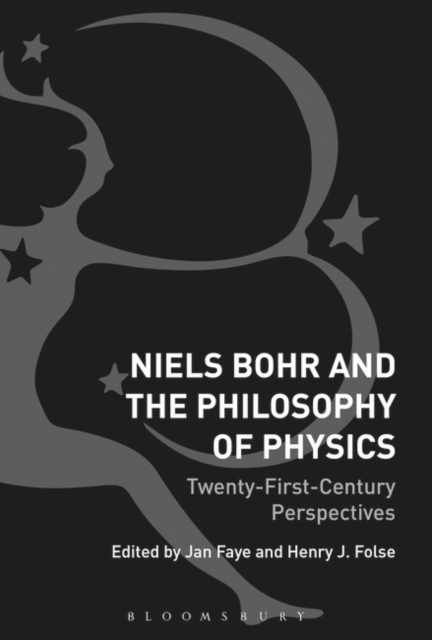
Niels Bohr and Philosophy of Physics: Twenty-First Century Perspectives examines the philosophical views, influences and legacy of the Nobel Prize physicist and philosophical spokesman of the quantum revolution, Niels Bohr.
Niels Bohr and Philosophy of Physics: Twenty-First Century Perspectives examines the philosophical views, influences and legacy of the Nobel Prize physicist and philosophical spokesman of the quantum revolution, Niels Bohr.
Containing the proceedings of the symposium held by the American Academy of Arts and Sciences to celebrate the 100th anniversary of the birth of Niels Bohr, this collection was first published in 1988.
Containing the proceedings of the symposium held by the American Academy of Arts and Sciences to celebrate the 100th anniversary of the birth of Niels Bohr, this collection was first published in 1988.
Into the short compass of this book Professor Graetz has succeeded in compressing an eminently readable survey of the directions in which the atomic theory, as accepted in the nineteenth century, has been extended by the remarkable and almost revolutionary physical investigations and discoveries of the two decades preceding the book's original publication in 1923.
Into the short compass of this book Professor Graetz has succeeded in compressing an eminently readable survey of the directions in which the atomic theory, as accepted in the nineteenth century, has been extended by the remarkable and almost revolutionary physical investigations and discoveries of the two decades preceding the book's original publication in 1923.
Summarising the most novel facts and theories which were coming into prominence at the time, particularly those which had not yet been incorporated into standard textbooks, this important work was first published in 1921.
Summarising the most novel facts and theories which were coming into prominence at the time, particularly those which had not yet been incorporated into standard textbooks, this important work was first published in 1921.
Published in 1934, this monograph was one of the first introductory accounts of the principles which form the physical basis of the Quantum Theory, considered as a branch of mathematics.
Published in 1934, this monograph was one of the first introductory accounts of the principles which form the physical basis of the Quantum Theory, considered as a branch of mathematics.
Quantum computing, particularly in conjunction with a high level of interconnectivity facilitated by quantum connectivity, can facilitate a host of new, previously unattainable applications-these include blind quantum computation, (information) teleporting, clock synchronization, quantum key distribution, secure access to remote quantum computers, superdense coding, secure identification, quantum-secure encryption, distributed sensors, and other scientific and commercial applications, including new drug development.
This textbook serves as a comprehensive introduction to quantum technology for advanced undergraduate and beginning graduate students in physics and engineering.
Conscious Action Theory provides a logical unification between the spirit and the material, by identifying reality as an event that processes personal experiences into explanatory memories, from which personal experiences are regenerated in a never-ending cycle of activity.
Conscious Action Theory provides a logical unification between the spirit and the material, by identifying reality as an event that processes personal experiences into explanatory memories, from which personal experiences are regenerated in a never-ending cycle of activity.
In 1981 Robert John Russell founded what would become the leading center of research at the interface of science and religion, the Center for Theology and the Natural Sciences.
In 1981 Robert John Russell founded what would become the leading center of research at the interface of science and religion, the Center for Theology and the Natural Sciences.
Introducing the reader to the very latest developments in the philosophical foundations of physics, this book covers advanced material at a level suitable for beginner and intermediate students.