An important contributor to our current understanding of critical phenomena, Ma introduces the beginner--especially the graduate student with no previous knowledge of the subject-to fundamental theoretical concepts such as mean field theory, the scaling hypothesis, and the renormalization group.
This book focuses on the most important questions of philosophy of physics, offering a sufficiently concise and clear treatment of the issues to lead the interested reader through the sometimes labyrinthian paths taken by the central debates.
Understanding the structural and thermodynamic properties of surfaces, interfaces, and membranes is important for both fundamental and practical reasons.
From the Preface: "e;The purpose of this book is to present and apply a language and to discuss methods which make it very convenient to exploit such analogies, and which are uniquely suited to describe and explain non-equilibrium phenomena in a rich variety of many-particle systems: the language of time correlation functions and linear response theory.
This book is a very early systematic treatment of the application of the field-theoretical methods developed after the Second World War to the quantum mechanical many-body problem at finite temperature.
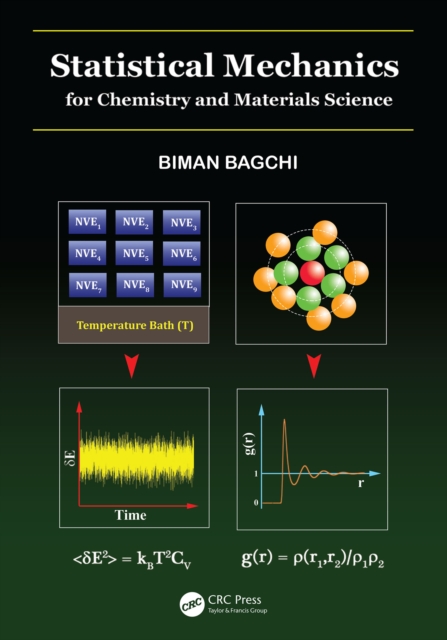
This book covers the broad subject of equilibrium statistical mechanics along with many advanced and modern topics such as nucleation, spinodal decomposition, inherent structures of liquids and liquid crystals.
This book covers the broad subject of equilibrium statistical mechanics along with many advanced and modern topics such as nucleation, spinodal decomposition, inherent structures of liquids and liquid crystals.
Thermodynamics can never be made easy, but with the right approach and a consistent use of scientific terms it can be made less opaque, and it can give a person, who is prepared to try, an insight into how science explains why things happen the way they do.
The Tutte Polynomial touches on nearly every area of combinatorics as well as many other fields, including statistical mechanics, coding theory, and DNA sequencing.
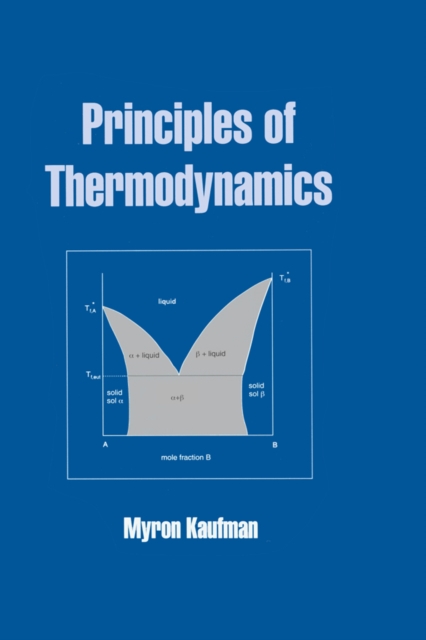
Ideal for one- or two-semester courses that assume elementary knowledge of calculus, This text presents the fundamental concepts of thermodynamics and applies these to problems dealing with properties of materials, phase transformations, chemical reactions, solutions and surfaces.
This monograph, suitable for use as an advanced text, presents the statistical mechanics of solids from the perspective of the material properties of the solid state.
Aimed at advanced undergraduates and graduate students, When Things Grow Many is an accessible and engaging textbook introducing the theory of statistical mechanics, as well as its fascinating real-world applications.
Flocks of birds, schools of fish and swarms of locusts display amazing forms of collective motion, while huge numbers of glow worms can emit light signals with almost unbelievable synchronization.
Recent groundbreaking discoveries in physics, including the discovery of the Higgs Boson and gravitational waves, have relied on chi-squared analysis and model testing, a data analysis method.
This book presents an up-to-date formalism of non-equilibrium Green's functions covering different applications ranging from solid state physics, plasma physics, cold atoms in optical lattices up to relativistic transport and heavy ion collisions.
Quantum phase transitions describe the violent rearrangement of electrons or atoms as they evolve from well defined excitations in one phase to a completely different set of excitations in another.
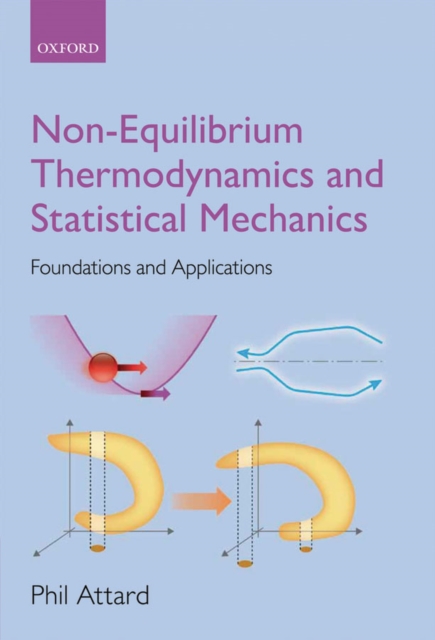
`Non-equilibrium Thermodynamics and Statistical Mechanics: Foundations and Applications' builds from basic principles to advanced techniques, and covers the major phenomena, methods, and results of time-dependent systems.
This book discusses the study and analysis of the physical aspects of social systems and models, inspired by the analogy with familiar models of physical systems and possible applications of statistical physics tools.
This book discusses the study and analysis of the physical aspects of social systems and models, inspired by the analogy with familiar models of physical systems and possible applications of statistical physics tools.