This book provides an accessible introduction to using the tools of differential geometry to tackle a wide range of topics in physics, with the concepts developed through numerous examples to help the reader become familiar with the techniques.
This book provides an accessible introduction to intermediate-level electrodynamics with computa- tional approaches to complement a traditional mathematical treatment of the subject.
This book presents an introduction to the main concepts of statistical physics, followed by applications to specific problems and more advanced concepts, selected for their pedagogical or practical interest.
A group of distinguished scientists contributes to the foundations of a new discipline in Earth sciences: earthquake thermodynamics and thermodynamics of formation of the Earth's interior structures.
The proceedings of the 2005 les Houches summer school on Mathematical Statistical Physics give and broad and clear overview on this fast developing area of interest to both physicists and mathematicians.
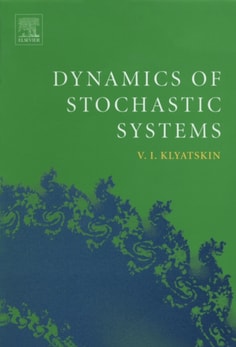
Our original objective in writing this book was to demonstrate how the concept of the equation of motion of a Brownian particle - the Langevin equation or Newtonian-like evolution equation of the random phase space variables describing the motion - first formulated by Langevin in 1908 - so making him inter alia the founder of the subject of stochastic differential equations, may be extended to solve the nonlinear problems arising from the Brownian motion in a potential.
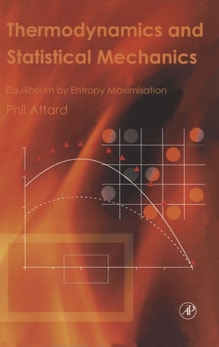
Thermodynamics is the physical science surrounding work, heat, and relationships across fundamental quantities, and situates itself near the center of multiple disciplines through its generality and timelessness.
Complex systems-characterized by self-organization, emergence, and profound non-linearity-govern everything from global financial markets to ecological stability.
Complex systems-characterized by self-organization, emergence, and profound non-linearity-govern everything from global financial markets to ecological stability.