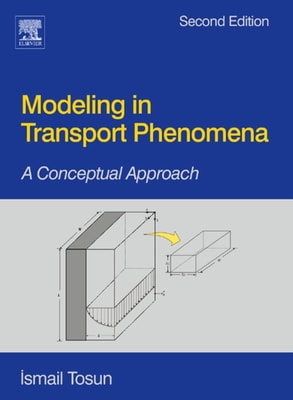
Modeling in Transport Phenomena, Second Edition presents and clearly explains with example problems the basic concepts and their applications to fluid flow, heat transfer, mass transfer, chemical reaction engineering and thermodynamics.
This book provides an accessible introduction to intermediate-level electrodynamics with computa- tional approaches to complement a traditional mathematical treatment of the subject.
Fundamentals and Technology of Combustion contains brief descriptions of combustion fundamental processes, followed by an extensive survey of the combustion research technology.
This volume provides an overview of current research and recent advances in the area of energetic materials, focusing on decomposition, crystal and molecular properties.
A group of distinguished scientists contributes to the foundations of a new discipline in Earth sciences: earthquake thermodynamics and thermodynamics of formation of the Earth's interior structures.
Alternative Mathematical Theory of Non-equilibrium Phenomena presents an entirely new theoretical approach to complex non-equilibrium phenomena, especially Gibbs/Falk thermodynamics and fluid mechanics.
This book presents a consistent mathematical theory of the non-electronic physical properties of disordered and amorphous solids, starting from the atomic-level dynamics and leading to experimentally verifiable descriptions of macroscopic properties such as elastic and viscoelastic moduli, plasticity, phonons and vibrational spectra, and thermal properties.
Advances in Heat Transfer is designed to fill the information gap between regularly scheduled journals and university level textbooks by providing in-depth review articles over a broader scope than is allowable in either journals or texts.
Today the study of materials is concerned with the underlying thermodynamic and chemical processes involved in the manufacture and processing of a wide range of materials - metals, ceramics, semi-conductors, plastics and composites.
This book elucidates the important role of conduction, convection, and radiation heat transfer, mass transport in solids and fluids, and internal and external fluid flow in the behavior of materials processes.
This textbook covers the scientific basics of molecular bioengineering, a new field where technology meets biology and chemistry, and the fundamental knowledge required for students to understand molecular mechanisms beyond biological phenomena.
The most comprehensive and detailed treatment of thermal radiation heat transfer available for graduate students, as well as senior undergraduate students, practicing engineers and physicists is enhanced by an excellent writing style with nice historical highlights and a clear and consistent notation throughout.
Handbook of Power Electronics in Autonomous and Electric Vehicles provides advanced knowledge on autonomous systems, electric propulsion in electric vehicles, radars and sensors for autonomous systems, and relevant aspects of energy storage and battery charging.
Nanofluid Boiling presents valuable insights into boiling heat transfer mechanisms, offering state-of-the-art techniques for overcoming obstacles against nanofluid applications.
Chemical Thermodynamics: Principles and Applications presents a thorough development of the principles of thermodynamics--an old science to which the authors include the most modern applications, along with those of importance in developing the science and those of historical interest.
Microgrid Methodologies and Applications provides step-by-guide guidance on the implementation of microgrids projects that is informed by current scientific principles, emergent technologies such as modern power electronic interfaces, energy storage systems, multi-vector energy systems, and a close study of recent case studies.
Microgrid Methodologies and Applications provides step-by-guide guidance on the implementation of microgrids projects that is informed by current scientific principles, emergent technologies such as modern power electronic interfaces, energy storage systems, multi-vector energy systems, and a close study of recent case studies.
Heat Pipes: Theory, Design and Applications, Seventh Edition, takes a highly practical approach to the design and selection of heat pipes, making it an essential guide for practicing engineers and an ideal text for postgraduate students.
The new edition will continue to be of use to engineers in industry and technological establishments, especially as brief reviews are included on many important aspects of Turbomachinery, giving pointers towards more advanced sources of information.
"e;Order from Chaos: Theoretical Principles and Practical Aspects of the New Class of High-Entropy Materials"e; offers a comprehensive exploration of High-Entropy Materials, a novel class of materials characterized by complex compositions and unexpected properties.
Advances in Heat Transfer fills the information gap between regularly scheduled journals and university level textbooks by providing in-depth review articles over a broader scope than in journals or texts.
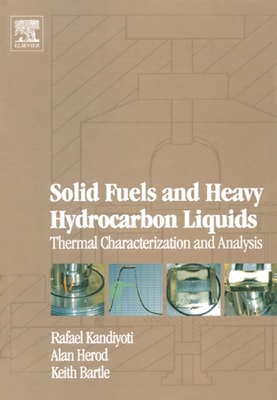
The first strand involves a critical overview of the design of experimental methods used for examining the thermal behaviour of solid fuels [pyrolysis, liquefaction and gasification], while the second will emphasise chemical structures and molecular mass distributions of coal derived tars, extracts and pitches, petroleum-derived asphaltenes, and biomass derived heavy hydrocarbon liquids.
Cryogenic Technology and Applications describes the need for smaller cryo-coolers as a result of the advances in the miniaturization of electrical and optical devices and the need for cooling and conducting efficiency.
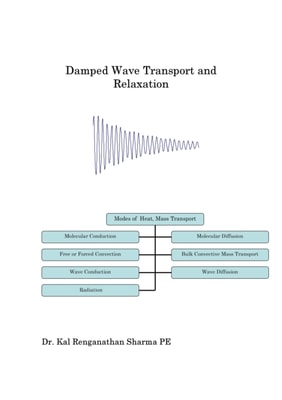
Transient problems in transport phenomena have a variety of applications, ranging from drug delivery systems in chemotherapy in bioengineering to heat transfer to surfaces in fluidized bed combustion (FBC) boilers in mechanical engineering.
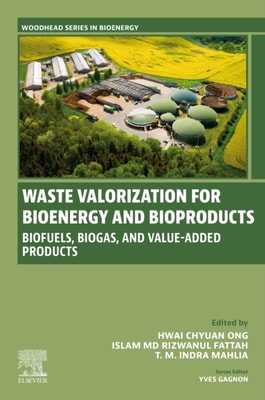
Waste Valorisation for Bioenergy and Bioproducts: Biofuel, Biogas, and Value-Added Products presents a comprehensive review of the state-of-the-art of waste valorization from solid, liquid, and gaseous waste streams.
Heat exchangers with minichannel and microchannel flow passages are becoming increasingly popular because of their ability to remove large heat fluxes under single-phase and two-phase applications.
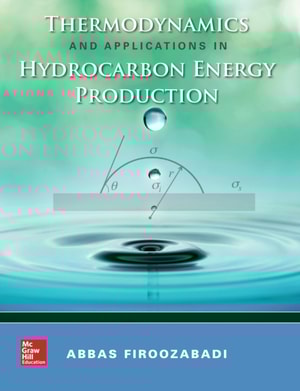
This state-of-the-art guide presents a systematic methodology for applying thermodynamics principles in the many areas of the hydrocarbon energy industryThermodynamics and Applications in Hydrocarbon Energy Production lays out a unified view of classical thermodynamics and teaches how to effectively put those theories to work in fuel exploration, preparation, and refinement.
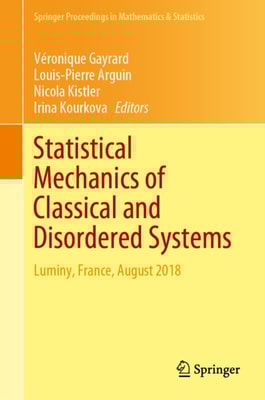
These proceedings of the conference Advances in Statistical Mechanics, held in Marseille, France, August 2018, focus on fundamental issues of equilibrium and non-equilibrium dynamics for classical mechanical systems, as well as on open problems in statistical mechanics related to probability, mathematical physics, computer science, and biology.