The bestselling author of Fermat's Last Theorem and The Code Book tells the story of the brilliant minds that deciphered the mysteries of the Big Bang.
Over the years, millions of school children must have written out their address in the same way - their house number and street, their town, their country, their continent, planet Earth, the universe.
Parameter Estimation and Inverse Problems, Second Edition provides geoscience students and professionals with answers to common questions like how one can derive a physical model from a finite set of observations containing errors, and how one may determine the quality of such a model.
SPECIAL PRICE FOR A LIMITED TIMEBring love, happiness and fulfilment into your own life and those around you, with this gift book of inspirational guidance, quotes and stories of angels and spirits from the other side.
Sunday Times BestsellerA breathtaking and beautiful exploration of our planet, this groundbreaking book accompanies the BBC One TV series, providing the deepest answers to the simplest questions.
J P McEvoy looks at remarkable phenomenon of a solar eclipse through a thrilling narrative that charts the historical, cultural and scientific relevance of solar eclipses through the ages and explores the significance of this rare event.
A compact introduction to observing, predicting, and understanding the weatherNote: this ebook for black and white devices was originally created and printed in colour.
In the follow up to the Sunday Times bestseller, The Gift, we are taken on a journey further into the psychic world of Mia Dolan, one of Britain's most gifted psychics.
"Namibias vergessene Geometrien" entführt die Lesenden in die spirituelle Welt der Himba – ein Volk, das tief in der Wüste Namibias verwurzelt lebt und dessen Kultur bis heute von einer einzigartigen Verbindung zwischen Mensch, Natur und Ahnen getragen wird.
*; Traces the journey of Otto Rahn, the occultist and one-time SS member who sought the Holy Grail and traveled widely throughout Europe as a researcher until his mysterious death in 1939*; Explores the modern legacy of the officially heretical Christian sect known as the Cathars*; Follows the author's own investigations into the location of the Grail and Rahn's legacy, taking readers on a journey through occult EuropeMeticulously following controversial 20th-century occultist, historian, and partially Jewish SS member Otto Rahn's investigations into the Holy Grail and Catharism, author and filmmaker Richard Stanley enters into the occult world of Europe.
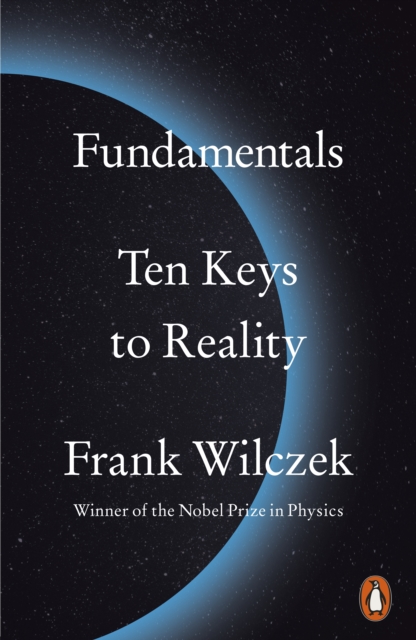
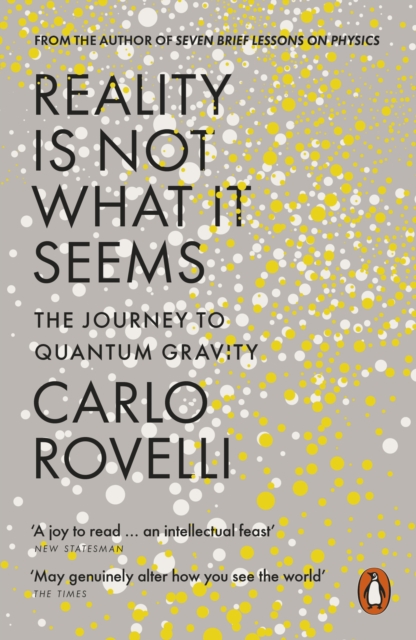
The ten biggest ideas in theoretical physics that have withstood the test of timeCould any discovery be more unexpected and shocking than the realization that the reality we were born into is but an approximation of an underlying quantum world that is barely within our grasp?
*; Develops the concept of the metaverse, the ';transcendental universe,' composed of additional hidden dimensions operating in parallel with space and time*; Integrates and maps the theories of consciousness developed by Carl Jung, David Bohm, Pierre Teilhard de Chardin, and other scientists*; Offers the reader a path into the hidden dimensions through detailed maps of psyche, mind, and cosmosThe "e;metaverse"e;as this wider universe is now coming to be knownis rooted in one interconnected consciousness that encompasses space and time as well as previously unknown dimensions only recently detected.
A landmark book on the influential many-worlds interpretation of quantum mechanicsIn 1957, Hugh Everett proposed a novel interpretation of quantum mechanicsa view that eventually became known as the many-worlds interpretation.
The incredible book behind the primetime Channel 4 documentary, Peter: The Human Cyborg'A remarkable account of what it means to be human and what technology can really achieve' Sunday Telegraph'Peter's story is one of the most extraordinary you will ever hear.
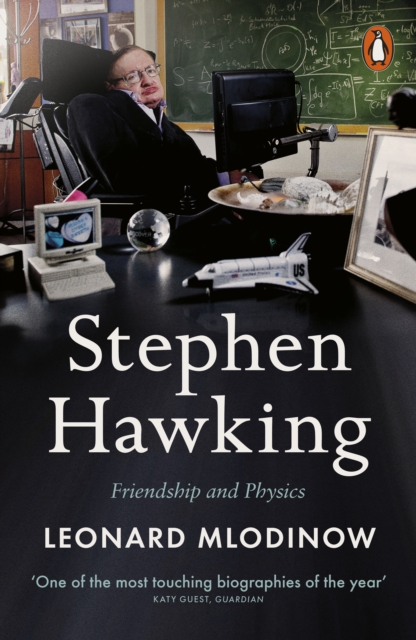
CHOSEN AS A BOOK OF THE YEAR BY THE GUARDIAN, DAILY TELEGRAPH, NEW STATESMAN AND BBC SCIENCE FOCUS'An intimate, unique, and inspiring perspective on the life and work of one of the greatest minds of our time.
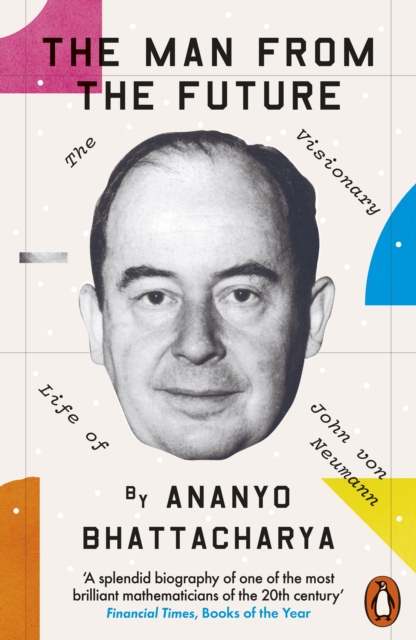
A FINANCIAL TIMES AND TLS BOOK OF THE YEARAn exhilarating new biography of John von Neumann: the lost genius who invented our world'A sparkling book, with an intoxicating mix of pen-portraits and grand historical narrative.
A young theoretical physicist's guide to how the radical new science of counterfactuals can reveal the full scope of our universeThere is a vast class of properties that science has so far almost entirely neglected.
'Everything about this story is astounding' Bryan Appleyard, Sunday Times"e;Trinity"e; was the codename for the test explosion of the atomic bomb in New Mexico on 16 July 1945.
One of our great contemporary scientists reveals the ten profound insights that illuminate what everyone should know about the physical worldIn Fundamentals, Nobel laureate Frank Wilczek offers the reader a simple yet profound exploration of reality based on the deep revelations of modern science.
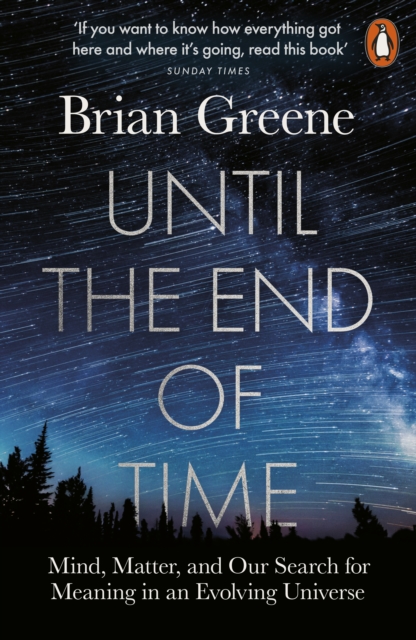
From the world-renowned physicist and bestselling author of The Elegant Universe and The Fabric of the Cosmos, a captivating exploration of deep time and humanity's search for purposeIn both time and space, the cosmos is astoundingly vast, and yet is governed by simple, elegant, universal mathematical laws.
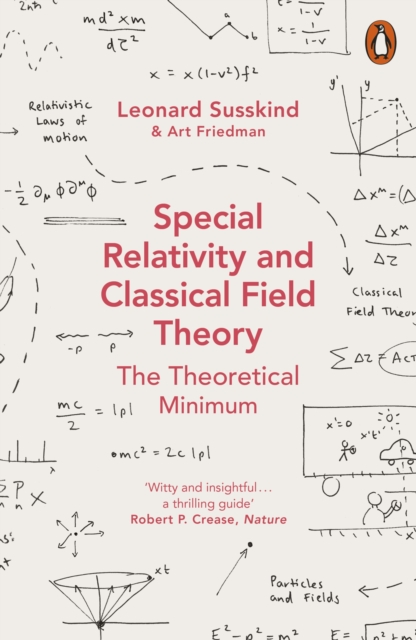
In the first two books in his wildly popular The Theoretical Minimum series, world-class physicist Leonard Susskind provided a brilliant first course in classical and quantum mechanics, offering readers not an oversimplified introduction, but the real thing - everything you need to start doing physics, and nothing more.
An acclaimed physicist's accessible yet rigorous introduction to quantum mechanics for nonspecialistsThis is a rare and much-needed book: a concise but comprehensive account of quantum mechanics for popular science readers written by a respected physicist.