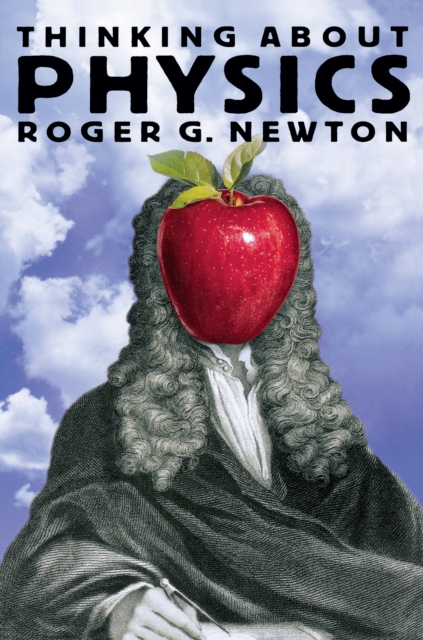
Everybody knows that mathematics is indispensable to physics--imagine where we'd be today if Einstein and Newton didn't have the math to back up their ideas.
The past century has seen fantastic advances in physics, from the discovery of the electron, x-rays, and radioactivity, to the era of incredible solid state devices, computers, quarks and leptons, and the standard model.
Scaling and self-similarity ideas and methods in theoretical physics have, in the last twenty-five years, coalesced into renormalization-group methods.
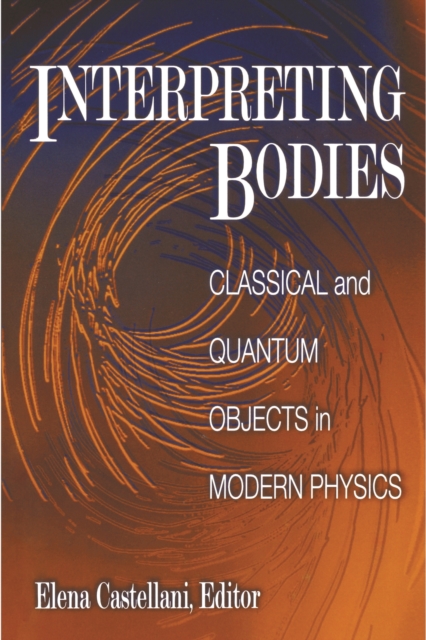
Bewildering features of modern physics, such as relativistic space-time structure and the peculiarities of so-called quantum statistics, challenge traditional ways of conceiving of objects in space and time.
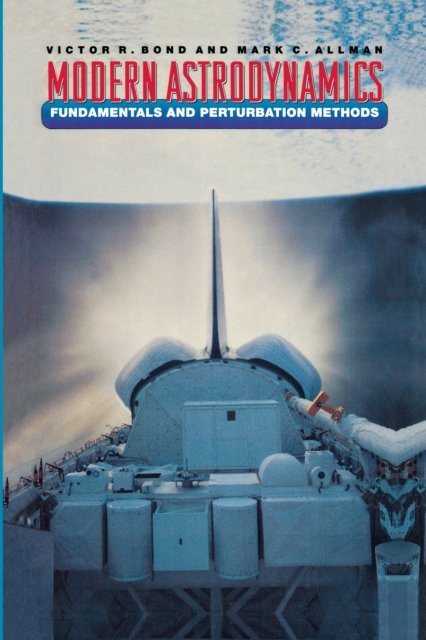
Newton's laws of motion and his universal law of gravitation described mathematically the motion of two bodies undergoing mutual gravitational attraction.
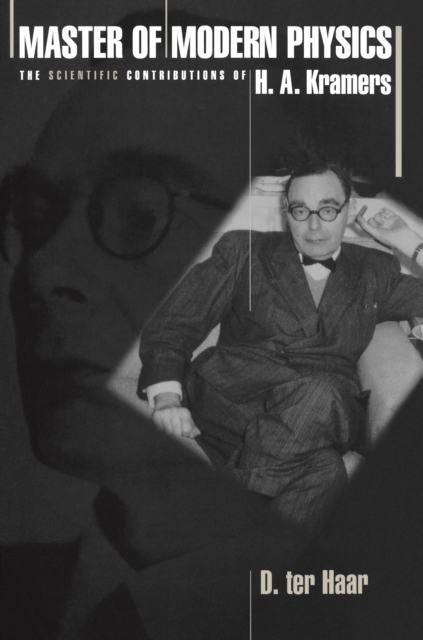
The Dutch scientist Hendrik Kramers (1894-1952) was one of the greatest theoretical physicists of the twentieth century--and one of a mere handful who have made major contributions across the whole field.
Problems in theoretical physics often lead to paradoxical answers; yet closer reasoning and a more complete analysis invariably lead to the resolution of the paradox and to a deeper understanding of the physics involved.
Like its predecessor, this book by the renowned physicist Sir Rudolf Peierls draws from many diverse fields of theoretical physics to present problems in which the answer differs from what our intuition had led us to expect.
This widely acclaimed introduction to N = 1 supersymmetry and supergravity is aimed at readers familiar with relativistic quantum field theory who wish to learn about the supersymmetry algebra.
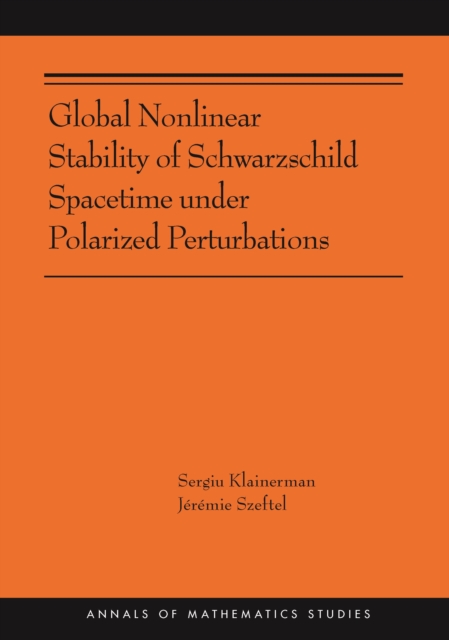
Essential mathematical insights into one of the most important and challenging open problems in general relativity-the stability of black holesOne of the major outstanding questions about black holes is whether they remain stable when subject to small perturbations.
'Hugely readable and entertaining' JIM AL-KHALILI'An accessible and crystal-clear portrait of this discipline's breadth, largely told through its history' PHIL BALL, PHYSICS WORLDEinstein's Fridge tells the story of how scientists uncovered the least known and yet most consequential of all the sciences, and learned to harness the power of heat and ice.
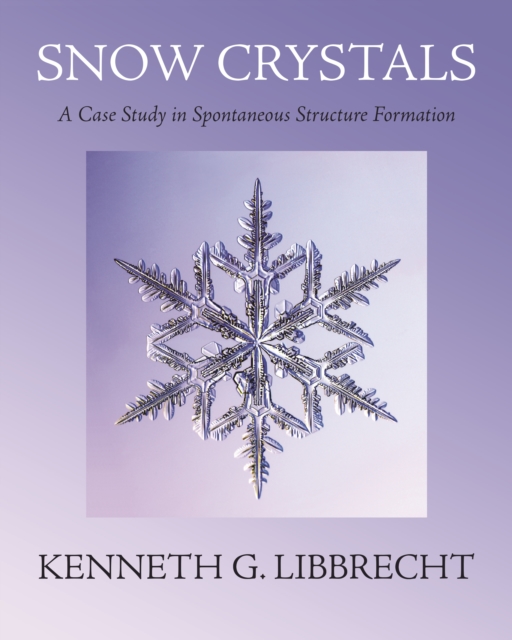
A definitive new investigation of the science of snowflakes by the world's leading expertA snowflake's sophisticated symmetry emerges when crystalline ice grows from water vapor within the winter clouds.
An advanced treatment of surgery theory for graduate students and researchersSurgery theory, a subfield of geometric topology, is the study of the classifications of manifolds.
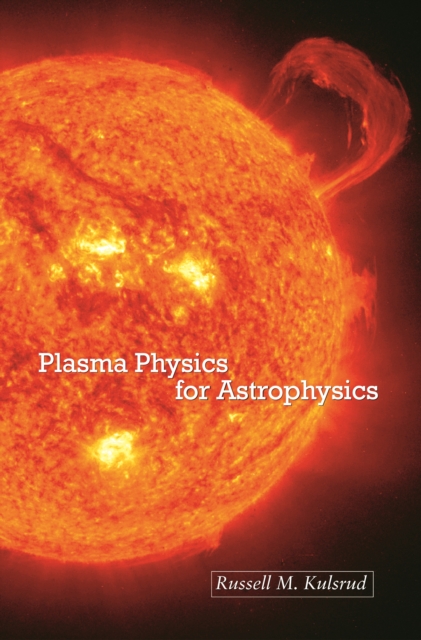
In this book, a distinguished expert introduces plasma physics from the ground up, presenting it as a comprehensible field that can be grasped largely on the basis of physical intuition and qualitative reasoning, similar to other fields of physics.
Metastable Liquids provides a comprehensive treatment of the properties of liquids under conditions where the stable state is a vapor, a solid, or a liquid mixture of different composition.
Whether discussing theories of cosmology, the physics of making a violin, or the impact of magazine covers on potential buyers, physicist and writer Tony Rothman brings the worlds of the scientist and nonscientist closer together, with amusing and enlightening results.
This is the second volume of a two-volume collection of over 100 articles spanning half a century of work by the late Soviet scientist Yakov Borisovich Zeldovich.
A concise introduction to the cutting-edge science of particle physicsThe standard model of particle physics describes our current understanding of nature's fundamental particles and their interactions, yet gaps remain.
About 120 years ago, James Clerk Maxwell introduced his now legendary hypothetical "e;demon"e; as a challenge to the integrity of the second law of thermodynamics.
Diffusive motion--displacement due to the cumulative effect of irregular fluctuations--has been a fundamental concept in mathematics and physics since Einstein's work on Brownian motion.
Studies of stars and stellar populations, and the discovery and characterization of exoplanets, are being revolutionized by new satellite and telescope observations of unprecedented quality and scope.
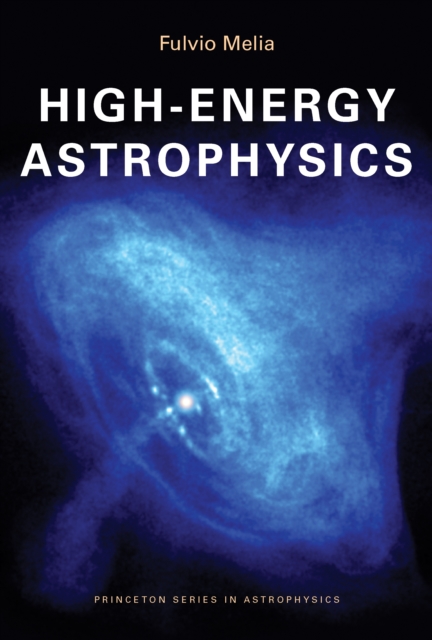
High-energy astrophysics involves the study of exceedingly dynamic and energetic phenomena occurring near the most extreme celestial objects known to exist, such as black holes, neutron stars, white dwarfs, and supernova remnants.
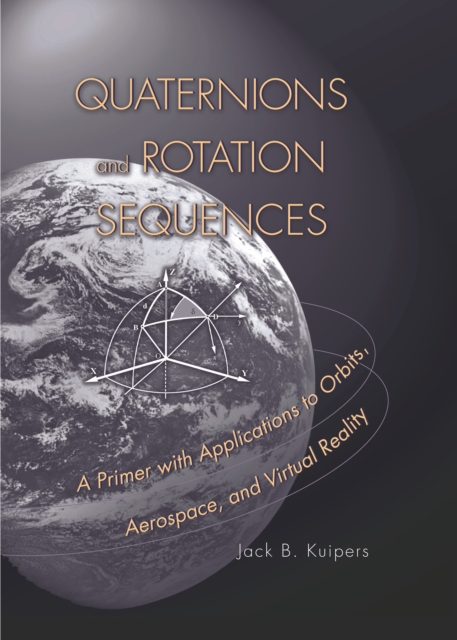
Ever since the Irish mathematician William Rowan Hamilton introduced quaternions in the nineteenth century--a feat he celebrated by carving the founding equations into a stone bridge--mathematicians and engineers have been fascinated by these mathematical objects.
Motivated by the theory of turbulence in fluids, the physicist and chemist Lars Onsager conjectured in 1949 that weak solutions to the incompressible Euler equations might fail to conserve energy if their spatial regularity was below 1/3-Holder.
This book offers a survey of recent developments in the analysis of shock reflection-diffraction, a detailed presentation of original mathematical proofs of von Neumann's conjectures for potential flow, and a collection of related results and new techniques in the analysis of partial differential equations (PDEs), as well as a set of fundamental open problems for further development.
This book provides a short, hands-on introduction to the science of complexity using simple computational models of natural complex systems-with models and exercises drawn from physics, chemistry, geology, and biology.
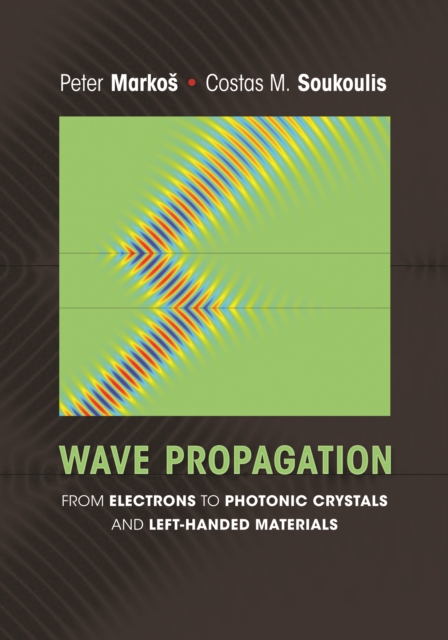
This textbook offers the first unified treatment of wave propagation in electronic and electromagnetic systems and introduces readers to the essentials of the transfer matrix method, a powerful analytical tool that can be used to model and study an array of problems pertaining to wave propagation in electrons and photons.
The quantum theory of macroscopic systems is a vast, ever-developing area of science that serves to relate the properties of complex physical objects to those of their constituent particles.
This book presents an authoritative and in-depth treatment of potential energy landscape theory, a powerful analytical approach to describing the atomic and molecular interactions in condensed-matter phenomena.
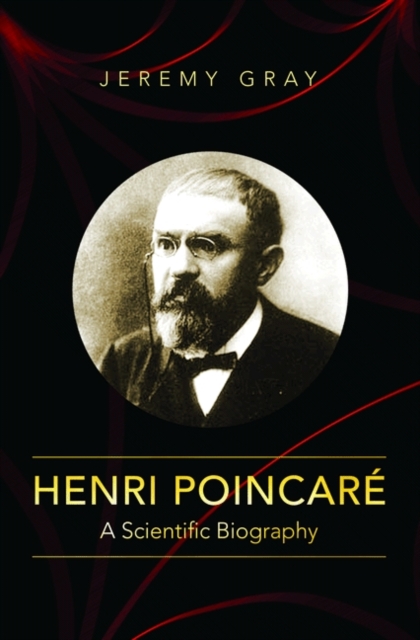
A comprehensive look at the mathematics, physics, and philosophy of Henri PoincareHenri Poincare (1854-1912) was not just one of the most inventive, versatile, and productive mathematicians of all time-he was also a leading physicist who almost won a Nobel Prize for physics and a prominent philosopher of science whose fresh and surprising essays are still in print a century later.
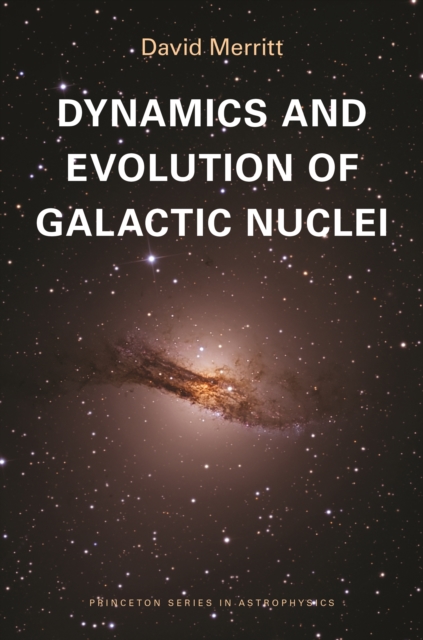
Deep within galaxies like the Milky Way, astronomers have found a fascinating legacy of Einstein's general theory of relativity: supermassive black holes.
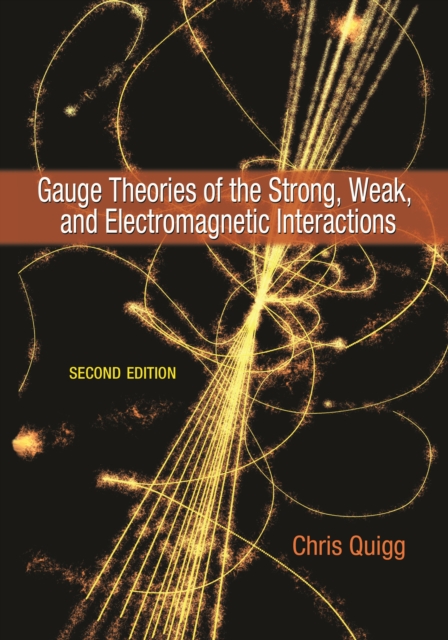
A thoroughly revised edition of a landmark textbook on gauge theories and their applications to particle physicsThis completely revised and updated graduate-level textbook is an ideal introduction to gauge theories and their applications to high-energy particle physics, and takes an in-depth look at two new laws of nature-quantum chromodynamics and the electroweak theory.
The first complete proof of Arnold diffusion-one of the most important problems in dynamical systems and mathematical physicsArnold diffusion, which concerns the appearance of chaos in classical mechanics, is one of the most important problems in the fields of dynamical systems and mathematical physics.