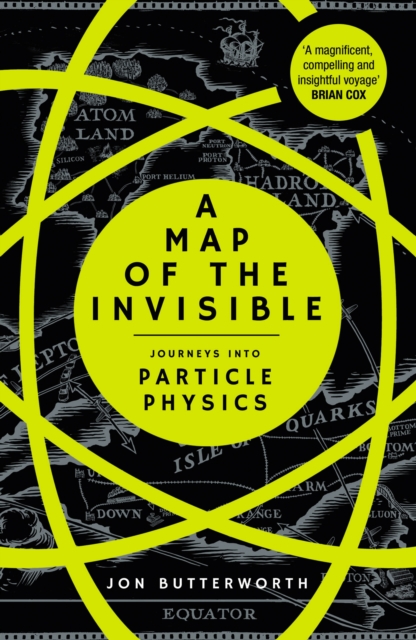
As you read this, billions of neutrinos from the sun are passing through your body, antimatter is sprouting from your dinner and the core of your being is a chaotic mess of particles known only as quarks and gluons.
Written by Dr Alexandre Zagoskin, who is a Reader at Loughborough University, Quantum Mechanics: A Complete Introduction is designed to give you everything you need to succeed, all in one place.
'This is the best book on the subject that I have read, it's brilliant, wide ranging, easy to read, doesn't use tech jargon and its been designed to help you learn about the subject, not just read a book.
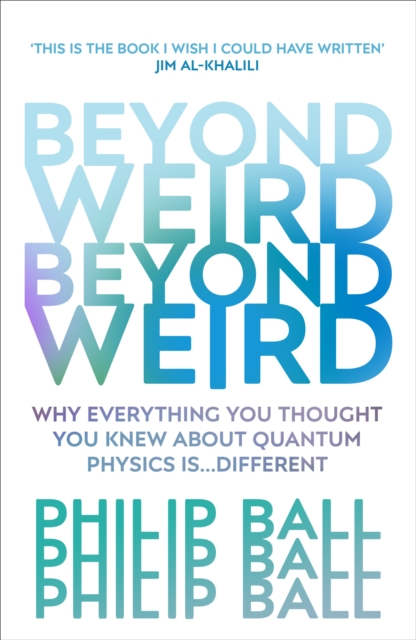
PHYSICS WORLD 2018 BOOK OF THE YEAR A clear and deeply researched account of what s known about the quantum laws of nature, and how to think about what they might really mean Nature I think I can safely say that nobody understands quantum mechanics.
A SUNDAY TIMES BOOK OF THE YEAR'A magnificent, compelling and insightful voyage to the frontier of knowledge from a great writer with a deep understanding.
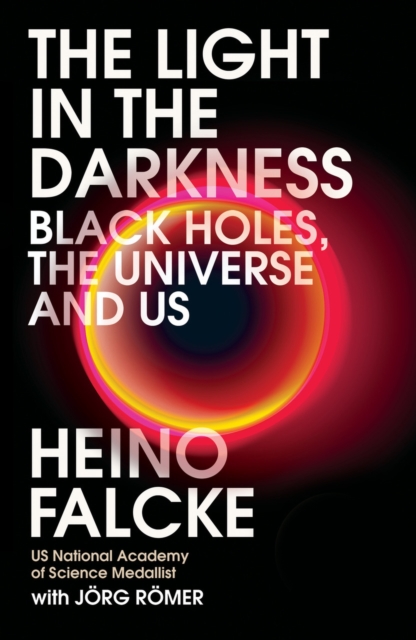
As featured in THE EDGE OF ALL WE KNOW - the new Netflix documentary about Black HolesFor readers of Stephen Hawking, a fascinating account of the universe from the perspective of world-leading astrophysicist Heino Falcke, who took the first ever picture of a black hole.
*; Award Winner in Outstanding ';Religious/Christian Non-Fiction' Category of The Independent Author Network Book of the Year Awards*; Award Winner in the Spirituality: Inspirational category of the 2024 Best Book Awards sponsored by American Book Fest*; Explores obscured periods of Mary's life, including her time as leader of the Christian community and as the spiritual teacher to Jesus and Mary Magdalene*; Examines Mary's high-level powers, which enabled the divine conception of Jesus, his resurrection, and Mary's assumption into heaven*; Shows how nurturing a relationship with Mother Mary can provide healing, empowerment, and the development of your own womb powersMany women have trouble with the image of the Virgin Mary, a young woman whose most esteemed quality has been celibacy.
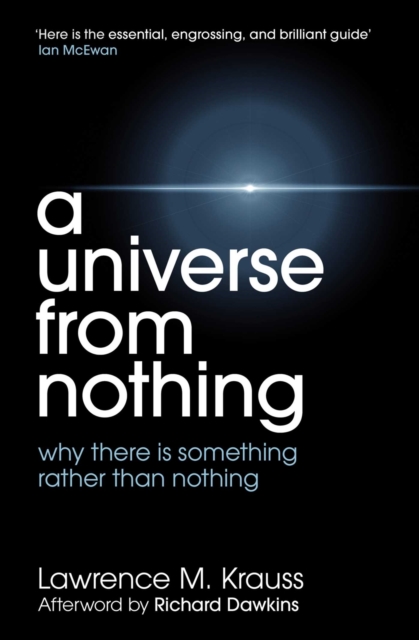
Internationally renowned theoretical physicist and bestselling author Lawrence Krauss offers provocative, revelatory answers to the biggest philosophical questions: Where did our universe come from?
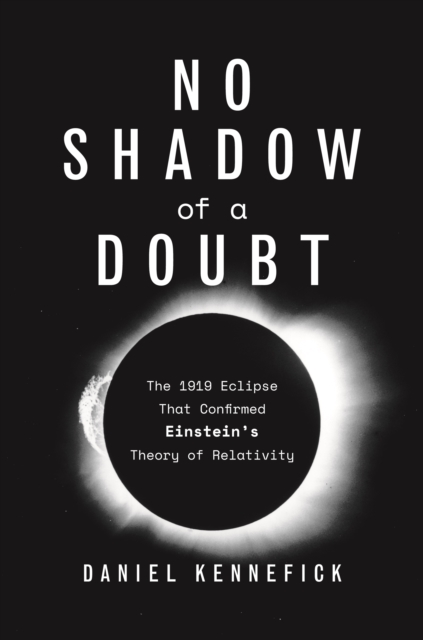
On their 100th anniversary, the story of the extraordinary scientific expeditions that ushered in the era of relativityIn 1919, British scientists led extraordinary expeditions to Brazil and Africa to test Albert Einstein's revolutionary new theory of general relativity in what became the century's most celebrated scientific experiment.
Integrating numerology, astrology, Kabbalah, and the contemplative life*; Connects the traditional, symbolic, psychological, alchemical, astrological, and numerological meanings of each of the 78 cards of the Tarot to its deepest meaning, the one closest to its spiritual core*; Reveals how the Tarot offers a hands-on way to learn multiple spiritual practices and metaphysical systems, including numerology, astrology, psychology, and Kabbalistic wisdom*; Details how to use the Tarot to calculate the numerological value of names, words, and dates, including birthdays, to reveal their metaphysical significanceAs John Sandbach illuminates in depth, the tarot is a portal to realms of wisdom.
Radiation processing is widely employed in plastics engineering to enhance the physical properties of polymers, such as chemical resistance, surface properties, mechanical and thermal properties, particle size reduction, melt properties, material compatibility, fire retardation, etc.
The most thrilling, genre-busting, unlikely science book you ll ever read, from the world-renowned, multi-award-winning, superstar physicist Lisa Randal.
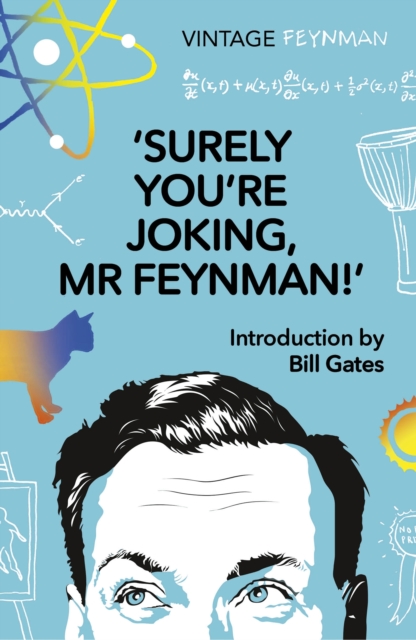
WITH A NEW INTRODUCTION BY BILL GATESIn this warm, insightful portrait of the Winner of the Nobel Prize for Physics in 1965, we see the wisdom, humour and curiosity of Richard Feynman through a series of conversations with his friend Ralph Leighton.
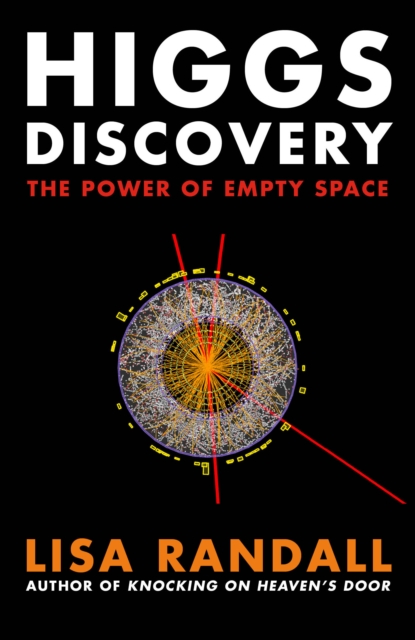
On July 4th, 2012, one of physics' most exhilarating results was announced: a new particle and very likely a new kind of particle had been discovered at the Large Hadron Collider, the huge particle accelerator designed to reproduce energies present in the universe a fraction of a second after the Big Bang.
Walker argues that previous translations have got it wrong, because they have failed to realise that Nostradamus was writing in an esoteric language called the 'green language'.
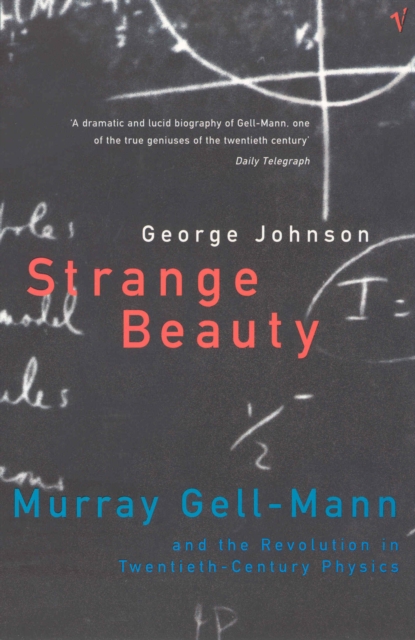
No scientist has done more to shape our understanding of the universe than Murray Gell-Mann, the Nobel Prize-winner considered by many colleagues to be the most brilliant physicist of his generation.
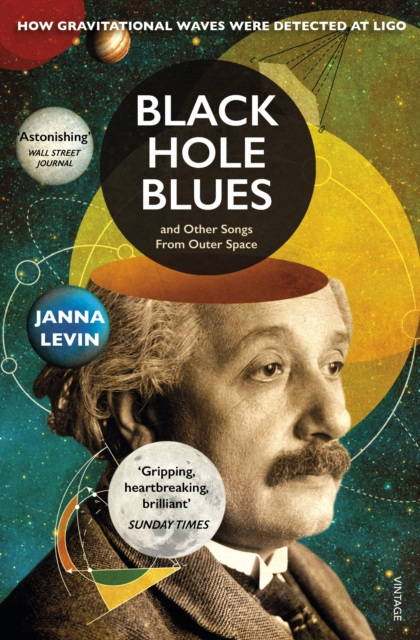
The full inside story of the detection of gravitational waves at LIGO, one of the most ambitious feats in scientific history*Selected as a Book of the Year 2016 in the Sunday Times*'This is empirical poetry.
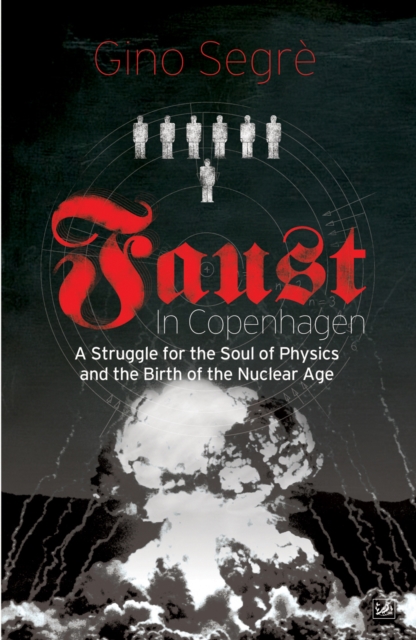
In 1932, the so-called annus mirabilis of modern physics, a group of scientists gathered in Copenhagen for a week-long conference on the extraordinary new work that was taking place in laboratories across the world; work that would ultimately lead to the development of nuclear weapons and the ensuing international power struggles.
Not Even Wrong is a fascinating exploration of our attempts to come to grips with perhaps the most intellectually demanding puzzle of all: how does the universe work at its most fundamnetal level?
The third edition of Quantum Non-Locality and Relativity has been carefully updated to reflect significant developments, including a new chapter covering important recent work in the foundations of physics.
The third edition of Quantum Non-Locality and Relativity has been carefully updated to reflect significant developments, including a new chapter covering important recent work in the foundations of physics.
This new edition of the well-established Kearey and Brooks text is fully updated to reflect the important developments in geophysical methods since the production of the previous edition.
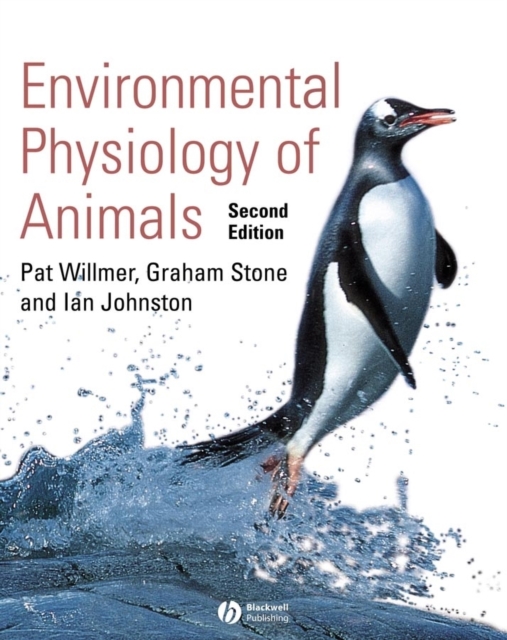
The new and updated edition of this accessible text provides a comprehensive overview of the comparative physiology of animals within an environmental context.