Presenting a history of agriculture in the American Corn Belt, this book argues that modernization occurred not only for economic reasons but also because of how farmers use technology as a part of their identity and culture.
This project is born out of similar questions and discussions on the topic of organicism emergent from two critical strands regarding the discourse of organic self-generation: one dealing with the problem of stopping in the design processes in history, and the other with the organic legacy of style in the nineteenth century as a preeminent form of aesthetic ideology.
This project is born out of similar questions and discussions on the topic of organicism emergent from two critical strands regarding the discourse of organic self-generation: one dealing with the problem of stopping in the design processes in history, and the other with the organic legacy of style in the nineteenth century as a preeminent form of aesthetic ideology.
This book presents an analysis of the institutional development of selected social science and humanities (SSH) disciplines in Argentina, France, Germany, Hungary, Italy, the Netherlands, Sweden and the United Kingdom.
This revealing work examines an approach from ancient astronomy to what was then a particularly important question, namely that of understanding the relationship between the position in the ecliptic and the time it takes for a fixed-length of the ecliptic beginning at that point to rise above the eastern horizon.
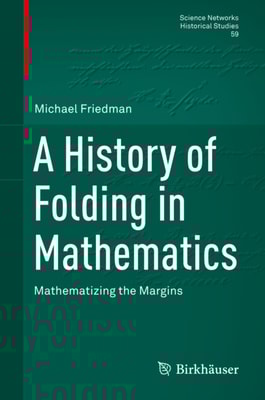
While it is well known that the Delian problems are impossible to solve with a straightedge and compass - for example, it is impossible to construct a segment whose length is cube root of 2 with these instruments - the discovery of the Italian mathematician Margherita Beloch Piazzolla in 1934 that one can in fact construct a segment of length cube root of 2 with a single paper fold was completely ignored (till the end of the 1980s).
Through the original writings and photography of renowned geologist Harold Rollin Wanless, this book paints a thorough and engaging picture of the White River Badlands' landscape, geology, biology, pioneer settlers, and how life was lived 100 years ago in a harsh, challenging, remote setting.
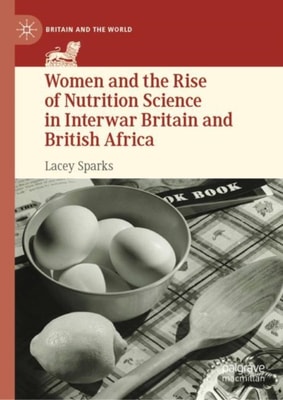
In the wake of the Great Depression, economic recovery and nutritional improvement in Britain simultaneously occurred with their decline in British Africa.
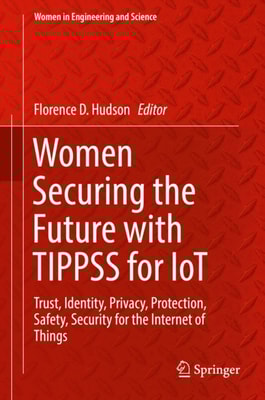
This book provides insight and expert advice on the challenges of Trust, Identity, Privacy, Protection, Safety and Security (TIPPSS) for the growing Internet of Things (IoT) in our connected world.
This volume provides a much needed, historically accurate narrative of the development of theories of space up to the beginning of the eighteenth century.
This is a volume of chapters on the historical study of information, computing, and society written by seven of the most senior, distinguished members of the History of Computing field.
This book offers insights relevant to modern history and epistemology of physics,mathematics and, indeed, to all the sciences and engineering disciplines emergingof 19th century.
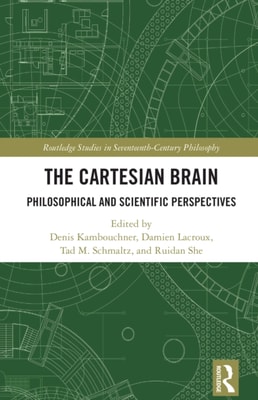
This volume presents new research on Cartesian psychophysiology that combines historical and textual analysis with a consideration of recent advances in contemporary neuroscience research.
Providing scientifically accurate, detailed, and accessible information to students and general readers, this book presents the history of vaccination; describes the administration, manufacturing, and regulation of vaccines in the United States; and explains the most recent scientific findings about vaccination while addressing concerns of those who oppose immunization.
This book provides a detailed biographical account of the industrious late nineteenth-century astronomer William Frederick Denning who, in later life, rose to be a celebrated public figure and a highly respected amateur astronomer.
This volume presents comprehensive investigations into various facets of observational astronomy during the medieval Islamic period, spanning from the ninth to the seventeenth centuries.
This volume presents new research on Cartesian psychophysiology that combines historical and textual analysis with a consideration of recent advances in contemporary neuroscience research.
Our current concept of matter, one of scientific research's greatest successes, represents a long journey, from questions posed during the birth of philosophy in Ancient Greece to recent advances in physics and chemistry, including Quantum Physics.
In 1971, psychologist Philip Zimbardo ran the now famous Stanford prison experiment to show that prison could make normal people behave in pathological ways.
Astrology and Magic from the Medieval Latin and Islamic World to Renaissance Europe brings together ten of Paola Zambelli's papers on the subject, four of which are published in English for the first time.
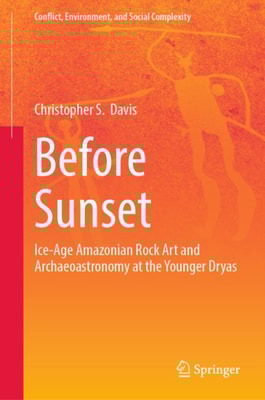
Through a presentation of the oldest rock art dated in the Americas, located in Monte Alegre, Brazil, this book analyzes an ancient ecological-astronomy strategy that theoretically made the rapid human migration in the Americas successful.
This collection of Charles Burnett's articles on the transmission of Arabic learning to Europe concentrates on the identity of the Latin translators and the context in which they were working.
Now in its sixth edition, this book explores the ways in which the industrial revolution reshaped world history, covering the international factors that helped launch the industrial revolution, its global spread and its impact from the end of the eighteenth century to the present day.
The hundred years that began with the Great Exhibition of 1851 and ended with the Festival of Britain in 1951 was a period of remarkable progress in science and technology.
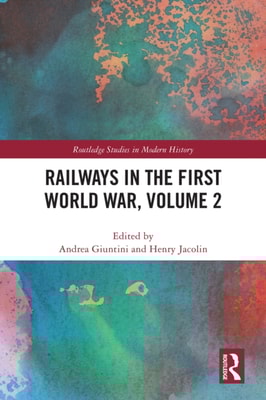
This book, the second in a two- volume work resulting from a 2018 conference organized by the International Railway History Association (IRHA), examines the relationship between the railways and the First World War from a global theoretical, methodological and geographical perspective.
This book, the second in a two- volume work resulting from a 2018 conference organized by the International Railway History Association (IRHA), examines the relationship between the railways and the First World War from a global theoretical, methodological and geographical perspective.
The hundred years that began with the Great Exhibition of 1851 and ended with the Festival of Britain in 1951 was a period of remarkable progress in science and technology.
Offering historical primary sources that outline both medical and experiential perspectives of physical disability, this book provides frequently mentioned but rarely provided material and supports readers in making sense of the material themselves to develop students' historical sensibilities, as well as their critical thinking, critical reading skills and their ability to perform historical document analysis.
Now in its sixth edition, this book explores the ways in which the industrial revolution reshaped world history, covering the international factors that helped launch the industrial revolution, its global spread and its impact from the end of the eighteenth century to the present day.