How science in medieval Europe originated in Buddhist AsiaWarriors of the Cloisters tells how key cultural innovations from Central Asia revolutionized medieval Europe and gave rise to the culture of science in the West.
The story of the visionary scientists who invented the futureIn 1969, Princeton physicist Gerard O'Neill began looking outward to space colonies as the new frontier for humanity's expansion.
The impact on climate from 200 years of industrial development is an everyday fact of life, but did humankind's active involvement in climate change really begin with the industrial revolution, as commonly believed?
The clash of faith and science in Napoleonic FranceThe Dendera zodiac-an ancient bas-relief temple ceiling adorned with mysterious symbols of the stars and planets-was first discovered by the French during Napoleon's campaign in Egypt, and quickly provoked a controversy between scientists and theologians.
A major history of technology and Western conquestFor six hundred years, the nations of Europe and North America have periodically attempted to coerce, invade, or conquer other societies.
The volcano that has fascinated scientists, writers, and poets for two millenniaCapricious, vibrant, and volatile, Vesuvius has been and remains one of the world's most dangerous volcanoes.
In this first ethnographic study of the European Space Agency, Stacia Zabusky explores the complex processes involved in cooperation on space science missions in the contemporary context of European integration.
Desde las antiguas civilizaciones que hicieron mapas de los cielos a Star Trek, X-Files y Apolo 13, el espacio sideral ha intrigado a la gente por mucho tiempo.
The Measure of God is a lively historical narrative offering the reader a sense for what has taken place in the God and science debate over the past century.
Unraveling the Mystery of the Human Soul: A Rabbi's Profound Journey Inspired by Albert Einstein's Poignant LetterWinner of the 2017 Nautilus Award in the Religion/Spirituality of Western Thought categoryWhen Rabbi Naomi Levy stumbled upon a poignant letter by Albert Einstein, his words perfectly encapsulated her beliefs about the human condition: That we are intimately connected, yet blind to this truth.
Increasing awareness of the extent and cause of environmental problems has fuelled the emergence of a new and timely discipline: environmental history.
The seemingly unlimited reach of powerful biotechnologies and the attendant growth of the multibillion-dollar industry have raised difficult questions about the scientific discoveries, political assumptions, and cultural patterns that gave rise to for-profit biological research.
Shortlisted for the Andre Simon Food & Drink Book AwardAn intoxicating interconnected history of booze and medicine, from one of the world's foremost cocktail writers.
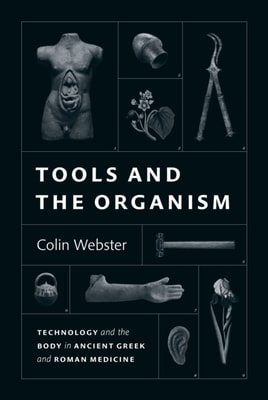
The first book to show how the concept of bodily organs emerged and how ancient tools influenced conceptualizations of human anatomy and its operations.
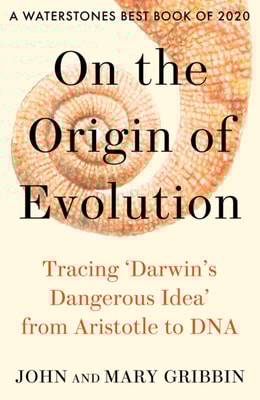
A Waterstones Best Book of 2020The theory of evolution by natural selection did not spring fully formed and unprecedented from the brain of Charles Darwin.
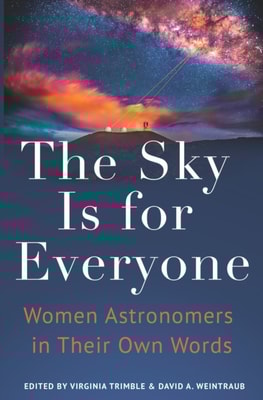
An inspiring anthology of writings by trailblazing women astronomers from around the globeThe Sky Is for Everyone is an internationally diverse collection of autobiographical essays by women who broke down barriers and changed the face of modern astronomy.
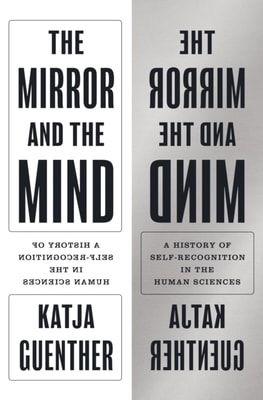
How the classic mirror test served as a portal for scientists to explore questions of self-awarenessSince the late eighteenth century, scientists have placed subjects-humans, infants, animals, and robots-in front of mirrors in order to look for signs of self-recognition.
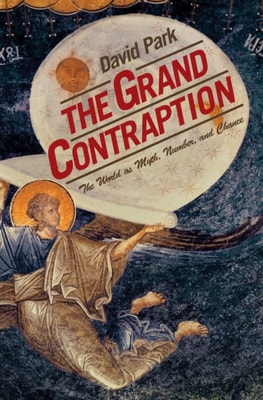
The Grand Contraption tells the story of humanity's attempts through 4,000 years of written history to make sense of the world in its cosmic totality, to understand its physical nature, and to know its real and imagined inhabitants.
The little-known history of how the Sahara was transformed from a green and fertile land into the largest hot desert in the worldThe Sahara is the largest hot desert in the world, equal in size to China or the United States.
The origins and development of the modern American emergency stateFrom pandemic disease, to the disasters associated with global warming, to cyberattacks, today we face an increasing array of catastrophic threats.
An authoritative interdisciplinary account of the historic discovery of gravitational wavesIn 1915, Albert Einstein predicted the existence of gravitational waves-ripples in the fabric of spacetime caused by the movement of large masses-as part of the theory of general relativity.
Leading scholars take stock of Darwin's ideas about human evolution in the light of modern scienceIn 1871, Charles Darwin published The Descent of Man, a companion to Origin of Species in which he attempted to explain human evolution, a topic he called "e;the highest and most interesting problem for the naturalist.
The first ethnographic exploration of the contentious debate over whether nonhuman primates are capable of cultureIn the 1950s, Japanese zoologists took note when a number of macaques invented and passed on new food-washing behaviors within their troop.
A gripping history of the polar continent, from the great discoveries of the nineteenth century to modern scientific breakthroughsAntarctica, the ice kingdom hosting the South Pole, looms large in the human imagination.
The classic case for why government must support science-with a new essay by physicist and former congressman Rush Holt on what democracy needs from science todayScience, the Endless Frontier is recognized as the landmark argument for the essential role of science in society and government's responsibility to support scientific endeavors.
On their 100th anniversary, the story of the extraordinary scientific expeditions that ushered in the era of relativityIn 1919, British scientists led extraordinary expeditions to Brazil and Africa to test Albert Einstein's revolutionary new theory of general relativity in what became the century's most celebrated scientific experiment.
A comprehensive account of the origins, evolution, and behavior of South and Central American primatesNew World Monkeys brings to life the beauty of evolution and biodiversity in action among South and Central American primates, who are now at risk.
How scientists through the ages have conducted thought experiments using imaginary entities-demons-to test the laws of nature and push the frontiers of what is possible Science may be known for banishing the demons of superstition from the modern world.
A fundamentally new approach to the history of science and technologyThis book presents a new way of thinking about the history of science and technology, one that offers a grand narrative of human history in which knowledge serves as a critical factor of cultural evolution.
The Age of Railways was an era of extraordinary change which utterly transformed every aspect of British life - from trade and transportation to health and recreation.