Biographic Memoirs: Volume 45 contains the biographies of deceased members of the National Academy of Sciences and bibliographies of their published works.
This is the 21st Volume in the series Memorial Tributes compiled by the National Academy of Engineering as a personal remembrance of the lives and outstanding achievements of its members and foreign associates.
This is the fifteenth volume in the series of Memorial Tributes compiled by the National Academy of Engineering as a personal remembrance of the lives and outstanding achievements of its members and foreign associates.
This is the fifteenth volume in the series of Memorial Tributes compiled by the National Academy of Engineering as a personal remembrance of the lives and outstanding achievements of its members and foreign associates.
An original study of late Enlightenment aesthetics, poetics, and environmental medicine as overlapping ways of comprehending the dislocations of historical existence lodged in the movements of bodies and minds This book studies later eighteenth-century medicine, aesthetics, and poetics as overlapping forms of knowledge increasingly concerned about the relationship between the geographical movements of persons displaced from home and the physiological or nervous "e;motions"e; within their bodies and minds.
A wide-ranging and original introduction to the Anthropocene (the Age of Humanity) that offers fresh, theoretical insights bridging the sciences and the humanities From noted environmental historian Carolyn Merchant, this book focuses on the original concept of the Anthropocene first proposed by Paul Crutzen and Eugene Stoermer in their foundational 2000 paper.
An engaging history of the surprising, poignant, and occasionally scandalous stories behind scientific names and their cultural significance, “More fun than you’ve ever had with taxonomy in your whole entire life!
The history of particle physics, the hunt for the most elusive particle, and the fundamental questions the search has inspired How did physicists combine talent and technology to discover the Higgs boson, the last piece in our inventory of the subatomic world?
A "e;highly readable"e; account of the role Britain played in Einstein's life-by inspiring his teenage passion for physics and providing refuge from the Nazis (The Wall Street Journal).
A provocative essay challenging the idea of Buddhist exceptionalism, from one of the world’s most widely respected philosophers and writers on Buddhism and science Buddhism has become a uniquely favored religion in our modern age.
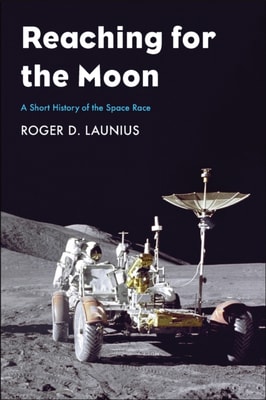
Fifty years after the Moon landing, a new history of the space race explores the lives of both Soviet and American engineers At the dawn of the space age, technological breakthroughs in Earth orbit flight were both breathtaking feats of ingenuity and disturbances to a delicate global balance of power.
Explore the evolution of astronomy from Dante to Einstein, as seen through the eyes of trailblazing Victorian astronomer Mary Acworth Evershed In 1910, Mary Acworth Evershed (1867–1949) sat on a hill in southern India staring at the moon as she grappled with apparent mistakes in Dante’s Divine Comedy.
A short and entertaining introduction to thermodynamics that uses real-world examples to explain accessibly an important but subtle scientific theory A romantic description of the second law of thermodynamics is that the universe becomes increasingly disordered.
"e;Empowering and thoroughly researched, this book offers useful contemporary analysis and possible solutions to one of the greatest threats to democracy.
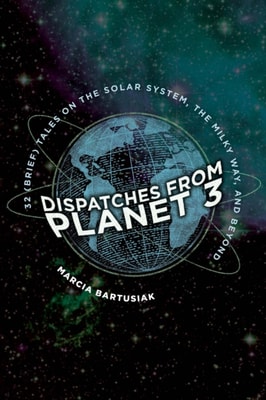
An award-winning science writer presents a captivating collection of cosmological essays for the armchair astronomerThe galaxy, the multiverse, and the history of astronomy are explored in this engaging compilation of cosmological tales by multiple-award-winning science writer Marcia Bartusiak.
A unique, beautifully illustrated exploration of our fascination with our closest primate relatives, and the development of primatology as a discipline This insightful work is a compact but wide-ranging survey of humankind’s relationship to the great apes (chimpanzees, bonobos, gorillas, orangutans), from antiquity to the present.
A captivating historical survey of the key debates, questions, and controversies at the intersection of science and religion Throughout history, scientific discovery has clashed with religious dogma, creating conflict, controversy, and sometimes violent dispute.
An international team of biologists, philosophers, and historians of science explores the critically important process of replication in biological and biomedical research Without replication, the trustworthiness of scientific research remains in doubt.
A gripping tale of 150 years of scientific adventure, research, and discovery at the Yale Peabody Museum This fascinating book tells the story of how one museum changed ideas about dinosaurs, dynasties, and even the story of life on earth.
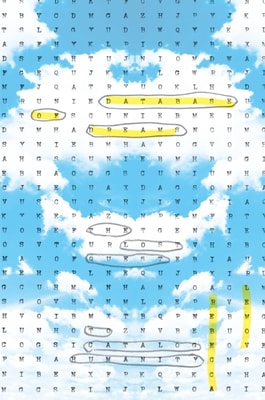
An acclaimed science historian uncovers the fascinating story of a “lost” project to unlock humanity’s common denominator that prefigured the emergence of Big Data Just a few years before the dawn of the digital age, Harvard psychologist Bert Kaplan set out to build the largest database of sociological information ever assembled.
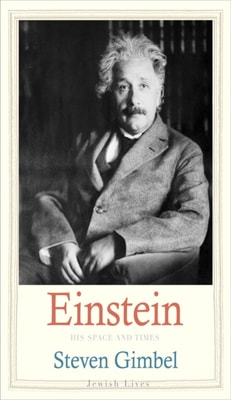
From the prizewinning Jewish Lives series, a revealing new portrait of Albert Einstein, the world’s first scientific “superstar” The commonly held view of Albert Einstein is of an eccentric genius for whom the pursuit of science was everything.
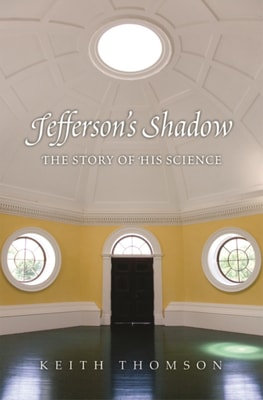
A distinguished scholar urges scientists and religious thinkers to become colleagues rather than adversaries in areas where their fields overlap Each age has its own crisis—our modern experience of science-religion conflict is not so very different from that experienced by our forebears, Keith Thomson proposes in this thoughtful book.
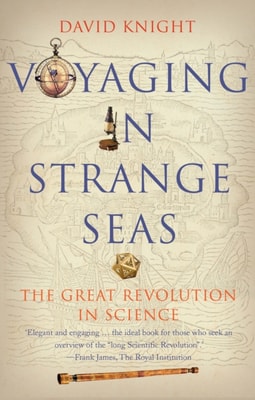
An ambitious, landmark history of the Scientific Revolution, from the age of Columbus to the age of Cook In 1492 Columbus set out across the Atlantic; in 1776 American colonists declared their independence.
A noted medical historian explores the roles played by various intellectual frameworks and trends in the writing of history A collection of ten essays paired with substantial prefaces, this book chronicles and contextualizes Roger Cooter’s contributions to the history of medicine.
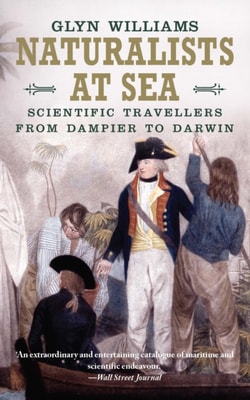
Tales of the intrepid early naturalists who set sail on dangerous voyages of discovery in the vast, unknown Pacific On the great Pacific discovery expeditions of the “long eighteenth century,” naturalists for the first time were commonly found aboard ships sailing forth from European ports.