A Pulitzer Prize-winning author examines South Pole expeditions, "e;wrapping the science in plenty of dangerous drama to keep readers engaged"e; (Booklist).
How Western notions of the Buddha have come to misrepresent his teachings and the traditional goals of Buddhist practice This book tells the story of the Scientific Buddha, "born" in Europe in the 1800s but commonly confused with the Buddha born in India 2,500 years ago.
In this book, Gregory Feist reviews and consolidates the scattered literatures on the psychology of science, then calls for the establishment of the field as a unique discipline.
This book relates how, between 1954 and 1961, the biologist Seymour Benzer mapped the fine structure of the rII region of the genome of the bacterial virus known as phage T4.
In 1957 two young scientists, Matthew Meselson and Frank Stahl, produced a landmark experiment confirming that DNA replicates as predicted by the double helix structure Watson and Crick had recently proposed.
From the world-famous expert on chimpanzees - the powerfully compelling sequel to the international bestseller IN THE SHADOW OF MAN: 'An instant animal classic' Time'I can't imagine a more vivid or unexpectedly moving introduction to chimpanzees in the wild than Jane Goodall's' New York TimesEquipped with little more than a notebook, binoculars, and her fascination with wildlife, Jane braved a realm of unknowns to give the world a remarkable window into humankind's closest living relatives.
Figuring the Population Bomb traces the genealogy of twentieth-century demographic facts that created a mathematical panic about a looming population explosion.
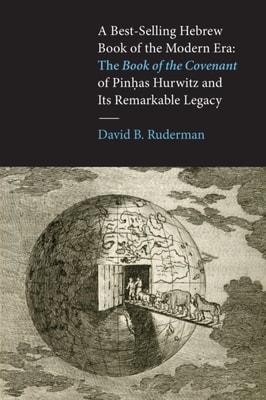
The history of a single book sheds light on the beginnings of modern Jewish thoughtIn 1797, in what is now the Czech Republic, Pinas Hurwitz published Book of the Covenant.
Focusing on the period between the 1970s and the present, Life as Surplus is a pointed and important study of the relationship between politics, economics, science, and cultural values in the United States today.
In 1950, Alan Turing, the British mathematician, cryptographer, and computer pioneer, looked to the future: now that the conceptual and technical parameters for electronic brains had been established, what kind of intelligence could be built?
Queer Feminist Science Studies takes a transnational, trans-species, and intersectional approach to this cutting-edge area of inquiry between womens, gender, and sexuality studies and science and technology studies (STS).
This fascinating study looks at how the seemingly incompatible forces of science, magic, and religion came together in the 15th, 16th, and 17th centuries to form the foundations of modern culture.
How early twentieth century fumigation technologies transformed maritime quarantine practices and inspired utopian visions of disease-free global trade.
The relationship of the dead body with technology through history, from nineteenth-century embalming machines to the death-prevention technologies of today.
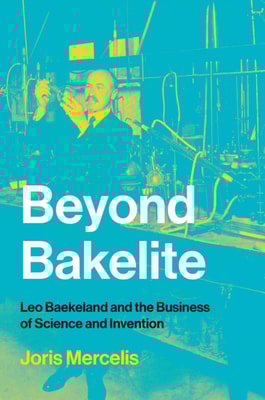
The changing relationships between science and industry in the late nineteenth and early twentieth centuries, illustrated by the career of the “father of plastics.
How highly abstract quantum concepts were represented in language, and how these concepts were later taken up by philosophers, literary critics, and new-age gurus.
An argument that we should be optimistic about the capacity of “methodologically omnivorous” geologists, paleontologists, and archaeologists to uncover truths about the deep past.
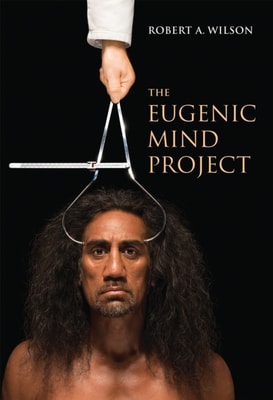
An examination of eugenic thinking past and present, from forced sterilization to prenatal screening, drawing on experience with those who survived eugenics.
The transformation of acoustics into electro-acoustics, a field at the intersection of science and technology, guided by electrical engineering, industry, and the military.
How, beginning in the mid 1960s, the US semiconductor industry helped shape changes in American science, including a new orientation to the short-term and the commercial.
Explorations of science, technology, and innovation in Africa not as the product of “technology transfer” from elsewhere but as the working of African knowledge.