Broad perspective on collectivity in the life sciences, from microorganisms to human consensus, and the theoretical and empirical opportunities and challenges.
How scientists used transformative new technologies to understand the complexities of weather and the atmosphere, told through the intertwined careers of three key figures.
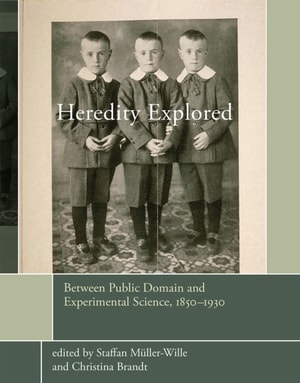
Investigations of how the understanding of heredity developed in scientific, medical, agro-industrial, and political contexts of the late nineteenth and early twentieth centuries.
An examination of digitality not simply as a technical substrate but also as the logical basis for reshaped concepts of labor, subjectivity, and collectivity.
The evolution of a set of fields—including operations research and systems analysis—intended to improve policymaking and explore the nature of rational decision-making.
An expert investigates Russia''s long history of technological invention followed by commercial failure and points to new opportunities to break the pattern.
An analysis of Newton''s mathematical work, from early discoveries to mature reflections, and a discussion of Newton''s views on the role and nature of mathematics.
How Paris, London, Chicago, Berlin, and Tokyo created modernity through science and technology by means of urban planning, international expositions, and museums.
The story of molecular biologist Elizabeth Blackburn and her groundbreaking research on telomeres and what it reveals about the resourceful opportunism that characterizes the best scientific thinking.
The Copernican Achievement captures the pivotal discussions and insights from the 1973 symposium at UCLA, commemorating the profound influence of Nicolaus Copernicus on science and thought.
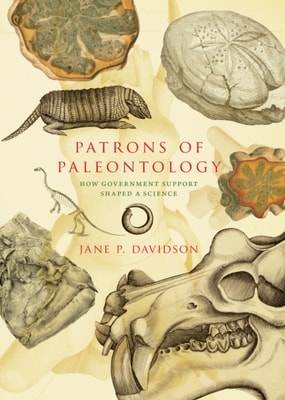
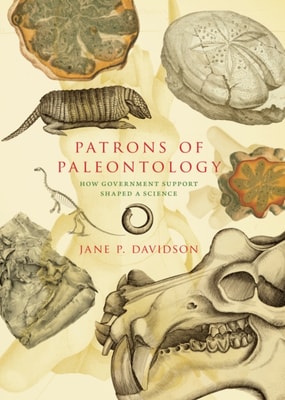
In the 19th and early 20th centuries, North American and European governments generously funded the discoveries of such famous paleontologists and geologists as Henry de la Beche, William Buckland, Richard Owen, Thomas Hawkins, Edward Drinker Cope, O.
In the 19th and early 20th centuries, North American and European governments generously funded the discoveries of such famous paleontologists and geologists as Henry de la Beche, William Buckland, Richard Owen, Thomas Hawkins, Edward Drinker Cope, O.
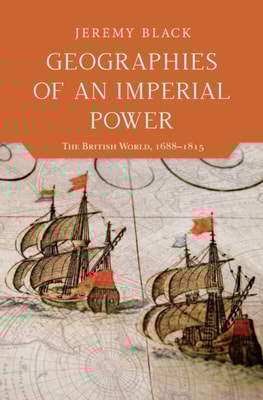
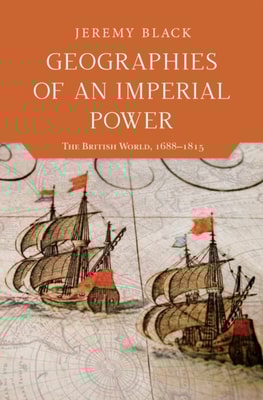
From explorers tracing rivers to navigators hunting for longitude, spatial awareness and the need for empirical understanding were linked to British strategy in the 1700s.
From explorers tracing rivers to navigators hunting for longitude, spatial awareness and the need for empirical understanding were linked to British strategy in the 1700s.
How cultural categories shaped--and were shaped by--new ideas about controlling nature Ranging from alchemy to necromancy, "e;books of secrets"e; offered medieval readers an affordable and accessible collection of knowledge about the natural world.
Contributors investigate the motivation behind scientifically-embedded contemporary art practices as well as art-based scientific research and engagement that attempt to shape society.
Tracing the history of sports medicine from the ancient world through to the present day, this book shines new light on the embedded relationship between physicians, performance enhancement and doping in elite sport.
Empire of Knowledge: The Academy of Sciences of the USSR (1917-1970) explores the unparalleled scope and influence of the Soviet Academy of Sciences, an institution that served as both the pinnacle of Soviet scholarly achievement and a crucial mechanism for integrating science with state ideology.
After decades of decline during the twentieth century, breastfeeding rates began to rise again in the 1970s, a rebound that has continued to the present.
'An utterly dazzling book, the best piece of history I have read for a long time' Jerry Brotton, author of A History of the World in Twelve Maps'Not merely an horologist's delight, but an ingenious meditation on the nature and symbolism of time-keeping itself' Richard HolmesThe measurement of time has always been essential to human civilization, from early Roman sundials to the advent of GPS.
The nineteenth century was, for many societies, a period of coming to grips with the growing, and seemingly unstoppable, domination of the world by the "e;Great Powers"e; of Europe.
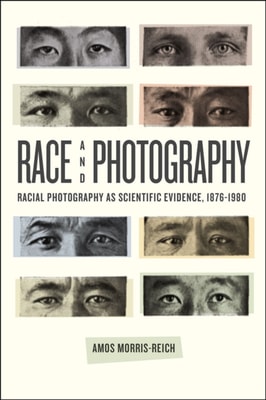
Race and Photography studies the changing function of photography from the 1870s to the 1940s within the field of the "e;science of race,"e; what many today consider the paradigm of pseudo-science.
Nothing is considered more natural than the connection between Isaac Newton's science and the modernity that came into being during the eighteenth-century Enlightenment.
Although largely unknown today, during his lifetime Mutio Oddi of Urbino (1569-1639) was a highly esteemed scholar, teacher, and practitioner of a wide range of disciplines related to mathematics.
The implicit questions that inevitably underlie German bioethics are the same ones that have pervaded all of German public life for decades: How could the Holocaust have happened?