In 1864, amid headline-grabbing heresy trials, members of the British Association for the Advancement of Science were asked to sign a declaration affirming that science and scripture were in agreement.
Few scenes capture the American experience so eloquently as that of a lonely train chugging across the vastness of the Great Plains, or snaking through tortuous high mountain passes.
Explore the lives and achievements of more than 85 of the world's most inspirational and influential scientists with this innovative and boldly graphic biography-led book.
Rich with archival detail and compelling characters, Life on Display uses the history of biological exhibitions to analyze museums' shifting roles in twentieth-century American science and society.
Although modern cell biology is often considered to have arisen following World War II in tandem with certain technological and methodological advances-in particular, the electron microscope and cell fractionation-its origins actually date to the 1830s and the development of cytology, the scientific study of cells.
A FINANCIAL TIMES AND TLS BOOK OF THE YEARAn exhilarating new biography of John von Neumann: the lost genius who invented our world'A sparkling book, with an intoxicating mix of pen-portraits and grand historical narrative.
THE INTERNATIONAL BESTSELLERBest Books of the Year, GuardianThe poignant story of the visionary surgeon who rebuilt the faces of the First World War's injured heroes, and in the process ushered in the modern era of plastic surgeryFrom the moment the first machine gun rang out over the Western Front, one thing was clear: mankind's military technology had wildly surpassed its medical capabilities.
Chosen as a Book of the Year by The Times, Daily Telegraph, TLS, BBC History Magazine and Tablet'Compulsive, brilliantly clear and superbly well-written, it's a charismatic evocation of another world' Ian Mortimer, author of The Time Traveller's Guide to Medieval EnglandThe Middle Ages were a time of wonder.
A young theoretical physicist's guide to how the radical new science of counterfactuals can reveal the full scope of our universeThere is a vast class of properties that science has so far almost entirely neglected.
One of our great contemporary scientists reveals the ten profound insights that illuminate what everyone should know about the physical worldIn Fundamentals, Nobel laureate Frank Wilczek offers the reader a simple yet profound exploration of reality based on the deep revelations of modern science.
*FROM THE NUMBER ONE BESTSELLING AUTHOR OF FRAZZLED*A three way encounter between a Monk, a neuroscientist and Ruby Wax sounds like the set up for a joke.
By dividing the creation of matter, energy, life, and mind into three big bangs, Holmes Rolston III brings into focus a history of the universe that respects both scientific discovery and the potential presence of an underlying intelligence.
In this book, Weikart helps unlock the mystery of Hitler's evil by vividly demonstrating the surprising conclusion that Hitler's immorality flowed from a coherent ethic.
An annotated edition of a landmark study in the history of psychology, including extensive essays and other critical apparatus that place Antoine Despine's work in its proper historical and scientific context.
This is an account of the roles of local and national movements, and of memory and regret in the destruction or preservation of the architectural, artistic, and historic legacy of Europe in which the author examines what is cultural heritage and why it matters.
Although Christianity's precise influence on the Holocaust cannot be determined and the Christian churches did not themselves perpetrate the Final Solution, Michael argues that two millennia of Christian ideas and prejudices and their impact on Christians' behaviour appear to be the major basis of antisemitism and it's apex, the Holocaust.
In this overview of secularism and its history, Kennedy traces, through a series of intellectual biographies of leading European thinkers such as Rousseau, Kant, Hegel, Marx, Dostoyevsky, and Solzhenitsyn, just how the Western world changed from religious to secular.
Arun Bala challenges Eurocentric conceptions of history by showing how Chinese, Indian, Arabic, and ancient Egyptian ideas in philosophy, mathematics, cosmology and physics played an indispensable role in making possible the birth of modern science.
This book is a survey of the relationship between the two Celtic and Roman traditions in Merovingian Gaul, Lombard Italy, and the British Isles during the period of the Easter controversy.
The purpose of this book is to show how the science of biology has been influenced by ethical, religious, social, cultural and philosophical beliefs as to the nature of life and our human place in the natural world.
In this controversial book, the authors show how the Roman-Jewish wars were precipitated partly by Jewish demographic and religious expansion and by conflict with the Greeks and their culture.
'Psychiatry and Empire' brings together scholars in the History of Medicine and Colonialism to explore questions of race, gender and power relations in former colonial states across Africa, Asia, the Caribbean and the Pacific.
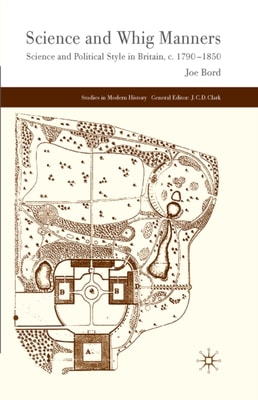
Approaching the intersection of politics and science from the perspective of political history, this book looks at how nineteenth-century British Whigs used the themes of natural science to signal their identities, and how their devotion to a culture of liberality helped to define them.
Explores the dynamics between Orthodoxy and politics in Romania, providing an accessible narrative on church-state relations from the establishment of the state in 1859 to the rise of Ceau?