The Mass Image situates the creation of the first photographically illustrated magazines within the social relations of the emerging popular culture of late Victorian London.
Rabies was a constant threat in Victorian Britain and gripped popular imagination, not least because its human form, hydrophobia, produced a vile death with the mind and body out of control.
Traces the Islamic healing tradition's interaction with Indian society and politics as these evolved in tandem from 1600 to 1900, and demonstrates how an in-house struggle for hegemony can be as potent as external power in defining medical, social and national modernity.
The ideological underpinnings of early modern theories of contagion are dissected in this volume by an integrated team of literary scholars, cultural historians, historians of medicine and art historians.
This collection of essays approaches the history of psychoanalysis from a transnational perspective, emphasizing the flows of people, ideas and institution across cultures and nations, and examining the factors that contributed to turn psychoanalysis into one of the systems of beliefs that defined the Twentieth century.
Between the microscopic world of quarks and atoms, and the macroscopic (observable) one of pebbles and planets, there is another world, strangely neglected by science.
This book charts the history of the worldwide introduction of an operative treatment method for broken bones, osteosynthesis, by a Swiss-based association, called AO.
In 1877, university Professor Carl von Linde obtained a patent for his refrigerator from the Imperial Patent Office - a patent for something that was not merely an invention, but the result of serious research in the basic laws of physics.
Landscape, Literature and English Religious Culture, 1660-1800 offers a powerful revisionist account of the intellectual significance of landscape descriptions during the 'long' Eighteenth-century.
This provocative and critical work addresses the question of why scientific realists and positivists consider experimental physics to be a natural and empirical science.
This, the first full analysis of Arbuthnot's Art of Political Lying (1712), argues that the work is a commentary on long-standing themes of debate in science, rhetoric and philosophy and should be seen as a seminal satire standing in opposition to the practice of Swift and Pope.
A new and innovative account of British sociology's intellectual origins that uses previously unknown archival resources to show how the field's forgotten roots in a late nineteenth and early twentieth-century debate about biology can help us understand both its subsequent development and future potential.
Based on thousands of letters written by patients and their relatives and on a wide range of other sources, this book provides the first comprehensive account of how early modern people understood, experienced and dealt with common diseases and how they dealt with them on a day-to-day basis.
The first book to provide a detailed analysis of the body-trafficking networks of the dead poor that underpinned the expansion of medical education from Victorian times.
An examination of how bodies and sexualities have been constructed, categorised, represented, diagnosed, experienced and subverted from the fifteenth to the early twenty-first century.
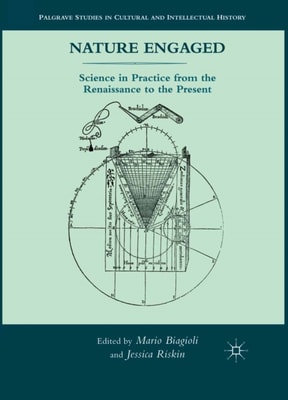
This volume gathers essays that focus on the worldliness of science, its inseparable engagement in the major institutional bases of social life: law, market, church, school, and nation.
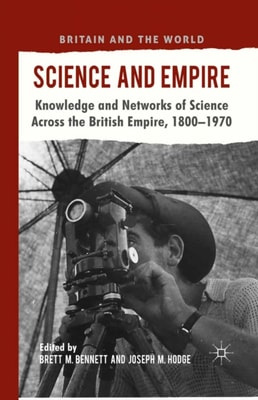
Offering one of the first analyses of how networks of science interacted within the British Empire during the past two centuries, this volume shows how the rise of formalized state networks of science in the mid nineteenth-century led to a constant tension between administrators and scientists.
Starting with the first man-made satellite 'Sputnik' in 1957 and culminating four years later with the first human in space, Yuri Gagarin, space became a new utopian horizon.
This book explores the world of religious thinking on imprisonment, and how images of imprisonment were used in monastic thought, the cult of saints, the early inquisitions, preaching and hagiographical literature and the world of the crusades to describe a conception of inclusion and freedom that was especially meaningful to medieval Christians.
Exploring aspects of Irish medical history, from the nature and proposed remedies for various illnesses in eighteenth century Ireland, to the treatment of influenza in twentieth-century Ireland, this book shows how the cultures of medical care evolved over three centuries.