Focusing on a wide range of philosophers and writers, from Nietzsche to Derrida and Flaubert to Borges, this book charts the history of the deployment of the concept of nihilism within the discourses of philosophical and aesthetic modernism and considers the similarities and differences between modernist and postmodernist approaches to nihilism.
The story of the rise and fall of smallpox, one of the most savage killers in the history of mankind, and the only disease ever to be successfully exterminated (30 years ago next year) by a public health campaign.
With a focus on colonial Bengal, this book demonstrates how the dynamics of agrarian prosperity or decline, communal conflicts, poverty and famine can only be properly understood from an ecological perspective as well as discussions of state's coercion and popular resistance, market forces and dependency, or contested cultures and consciousness.
This book is unique in recording the history of all the Protestant churches in Ireland in the twentieth century, though with particular focus on the two largest - the Presbyterian and the Church of Ireland.
A pioneering contribution to the cultural history of medicine exploring issues as diverse as dissection of the heart, childbirth, masturbation, animal care, hermaphrodites, orthopaedics, 'miracle' drugs, smallpox and sex advice in different European cultures from the 1600s to the present day.
Using interdisciplinary techniques and original research findings, this volume explores the shift from humoral to nervous interpretations of emotion; the emotional nature of the medical professional-patient relationship; and the extent to which gender might influence the diagnosis, treatment and prognosis of pathological emotional conditions.
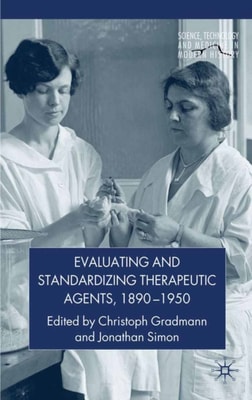
Following the testing of therapeutic sera, the quantified evaluation of a pharmaceutical's efficacy became a key feature of medicine in the twentieth century.
As people of the modern era were singularly prone to nervous disorders, the nervous system became a model for describing political and social organization.
Examining the ways in which hypochondria forms both a malady and a metaphor for a range of British Romantic writers, Grinnell contends that this is not one illness amongst many, but a disorder of the very ability to distinguish between illness and health, a malady of interpretation that mediates a broad spectrum of pressing cultural questions.
This book highlights stories of the most important 13 ground-based observatories and 14 space probes in human history, leading readers through each significant step of human's astronomical observation journey.
An analysis of a scandal involving a doctor accused of allowing a number of women to develop cervical cancer from carcinoma in situ as part of an experiment he had been conducting since the 1960s into conservative treatment of the disease, to more broadly explore dramatic changes in medical history in the second half of the twentieth century.
Madness in the Family explores how colonial families coped with insanity through a trans-colonial study of the relationships between families and public colonial hospitals for the insane in New South Wales, Victoria, Queensland and New Zealand between 1860 and 1914.
This book examines comparatively the US and the UK governments' management of Y2K and considers the extent to which such management can be understood as responses to market pressures, public opinion and organized interests.
Written in honour of eminent historian Roy Porter by twenty of his colleagues and students, the collection renders cutting edge scholarship accessible.
This book examines the relationship between medicine and the media in 1960's Britain, when the first wave of heart transplants were as much media as medical events and marked a decisive period in post-war history.
The trial of the seven bishops in 1688 was a signifcant prelude to the Glorious Revolution, as popular support for the bishops led to a widespread welcome for William of Orange's invasion.
A sparkling new collection on religion and imperialism, covering Ireland and Britain, Australia, Canada, the Cape Colony and New Zealand, Botswana and Madagascar.
The past three decades have seen a remarkable growth of interest in intellectual history and this book provides the first comprehensive survey of recent research in this field.
The period from Copernicus to Newton witnessed a Scientific Revolution which eventually led to modern science and both built upon and sharply challenged the earlier natural philosophies of the classical world.
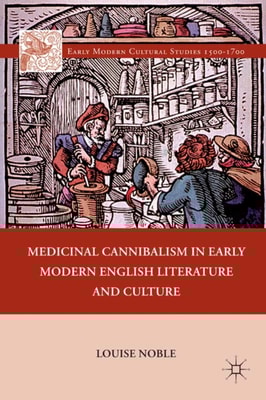
The human body, traded, fragmented and ingested is at the centre of Medicinal Cannibalism in Early Modern English Literature and Culture , which explores the connections between early modern literary representations of the eaten body and the medical consumption of corpses.
Looking at literary discourse, including poetry, fiction and non-fiction, diaries, and drama, this collection offers remarkable and fascinating examples of women writers who integrated scientific material in their literary narratives.
The first academic study of this subject is an entertaining look at the search for Sasquatch which considers not just the nature of monsters and monster hunting in the late 20th century, but the more important relationship between the professional scientists and amateur naturalists who hunt them-and their place in the history of science.
An examination of a pivotal moment in the history of science through the career and cultural impact of the historically neglected Victorian physicist John Tyndall, establishing him as an important figure of the period, whose scientific discoveries and philosophy of science in society are still relevant today.
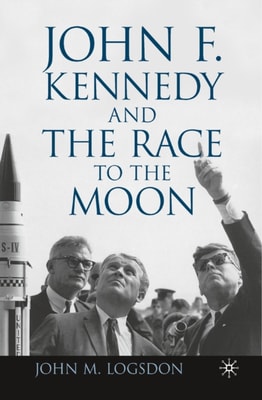
While there are many biographies of JFK and accounts of the early years of US space efforts, this book uses primary source material and interviews with key participants to provide a comprehensive account of how the actions taken by JFK's administration have shaped the course of the US space program over the last 45 years.
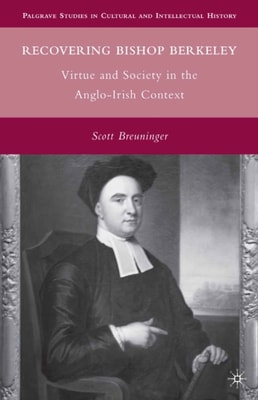
Through a close analysis of key texts and the larger historical contexts within which they were composed, this study explores George Berkeley's engagement with the social and economic threats facing Ireland and Britain, highlighting his belief that virtue and religion could play crucial roles in alleviating these problems.
Rubenfeld and the contributors to this collection posit that German physicians betrayed the Hippocratic Oath when they chose knowledge over wisdom, the state over the individual, a fuhrer over God, and personal gain over professional ethics.
Scientific and historical studies in the Nineteenth-century challenged Christian believers to restate their faith in ways which took account of new knowledge.
The implicit questions that inevitably underlie German bioethics are the same ones that have pervaded all of German public life for decades: How could the Holocaust have happened?