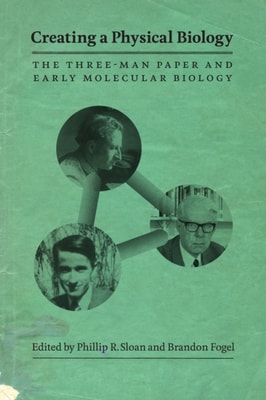
The Faustian bargain-in which an individual or group collaborates with an evil entity in order to obtain knowledge, power, or material gain-is perhaps best exemplified by the alliance between world-renowned human geneticists and the Nazi state.
Probing the relationship between German political economy and everyday fiscal administration, The Disordered Police State focuses on the cameral sciences-a peculiarly German body of knowledge designed to train state officials-and in so doing offers a new vision of science and practice during the seventeenth and eighteenth-centuries.
Fernando Vidal's trailblazing text on the origins of psychology traces the development of the discipline from its appearance in the late sixteenth century to its redefinition at the end of the seventeenth and its emergence as an institutionalized field in the eighteenth.
Measuring the Universe is the first history of the evolution of cosmic dimensions, from the work of Eratosthenes and Aristarchus in the third century B.
Although largely unknown today, during his lifetime Mutio Oddi of Urbino (1569-1639) was a highly esteemed scholar, teacher, and practitioner of a wide range of disciplines related to mathematics.
Examining the history of phrenology and physiognomy, Beauty and the Brain proposes a bold new way of understanding the connection between science, politics, and popular culture in early America.
In the fall of 1950, newspapers around the world reported that the Italian-born nuclear physicist Bruno Pontecorvo and his family had mysteriously disappeared while returning to Britain from a holiday trip.
Tropical Africa was one of the last regions of the world to experience formal European colonialism, a process that coincided with the advent of a range of new scientific specialties and research methods.
Self-styled adventurer, literary wit, philosopher, and statesman of science, Pierre-Louis Moreau de Maupertuis (1698-1759) stood at the center of Enlightenment science and culture.
A novel inquiry into the sociopolitical dimensions of public medicine, Healing the Land and the Nation traces the relationships between disease, hygiene, politics, geography, and nationalism in British Mandatory Palestine between the world wars.
Few scenes capture the American experience so eloquently as that of a lonely train chugging across the vastness of the Great Plains, or snaking through tortuous high mountain passes.
Joseph Dalton Hooker (1817-1911) was an internationally renowned botanist, a close friend and early supporter of Charles Darwin, and one of the first-and most successful-British men of science to become a full-time professional.
Eating the Enlightenment offers a new perspective on the history of food, looking at writings about cuisine, diet, and food chemistry as a key to larger debates over the state of the nation in Old Regime France.
The royal Parisian botanical garden, the Jardin du Roi, was a jewel in the crown of the French Old Regime, praised by both rulers and scientific practitioners.
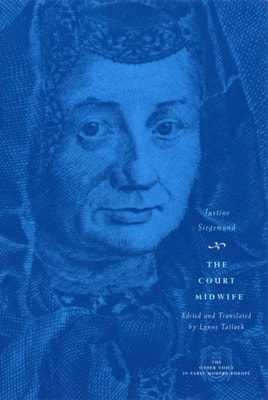
First published in 1690, The Court Midwife made Justine Siegemund (1636-1705) the spokesperson for the art of midwifery at a time when most obstetrical texts were written by men.
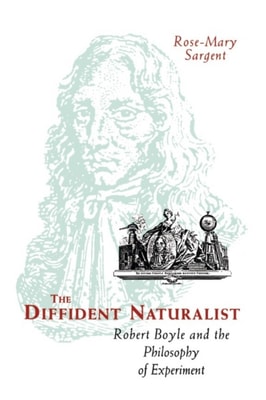
In a provocative reassessment of one of the quintessential figures of early modern science, Rose-Mary Sargent explores Robert Boyle's philosophy of experiment, a central aspect of his life and work that became a model for mid- to late seventeenth-century natural philosophers and for many who followed them.
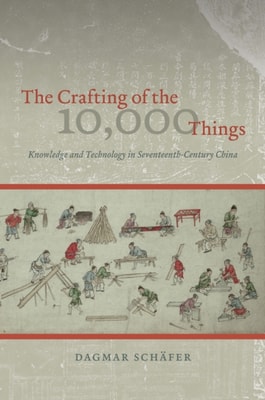
The last decades of the Ming dynasty, though plagued by chaos and destruction, saw a significant increase of publications that examined advances in knowledge and technology.
We think with objects-we conduct our lives surrounded by external devices that help us recall information, calculate, plan, design, make decisions, articulate ideas, and organize the chaos that fills our heads.
Nothing is considered more natural than the connection between Isaac Newton's science and the modernity that came into being during the eighteenth-century Enlightenment.