Following the launch of Sputnik, the North Atlantic Treaty Organization became a prominent sponsor of scientific research in its member countries, a role it retained until the end of the Cold War.
Across early modern Europe, men and women from all ranks gathered medical, culinary, and food preservation recipes from family and friends, experts and practitioners, and a wide array of printed materials.
In an age when the nature of reality is complicated daily by advances in bioengineering, cloning, and artificial intelligence, it is easy to forget that the ever-evolving boundary between nature and technology has long been a source of ethical and scientific concern: modern anxieties about the possibility of artificial life and the dangers of tinkering with nature more generally were shared by opponents of alchemy long before genetic science delivered us a cloned sheep named Dolly.
Modernity in interwar Europe frequently took the form of a preoccupation with mechanizing the natural; fears and fantasies revolved around the notion that the boundaries between people and machines were collapsing.
Today, predicting the impact of human activities on the earth's climate hinges on tracking interactions among phenomena of radically different dimensions, from the molecular to the planetary.
In 1864, amid headline-grabbing heresy trials, members of the British Association for the Advancement of Science were asked to sign a declaration affirming that science and scripture were in agreement.
"e;We frequently see one idea appear in one discipline as if it were new, when it migrated from another discipline, like a mole that had dug under a fence and popped up on the other side.
Mice are used as model organisms across a wide range of fields in science today-but it is far from obvious how studying a mouse in a maze can help us understand human problems like alcoholism or anxiety.
At the center of Stefan Bargheer's account of bird watching, field ornithology, and nature conservation in Britain and Germany stands the question of how values change over time and how individuals develop moral commitments.
Since the late nineteenth century, medicine has sought to foster the birth of healthy children by attending to the bodies of pregnant women, through what we have come to call prenatal care.
In the next century, sea levels are predicted to rise at unprecedented rates, causing flooding around the world, from the islands of Malaysia and the canals of Venice to the coasts of Florida and California.
These days, the idea of the cyborg is less the stuff of science fiction and more a reality, as we are all, in one way or another, constantly connected, extended, wired, and dispersed in and through technology.
Anna Morandi Manzolini (1714-74), a woman artist and scientist, surmounted meager origins and limited formal education to become one of the most acclaimed anatomical sculptors of the Enlightenment.
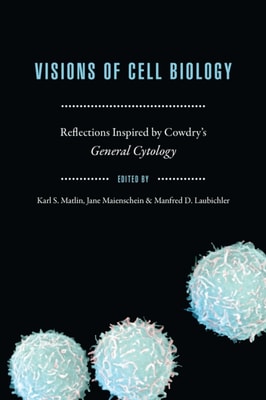
Although modern cell biology is often considered to have arisen following World War II in tandem with certain technological and methodological advances-in particular, the electron microscope and cell fractionation-its origins actually date to the 1830s and the development of cytology, the scientific study of cells.
Popular science readers embrace epics-the sweeping stories that claim to tell the history of all the universe, from the cosmological to the biological to the social.
A committed Lutheran excommunicated from his own church, a friend to Catholics and Calvinists alike, a layman who called himself a "e;priest of God,"e; a Copernican in a world where Ptolemy still reigned, a man who argued at the same time for the superiority of one truth and the need for many truths to coexist-German astronomer Johannes Kepler was, to say the least, a complicated figure.
In recent years, emotions have become a major, vibrant topic of research not merely in the biological and psychological sciences but throughout a wide swath of the humanities and social sciences as well.
With US soldiers stationed around the world and engaged in multiple conflicts, Americans will be forced for the foreseeable future to come to terms with those permanently disabled in battle.
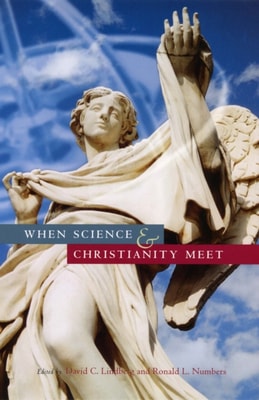
This book, in language accessible to the general reader, investigates twelve of the most notorious, most interesting, and most instructive episodes involving the interaction between science and Christianity, aiming to tell each story in its historical specificity and local particularity.
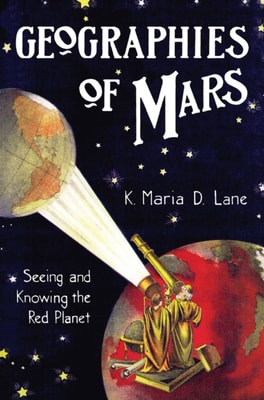
A highly original exploration of geography's spatial dimensions at the beginning of the twentieth century, offering a new view of the mapping of far-off worlds.
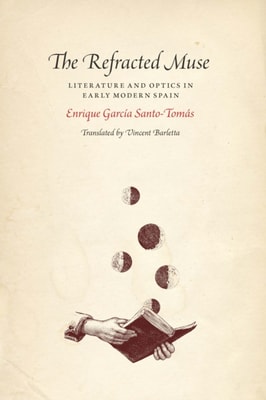
Galileo never set foot on the Iberian Peninsula, yet, as Enrique Garcia Santo-Tomas unfolds in The Refracted Muse, the news of his work with telescopes brought him to surprising prominence-not just among Spaniards working in the developing science of optometry but among creative writers as well.
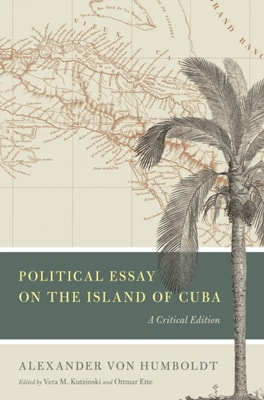
The research Alexander von Humboldt amassed during his five-year trek through the Americas in the early nineteenth-century proved foundational to the fields of botany, geography, and geology.
In the 1960s University of Cincinnati radiologist Eugene Saenger infamously conducted human experiments on patients with advanced cancer to examine how total body radiation could treat the disease.
Because of their spectacular, naturalistic pictures of plants and the human body, Leonhart Fuchs's De historia stirpium and Andreas Vesalius's De humani corporis fabrica are landmark publications in the history of the printed book.
At the center of Stefan Bargheer's account of bird watching, field ornithology, and nature conservation in Britain and Germany stands the question of how values change over time and how individuals develop moral commitments.
In the late nineteenth century, scientists, psychiatrists, and medical practitioners began employing a new experimental technique for the study of neuroses: hypnotism.