Though underexplored in contemporary scholarship, the Victorian attempts to turn aesthetics into a science remain one of the most fascinating aspects of that era.
While there is enormous public interest in biodiversity, food sourcing, and sustainable agriculture, romantic attachments to heirloom seeds and family farms have provoked misleading fantasies of an unrecoverable agrarian past.
Scores of wild species and ecosystems around the world face a variety of human-caused threats, from habitat destruction and fragmentation to rapid climate change.
In the early twentieth century, a curriculum known as nature study flourished in major city school systems, streetcar suburbs, small towns, and even rural one-room schools.
After the atomic bombing at the end of World War II, anxieties about survival in the nuclear age led scientists to begin stockpiling and freezing hundreds of thousands of blood samples from indigenous communities around the world.
In the final years of the twentieth century, emigres from engineering and computer science devoted themselves to biology and resolved that if the aim of biology is to understand life, then making life would yield better theories than experimentation.
Darwin's concept of natural selection has been exhaustively studied, but his secondary evolutionary principle of sexual selection remains largely unexplored and misunderstood.
From Blaise Pascal in the 1600s to Charles Babbage in the first half of the nineteenth century, inventors struggled to create the first calculating machines.
Amid the unrest, dislocation, and uncertainty of seventeenth-century Europe, readers seeking consolation and assurance turned to philosophical and scientific books that offered ways of conquering fears and training the mind-guidance for living a good life.
Medical confidentiality is an essential cornerstone of effective public health systems, and for centuries societies have struggled to maintain the illusion of absolute privacy.
Georges-Louis Leclerc, le comte de Buffon's The Epochs of Nature, originally published as Les Epoques de la Nature in 1778, is one of the first great popular science books, a work of style and insight that was devoured by Catherine the Great of Russia and influenced Humboldt, Darwin, Lyell, Vernadsky, and many other renowned scientists.
When asked to compare the practice of medicine today to that of a hundred years ago, most people will respond with a story of therapeutic revolution: Back then we had few effective remedies, but now we have more (and more powerful) tools to fight disease, from antibiotics to psychotropics to steroids to anticancer agents.
Like many of the traditional medicines of South Asia, Ayurvedic practice transformed dramatically in the later nineteenth and early twentieth centuries.
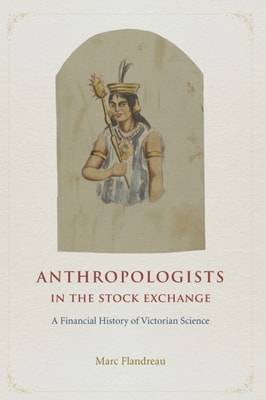
Uncovering strange plots by early British anthropologists to use scientific status to manipulate the stock market, Anthropologists in the Stock Exchange tells a provocative story that marries the birth of the social sciences with the exploits of global finance.
Field biology is enjoying a resurgence due to several factors, the most important being the realization that there is no ecology, no conservation, and no ecosystem restoration without an understanding of the basic relationships between species and their environments-an understanding gleaned only through field-based natural history.
Though Jesuits assumed a variety of roles as missionaries in late imperial China, their most memorable guise was that of scientific expert, whose maps, clocks, astrolabes, and armillaries reportedly astonished the Chinese.
A history of scientific ideas about extinction that explains why we learned to value diversity as a precious resource at the same time as we learned to "e;think catastrophically"e; about extinction.
The Science of Walking recounts the story of the growing interest and investment of Western scholars, physicians, and writers in the scientific study of an activity that seems utterly trivial in its everyday performance yet essential to our human nature: walking.
From Henry David Thoreau to Bill McKibben, critics and philosophers have long sought to demonstrate how a sufficient life-one without constant, environmentally damaging growth-might still be rich and satisfying.
Nineteenth-century paleontologists boasted that, shown a single bone, they could identify or even reconstruct the extinct creature it came from with infallible certainty-"e;Show me the bone, and I will describe the animal!
One of the articles of faith of twentieth-century intellectual history is that the theory of relativity in physics sprang in its essentials from the unaided genius of Albert Einstein; another is that scientific relativity is unconnected to ethical, cultural, or epistemological relativisms.
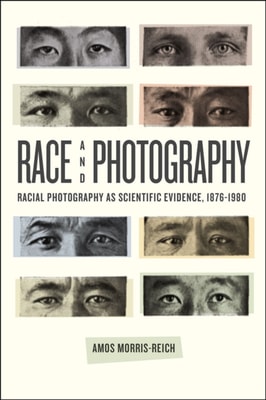
Race and Photography studies the changing function of photography from the 1870s to the 1940s within the field of the "e;science of race,"e; what many today consider the paradigm of pseudo-science.
The end of the eighteenth century saw the start of a new craze in Europe: tiny portraits of single eyes that were exchanged by lovers or family members.
Like nearly every area of scholarly inquiry today, the biological sciences are broken into increasingly narrow fields and subfields, its practitioners divided into ecologists, evolutionary biologists, taxonomists, paleontologists, and much more.
The paleoecological history of the Americas is as complex as the region is broad: stretching from the Arctic Circle to Tierra del Fuego, the New World features some of the most extraordinary vegetation on the planet.