Following the discovery in Europe in the late 1850s that humanity had roots predating known history and reaching deep into the Pleistocene era, scientists wondered whether North American prehistory might be just as ancient.
At the close of the Second World War, modernist poets found themselves in an increasingly scientific world, where natural and social sciences claimed exclusive rights to knowledge of both matter and mind.
After decades of decline during the twentieth century, breastfeeding rates began to rise again in the 1970s, a rebound that has continued to the present.
Sir Charles Bell (1774-1842) was a medical reformer in a great age of reform-an occasional and reluctant vivisectionist, a theistic popularizer of natural science, a Fellow of the Royal Society, a surgeon, an artist, and a teacher.
With the overwhelming amount of new information that bombards us each day, it is perhaps difficult to imagine a time when the widespread availability of the printed word was a novelty.
Threatened by the proliferation of cheap, mass-produced publications, the Religious Tract Society issued a series of publications on popular science during the 1840s.
Making "e;Nature"e; is the first book to chronicle the foundation and development of Nature, one of the world's most influential scientific institutions.
Some years ago, David Freedberg opened a dusty cupboard at Windsor Castle and discovered hundreds of vividly colored, masterfully precise drawings of all sorts of plants and animals from the Old and New Worlds.
Long before the age of "e;Big Data"e; or the rise of today's "e;self-quantifiers,"e; American capitalism embraced "e;risk"e;--and proceeded to number our days.
Between the early seventeenth and the mid-nineteenth century, the field of natural history in Japan separated itself from the discipline of medicine, produced knowledge that questioned the traditional religious and philosophical understandings of the world, developed into a system (called honzogaku) that rivaled Western science in complexity-and then seemingly disappeared.
William Hyde Wollaston made an astonishing number of discoveries in an astonishingly varied number of fields: platinum metallurgy, the existence of ultraviolet radiation, the chemical elements palladium and rhodium, the amino acid cystine, and the physiology of binocular vision, among others.
Founded around 1700 by a group of German Lutherans known as Pietists, the Halle Orphanage became the institutional headquarters of a universal seminar that still stands largely intact today.
Before the hydrogen bomb indelibly associated radioactivity with death, many chemists, physicians, botanists, and geneticists believed that radium might hold the secret to life.
A synthesis of eighteenth-century intellectual and cultural developments that offers an original explanation of how Enlightenment thought grappled with the problem of divine agency.
Primate Societies is a synthesis of the most current information on primate socioecology and its theoretical and empirical significance, spanning the disciplines of behavioral biology, ecology, anthropology, and psychology.
The advent of recombinant DNA technology in the 1970s was a key moment in the history of both biotechnology and the commercialization of academic research.
Long before people were "e;going green"e; and toting reusable bags, the Progressive generation of the early 1900s was calling for the conservation of resources, sustainable foresting practices, and restrictions on hunting.
An era of sweeping cultural change in America, the postwar years saw the rise of beatniks and hippies, the birth of feminism, and the release of the first video game.
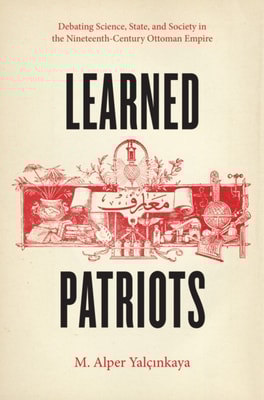
The nineteenth century was, for many societies, a period of coming to grips with the growing, and seemingly unstoppable, domination of the world by the "e;Great Powers"e; of Europe.
Neither Donkey nor Horse tells the story of how Chinese medicine was transformed from the antithesis of modernity in the early twentieth century into a potent symbol of and vehicle for China's exploration of its own modernity half a century later.
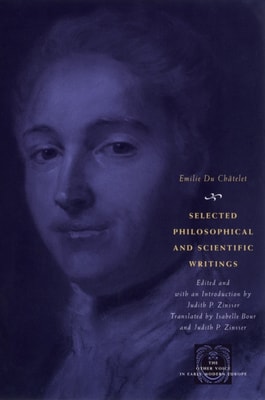
Though most historians remember her as the mistress of Voltaire, Emilie Du Chatelet (1706-49) was an accomplished writer in her own right, who published multiple editions of her scientific writings during her lifetime, as well as a translation of Newton's Principia Mathematica that is still the standard edition of that work in French.
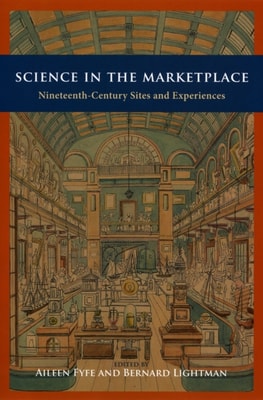
The nineteenth century was an age of transformation in science, when scientists were rewarded for their startling new discoveries with increased social status and authority.
The autopsy of Samuel Johnson (1709-84) initiated two centuries of Johnsonian anatomy-both in medical speculation about his famously unruly body and in literary devotion to his anecdotal remains.
When we think of sites of animal research that symbolize modernity, the first places that come to mind are grand research institutes in cities and near universities that house the latest in equipment and technologies, not the surroundings of the bird's nest, the octopus's garden in the sea, or the parts of inland lakes in which freshwater plankton reside.
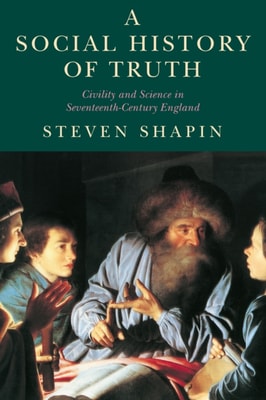
Although the Scientific Revolution has long been regarded as the beginning of modern science, there has been little consensus about its true character.
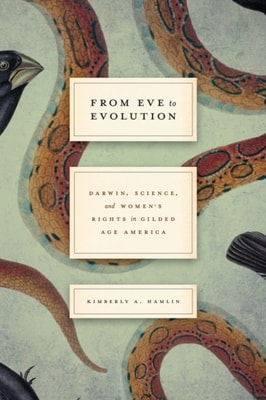
From Eve to Evolution provides the first full-length study of American women's responses to evolutionary theory and illuminates the role science played in the nineteenth-century women's rights movement.
One of the most popular and widely read books of the Middle Ages, Physiologus contains allegories of beasts, stones, and trees both real and imaginary, infused by their anonymous author with the spirit of Christian moral and mystical teaching.
The Emergence of Tropical Medicine in France examines the turbulent history of the ideas, people, and institutions of French colonial and tropical medicine from their early modern origins through World War I.