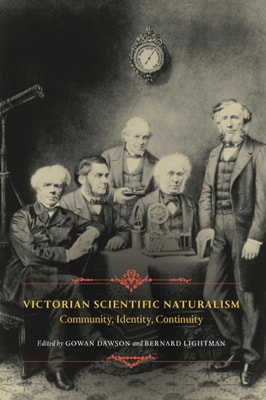
Victorian Scientific Naturalism examines the secular creeds of the generation of intellectuals who, in the wake of The Origin of Species, wrested cultural authority from the old Anglican establishment while installing themselves as a new professional scientific elite.
During most of the nineteenth century, physicians and pharmacists alike considered medical patenting and the use of trademarks by drug manufacturers unethical forms of monopoly; physicians who prescribed patented drugs could be, and were, ostracized from the medical community.
In Notebooks, English Virtuosi, and Early Modern Science, Richard Yeo interprets a relatively unexplored set of primary archival sources: the notes and notebooks of some of the leading figures of the Scientific Revolution.
How do scientists persuade colleagues from diverse fields to cross the disciplinary divide, risking their careers in new interdisciplinary research programs?
In recent decades game theory-the mathematics of rational decision-making by interacting individuals-has assumed a central place in our understanding of capitalist markets, the evolution of social behavior in animals, and even the ethics of altruism and fairness in human beings.
Thirty years ago, the most likely place to find a biologist was standing at a laboratory bench, peering down a microscope, surrounded by flasks of chemicals and petri dishes full of bacteria.
Rich with archival detail and compelling characters, Life on Display uses the history of biological exhibitions to analyze museums' shifting roles in twentieth-century American science and society.
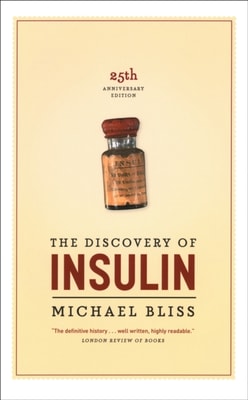
When insulin was discovered in the early 1920s, even jaded professionals marveled at how it brought starved, sometimes comatose diabetics back to life.
Recent scholarship has revealed that pioneering Victorian scientists endeavored through voluminous writing to raise public interest in science and its implications.
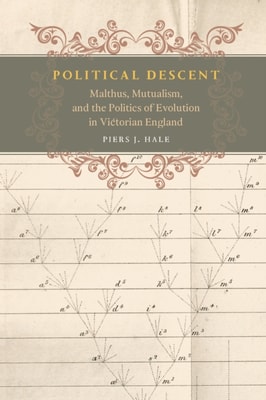
In tracing the history of Darwin's accomplishment and the trajectory of evolutionary theory during the late nineteenth and early twentieth centuries, most scholars agree that Darwin introduced blind mechanism into biology, thus banishing moral values from the understanding of nature.
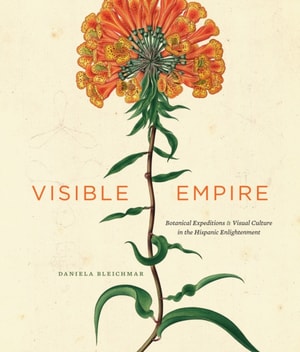
Between 1777 and 1816, botanical expeditions crisscrossed the vast Spanish empire in an ambitious project to survey the flora of much of the Americas, the Caribbean, and the Philippines.
In the late nineteenth century, scientists, psychiatrists, and medical practitioners began employing a new experimental technique for the study of neuroses: hypnotism.
Long before people were "e;going green"e; and toting reusable bags, the Progressive generation of the early 1900s was calling for the conservation of resources, sustainable foresting practices, and restrictions on hunting.
Founded around 1700 by a group of German Lutherans known as Pietists, the Halle Orphanage became the institutional headquarters of a universal seminar that still stands largely intact today.
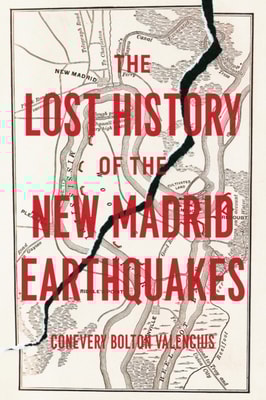
From December 1811 to February 1812, massive earthquakes shook the middle Mississippi Valley, collapsing homes, snapping large trees midtrunk, and briefly but dramatically reversing the flow of the continent's mightiest river.
In six short years, Galileo Galilei went from being a somewhat obscure mathematics professor running a student boarding house in Padua to a star in the court of Florence to the recipient of dangerous attention from the Inquisition for his support of Copernicanism.
During the first half of the twentieth century, supporters of the eugenics movement offered an image of a racially transformed America by curtailing the reproduction of "e;unfit"e; members of society.
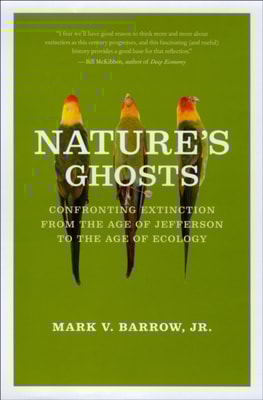
The rapid growth of the American environmental movement in recent decades obscures the fact that long before the first Earth Day and the passage of the Endangered Species Act, naturalists and concerned citizens recognized-and worried about-the problem of human-caused extinction.
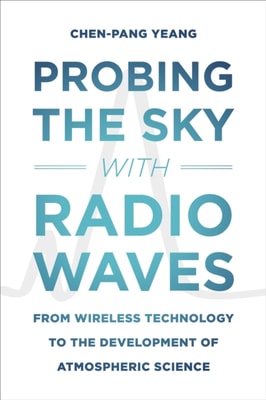
By the late nineteenth century, engineers and experimental scientists generally knew how radio waves behaved, and by 1901 scientists were able to manipulate them to transmit messages across long distances.
During the first half of the twentieth century, representatives of the French colonial health services actively strove to expand the practice of Western medicine in the frontier colony of Cambodia.
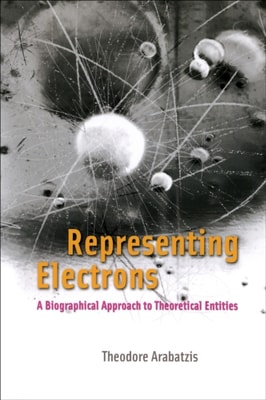
Both a history and a metahistory, Representing Electrons focuses on the development of various theoretical representations of electrons from the late 1890s to 1925 and the methodological problems associated with writing about unobservable scientific entities.
Because it laid the foundation for nearly all subsequent epistemologies, Immanuel Kant's Critique of Pure Reason has overshadowed his other interests in natural history and the life sciences, which scholars have long considered as separate from his rigorous theoretical philosophy-until now.
After World War II, the US Atomic Energy Commission (AEC) began mass-producing radioisotopes, sending out nearly 64,000 shipments of radioactive materials to scientists and physicians by 1955.
In 1984, Noel Swerdlow and Otto Neugebauer argued that Nicolaus Copernicus (1473-1543) explained planetary motion by using mathematical devices and astronomical models originally developed by Islamic astronomers in the thirteenth and fourteenth centuries.
The incalculable influence of Alexander von Humboldt (1769-1859) on biology, botany, geology, and meteorology deservedly earned him the reputation as the world's most illustrious scientist before Charles Darwin.
In Reading Darwin in Arabic, Marwa Elshakry questions current ideas about Islam, science, and secularism by exploring the ways in which Darwin was read in Arabic from the late 1860s to the mid-twentieth century.
From an historical perspective, this text presents an entirely non- mathematical introduction to astronomy from the first endeavours of the ancients to the current developments in research enabled by cutting edge technological advances.
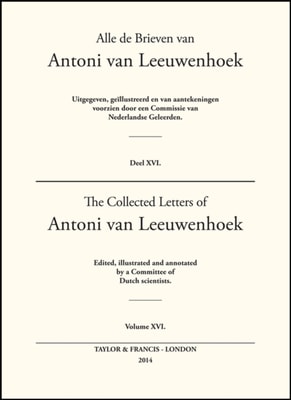
The contents of the letters published here, again show the great range of subjects that occupied Van Leeuwenhoek: from sugar candy, the shape and crystal structure of diamonds, the dissolution of silver crystals in aqua fortis to gold dust from Guinea dissolved in aqua regia and the dissolution and separation of gold, silver, and copper.
In volume XVI of The Collected Letters of Antoni van Leeuwenhoek, 25 letters of Van Leeuwenhoek have been included, all of them written from July 1707 to June 1712.