The present volume advances a recent historiographical turn towards the intersection of early modern philosophy and the life sciences by bringing together many of its leading scholars to present the contributions of important but often neglected figures, such as Ralph Cudworth, Nehemiah Grew, Francis Glisson, Hieronymus Fabricius ab Aquapendente, Georg Ernst Stahl, Juan Gallego de la Serna, Nicholas Hartsoeker, Henry More, as well as more familiar figures such as Descartes, Spinoza, Leibniz, Malebranche, and Kant.
Moscow's Novodevichy Cemetery is the final resting place of some of Russia's most celebrated figures, from Khrushchev and Yeltsin to Anton Chekhov, Sergei Eisenstein, Nikolai Gogol, and Mikhail Bulgakov.
Moscow's Novodevichy Cemetery is the final resting place of some of Russia's most celebrated figures, from Khrushchev and Yeltsin to Anton Chekhov, Sergei Eisenstein, Nikolai Gogol, and Mikhail Bulgakov.
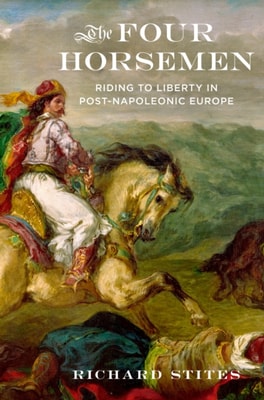
In a series of revolts starting in 1820, four military officers rode forth on horseback from obscure European towns to bring political freedom and a constitution to Spain, Naples, and Russia; and national independence to the Greeks.
In a series of revolts starting in 1820, four military officers rode forth on horseback from obscure European towns to bring political freedom and a constitution to Spain, Naples, and Russia; and national independence to the Greeks.
Historically, the scientific method has been said to require proposing a theory, making a prediction of something not already known, testing the prediction, and giving up the theory (or substantially changing it) if it fails the test.
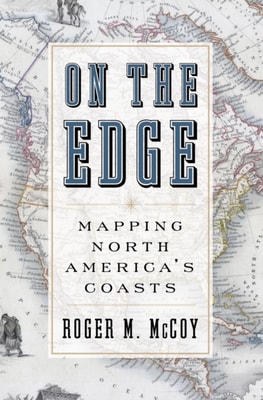
With our access to Google Maps, Global Positioning Systems, and Atlases that cover all regions and terrains and tell us precisely how to get from one place to another, we tend to forget there was ever a time when the world was unknown and uncharted--a mystery waiting to be solved.
With our access to Google Maps, Global Positioning Systems, and Atlases that cover all regions and terrains and tell us precisely how to get from one place to another, we tend to forget there was ever a time when the world was unknown and uncharted--a mystery waiting to be solved.
Planarians, a class of flatworm, are extraordinary: they possess the remarkable ability to regenerate lost body parts, including complete regeneration of the nervous system.
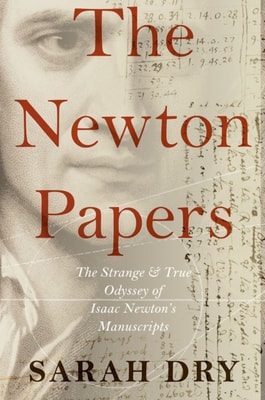
When Isaac Newton died in 1727 without a will, he left behind a wealth of papers that, when examined, gave his followers and his family a deep sense of unease.
With US soldiers stationed around the world and engaged in multiple conflicts, Americans will be forced for the foreseeable future to come to terms with those permanently disabled in battle.
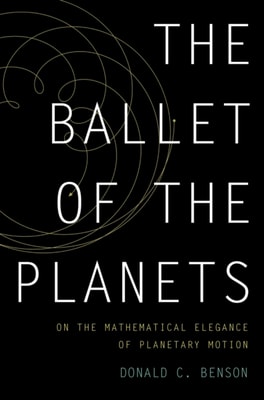
The Ballet of the Planets unravels the beautiful mystery of planetary motion, revealing how our understanding of astronomy evolved from Archimedes and Ptolemy to Copernicus, Kepler, and Newton.
What is meant by scientific evidence, and how can a definition of this concept be applied in the sciences to determine whether observed facts constitute evidence that a given theory is true?
In this long-awaited book, pre-eminent analytical philosopher Alvin Plantinga argues that the conflict between science and theistic religion is actually superficial, and that at a deeper level they are in concord.
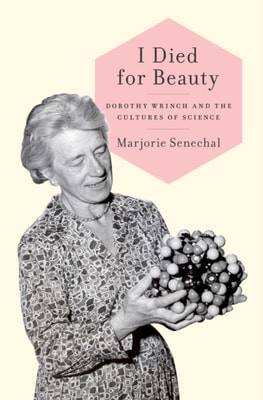
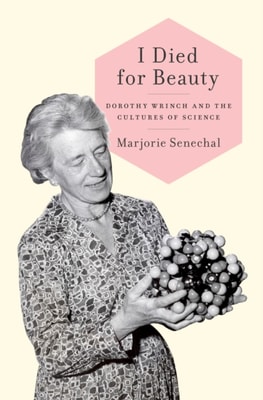
In the vein of A Beautiful Mind, The Man Who Loved Only Numbers, and Rosalind Franklin: The Dark Lady of DNA, this volume tells the poignant story of the brilliant, colorful, controversial mathematician named Dorothy Wrinch.
In 1913, English physicist Henry Moseley established an elegant method for "e;counting"e; the elements based on atomic number, ranging them from hydrogen (#1) to uranium (#92).
In this ground-breaking study of the Jewish reception of the Copernican revolution, Jeremy Brown examines four hundred years of Jewish writings on the Copernican model.
The Ballet of the Planets unravels the beautiful mystery of planetary motion, revealing how our understanding of astronomy evolved from Archimedes and Ptolemy to Copernicus, Kepler, and Newton.
This new second edition of Enchanted Evenings offers theater lovers an illuminating behind-the-scenes tour of some of America's best loved, most admired, and most enduring musicals.
If science has the equivalent of a Bloomsbury group, it is the five men born at the turn of the twentieth century in Budapest: Theodore von Karman, Leo Szilard, Eugene Wigner, John von Neumann, and Edward Teller.
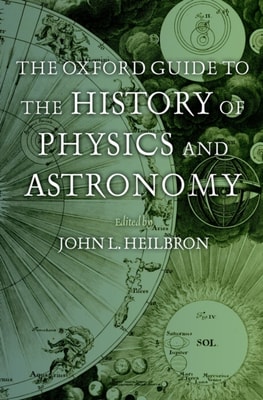
With over 150 alphabetically arranged entries about key scientists, concepts, discoveries, technological innovations, and learned institutions, the Oxford Guide to Physics and Astronomy traces the history of physics and astronomy from the Renaissance to the present.
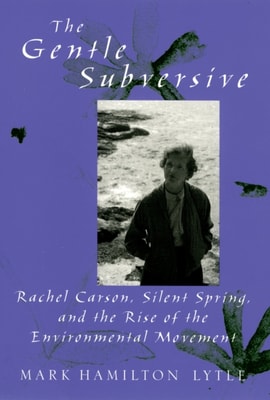
Rachel Carson's Silent Spring antagonized some of the most powerful interests in the nation--including the farm block and the agricultural chemical industry--and helped launch the modern environmental movement.
City of Light tells the story of fiber optics, tracing its transformation from 19th-century parlor trick into the foundation of our global communications network.
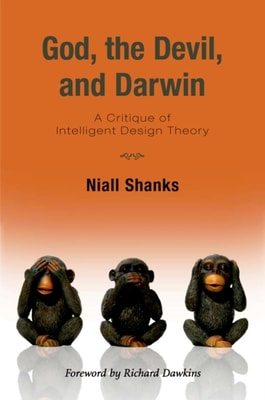
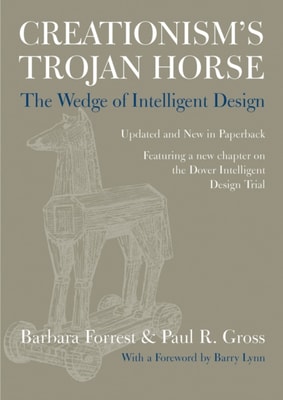
In the last fifteen years a controversial new theory of the origins of biological complexity and the nature of the universe has been fomenting bitter debates in education and science policy across North America, Europe, and Australia.
The History and Practice of Ancient Astronomy combines new scholarship with hands-on science to bring readers into direct contact with the work of ancient astronomers.
In the vein of A Beautiful Mind, The Man Who Loved Only Numbers, and Rosalind Franklin: The Dark Lady of DNA, this volume tells the poignant story of the brilliant, colorful, controversial mathematician named Dorothy Wrinch.
In 1913, English physicist Henry Moseley established an elegant method for "e;counting"e; the elements based on atomic number, ranging them from hydrogen (#1) to uranium (#92).
The History and Practice of Ancient Astronomy combines new scholarship with hands-on science to bring readers into direct contact with the work of ancient astronomers.