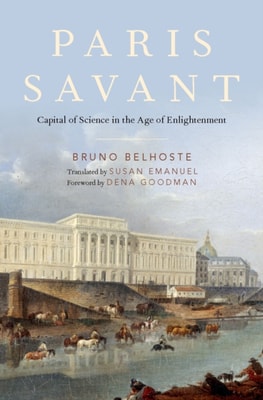
Novelist Honore de Balzac was the first to use the phrase "e;Paris savant"e; to refer to the dynamic Parisian scientific and intellectual community of the late 18th century.
Magdolna Hargittai uses over fifteen years of in-depth conversation with female physicists, chemists, biomedical researchers, and other scientists to form cohesive ideas on the state of the modern female scientist.
Magdolna Hargittai uses over fifteen years of in-depth conversation with female physicists, chemists, biomedical researchers, and other scientists to form cohesive ideas on the state of the modern female scientist.
Planarians, a class of flatworm, are extraordinary: they possess the remarkable ability to regenerate lost body parts, including complete regeneration of the nervous system.
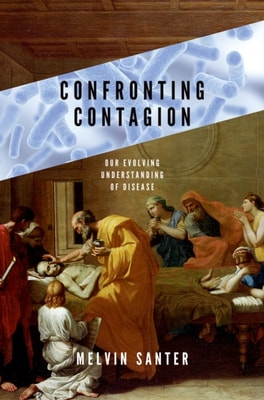
Throughout history, humankind's working theories regarding the cause of infectious disease have shifted drastically, as cultures developed their philosophic, religious, and scientific beliefs.
Throughout history, humankind's working theories regarding the cause of infectious disease have shifted drastically, as cultures developed their philosophic, religious, and scientific beliefs.
When Isaac Newton died in 1727 without a will, he left behind a wealth of papers that, when examined, gave his followers and his family a deep sense of unease.
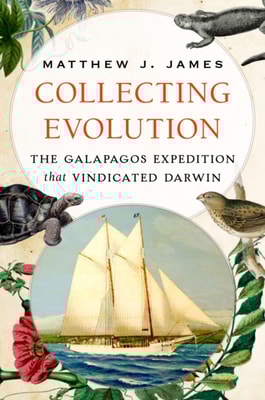
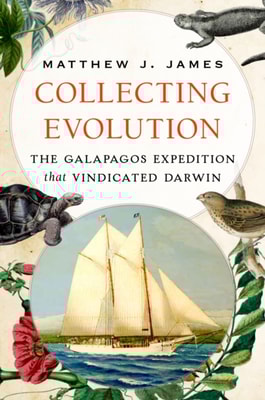
In 1905, eight men from the California Academy of Sciences set sail from San Francisco for a scientific collection expedition in the Galapagos Islands, and by the time they were finished in 1906, they had completed one of the most important expeditions in the history of both evolutionary and conservation science.
In 1905, eight men from the California Academy of Sciences set sail from San Francisco for a scientific collection expedition in the Galapagos Islands, and by the time they were finished in 1906, they had completed one of the most important expeditions in the history of both evolutionary and conservation science.
Murray Bookchin was not only one of the most significant and influential environmental philosophers of the twentieth century--he was also one of the most prescient.
Throughout the 1990s and the 2000s, Istvan, Balazs, and Magdolna Hargittai conducted hundreds of interviews with leading scientists in physics, chemistry, materials, and biomedical research.
Throughout the 1990s and the 2000s, Istvan, Balazs, and Magdolna Hargittai conducted hundreds of interviews with leading scientists in physics, chemistry, materials, and biomedical research.
Quarrelsome and quirky, a disheveled recluse who ate little, slept less, and yet had an iron constitution, Isaac Newton rose from a virtually illiterate family to become one of the towering intellects of science.
We ask question after question of an indifferent universe that would just as soon remain mute; and slowly, patiently, one sentence at a time, we write our own version of the book of nature.
Rachel Carson's Silent Spring antagonized some of the most powerful interests in the nation--including the farm block and the agricultural chemical industry--and helped launch the modern environmental movement.
In the tradition of Jared Diamond's Guns, Germs, and Steel, this gives the very early history of how human ingenuity overcame the risk of famine through productive agriculture.
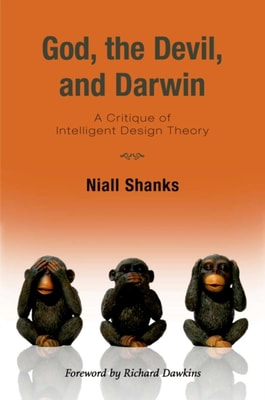
In the last fifteen years a controversial new theory of the origins of biological complexity and the nature of the universe has been fomenting bitter debates in education and science policy across North America, Europe, and Australia.
Starting from the botanical crazes inspired by Linnaeus in the eighteenth century, and exploring the variations it spawned--natural history, landscape architecture, polemical battles over botany's prurience--this study offers a fresh, detailed reading of the courtship novel from Jane Austen to George Eliot and Henry James.
Genesis: The Evolution of Biology presents a history of the past two centuries of biology, suitable for use in courses, but of interest more broadly to evolutionary biologists, geneticists, and biomedical scientists, as well as general readers interested in the history of science.
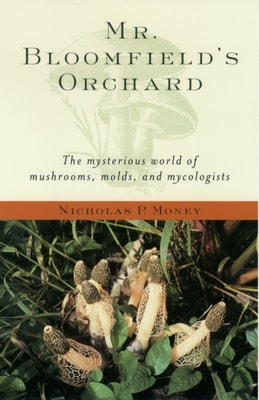
Stinkhorns, puffballs, the "e;corpse finder,"e; deadly galerina, Satan's bolete, birch conks, black mold, the old man of the woods--the world of fungi is infinitely varied and not a little weird.
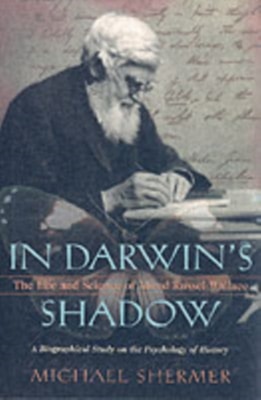
Virtually unknown today, Alfred Russel Wallace was the co-discoverer of natural selection with Charles Darwin and an eminent scientist who stood out among his Victorian peers as a man of formidable mind and equally outsized personality.
As author of the bestselling Why People Believe Weird Things and How We Believe, and Editor-in-Chief of Skeptic magazine, Michael Shermer has emerged as the nation's number one scourge of superstition and bad science.
Using historical and anthropological perspectives to examine mind-body relationships in western thought, this book interweaves topics that are usually disconnected to tell a big, important story in the histories of medicine, science, philosophy, religion, and political rhetoric.
City of Light tells the story of fiber optics, tracing its transformation from 19th-century parlor trick into the foundation of our global communications network.
From the revolutionary discoveries of Galileo and Newton to the mind-bending theories of Einstein and Heisenberg, from plate tectonics to particle physics, from the origin of life to universal entropy, and from biology to cosmology, here is a sweeping, readable, and dynamic account of the whole of Western science.
Most people believe that science arose as a natural end-product of our innate intelligence and curiosity, as an inevitable stage in human intellectual development.
In the fall of 1950, newspapers around the world reported that the Italian-born nuclear physicist Bruno Pontecorvo and his family had mysteriously disappeared while returning to Britain from a holiday trip.
Scores of wild species and ecosystems around the world face a variety of human-caused threats, from habitat destruction and fragmentation to rapid climate change.
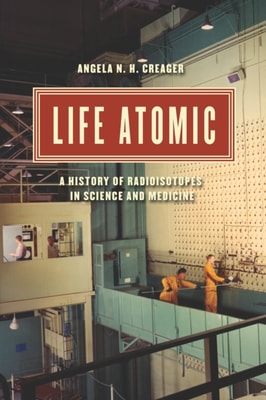
After World War II, the US Atomic Energy Commission (AEC) began mass-producing radioisotopes, sending out nearly 64,000 shipments of radioactive materials to scientists and physicians by 1955.
Everyone has heard of the term "e;pseudoscience"e;, typically used to describe something that looks like science, but is somehow false, misleading, or unproven.
Everyone has heard of the term "e;pseudoscience"e;, typically used to describe something that looks like science, but is somehow false, misleading, or unproven.