Whether you are planning a road trip or looking to engage with history from the comfort of your couch, the second edition of America's Scientific Treasures is sure to satisfy your craving for scientific and technologic history.
A groundbreaking narrative of how the United States offered the promise of nuclear technology to the developing world and its gamble that other nations would use it for peaceful purposes.
A groundbreaking narrative of how the United States offered the promise of nuclear technology to the developing world and its gamble that other nations would use it for peaceful purposes.
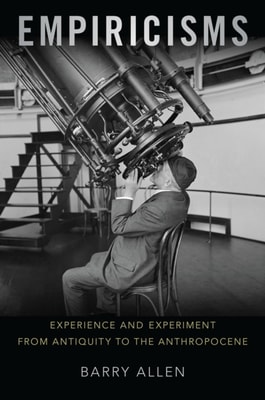
In this sweeping volume of comparative philosophy and intellectual history, Barry Allen reassesses the values of experience and experiment in European and world traditions.
In this sweeping volume of comparative philosophy and intellectual history, Barry Allen reassesses the values of experience and experiment in European and world traditions.
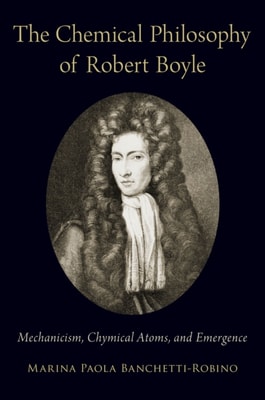
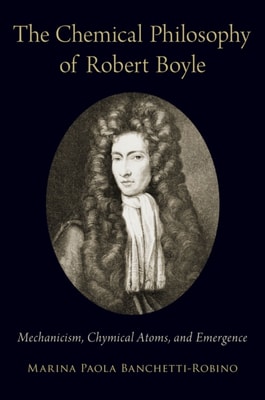
Robert Boyle (1627-1691) believed that a reductionist conception of the mechanical philosophy threatened the heuristic power and autonomy of chemistry as an experimental science.
Robert Boyle (1627-1691) believed that a reductionist conception of the mechanical philosophy threatened the heuristic power and autonomy of chemistry as an experimental science.
The four contributors to this volume examine the eugenics movements in Germany, France, Brazil, and the Soviet Union, and describe how geneticists and physicians participated in the development of policies concerning the improvement of hereditary qualities in humans.
This fascinating study examines the rise of American molecular biology to disciplinary dominance, focusing on the period between 1930 and the elucidation of DNA structure in the mid 1950s.
For scientists, no event better represents the contest between form and function as the chief organizing principle of life as the debate between Georges Cuvier and Etienne Geoffroy Saint-Hilaire.
The biologist Jacques Loeb (1859-1924) helped to shape the practice of modern biological research through his radical emphasis on reductionist experimentation.
Amy Marcy Cheney Beach (1867-1944), the most widely performed composer of her generation, was the first American woman to succeed as a creator of large-scale art music.
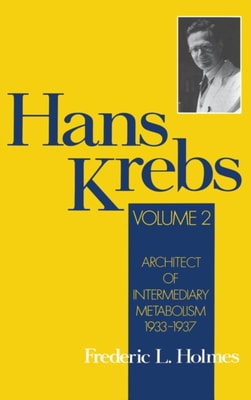
This comprehensive volume completes Frederic Holmes' notable and detailed biography of Hans Krebs, from the investigator's early development through the major phase of his groundbreaking investigation, which lay the foundations upon which the modern structure of intermediary metabolism is built.
In this comprehensive history of symbiosis theory--the first to be written--Jan Sapp masterfully traces its development from modest beginnings in the late nineteenth century to its current status as one of the key conceptual frameworks for the life sciences.
Unlike nearly all science books which tell of successful ventures and satisfactory conclusions, this book reveals the harsher but more common side of scientific research.
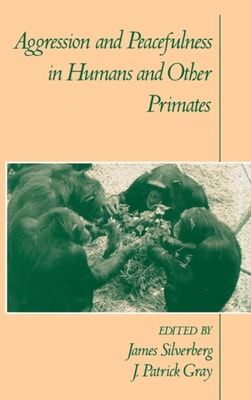
As part of the SFI series, this book presents the most up-to-date research in the study of human and primate societies, presenting recent advances in software and algorithms for modeling societies.
In the early twentieth century, American earth scientists were united in their opposition to the new--and highly radical--notion of continental drift, even going so far as to label the theory "e;unscientific.
Rhetorical Figures in Science breaks new ground in the rhetorical study of scientific argument as the first book to demonstrate how figures of speech other than metaphor have been used to accomplish key conceptual moves in scientific texts.
A little over 170 years ago--hardly a moment on the clock of history--one half of the United States was empty of all but Indians and the plants and game on which they subsisted.
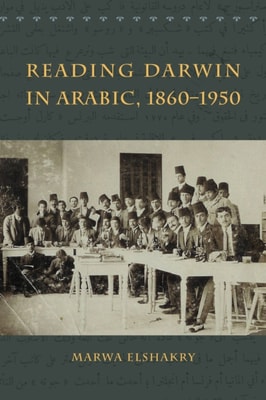
In Reading Darwin in Arabic, Marwa Elshakry questions current ideas about Islam, science, and secularism by exploring the ways in which Darwin was read in Arabic from the late 1860s to the mid-twentieth century.
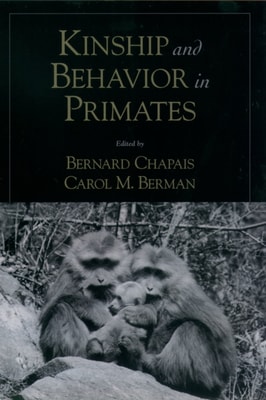
This book presents a series of review chapters on the various aspects of primate kinship and behavior, as a fundamental reference for students and professionals interested in primate behavior, ecology and evolution.
Peter Mitchell, winner of the 1978 Nobel Prize for chemistry for his chemiosmotic theory, was a highly original scientist who revolutionized our understanding of cellular metabolism and bioenergetics.
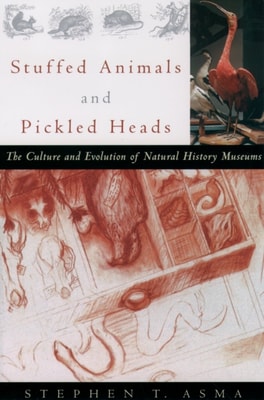
The natural history museum is a place where the line between "e;high"e; and "e;low"e; culture effectively vanishes--where our awe of nature, our taste for the bizarre, and our thirst for knowledge all blend happily together.
With a never-before published paper by Lord Henry Cavendish, as well as a biography on him, this book offers a fascinating discourse on the rise of scientific attitudes and ways of knowing.