How did Andrei Sakharov, a theoretical physicist and the acknowledged father of the Soviet hydrogen bomb, become a human rights activist and the first Russian to win the Nobel Peace Prize?
A history of scientific ideas about extinction that explains why we learned to value diversity as a precious resource at the same time as we learned to "e;think catastrophically"e; about extinction.
Through Francesco Bianchini, the 'greatest Italian of his time' this book explores the exciting meeting of science, history, and politics in early modern Europe.
Through Francesco Bianchini, the 'greatest Italian of his time' this book explores the exciting meeting of science, history, and politics in early modern Europe.
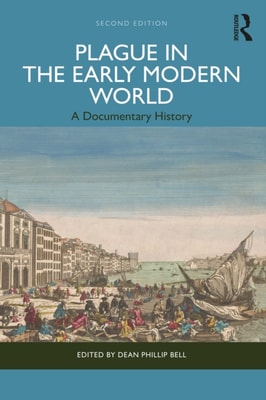
Plague in the Early Modern World, now in a second edition, presents a broad range of primary source materials from Europe, the Middle East, North Africa, China, India, and North America that explore the nature and impact of plague and disease in the early modern world.
In the course of the eighteenth century, understanding human cognitive life came to be construed as something to be explored in terms of the physiology of the sensory organs, the nerves, and the brain: a form of naturalization that effectively moved cognition out of the realm of philosophy as it had traditionally been understood.
In the course of the eighteenth century, understanding human cognitive life came to be construed as something to be explored in terms of the physiology of the sensory organs, the nerves, and the brain: a form of naturalization that effectively moved cognition out of the realm of philosophy as it had traditionally been understood.
The Royal Institution of Great Britain is renowned the world over, first, because it is a premier arena for the advancement of new scientific and technological knowledge; and second because it highlights the advance of knowledge of all kinds.
Scientists regularly employ historical narrative as a rhetorical tool in their communication of science, yet there's been little reflection on its effects within scientific communities and beyond.
'Arvid Agren has undertaken the most meticulously thorough reading of the relevant literature that I have ever encountered, deploying an intelligent understanding to pull it into a coherent story.
Long before the age of "e;Big Data"e; or the rise of today's "e;self-quantifiers,"e; American capitalism embraced "e;risk"e;--and proceeded to number our days.
Architects of Structural Biology is an amalgam of memoirs, biography, and intellectual history of the personalities and single-minded devotion of four scientists who are among the greatest in modern times.
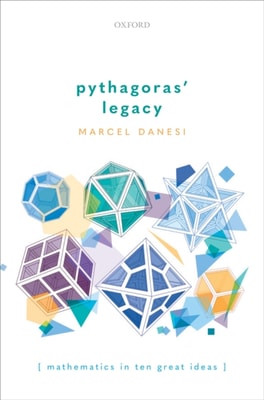
As the famous Pythagorean statement reads, 'Number rules the universe', and its veracity is proven in the many mathematical discoveries that have accelerated the development of science, engineering, and even philosophy.
As the famous Pythagorean statement reads, 'Number rules the universe', and its veracity is proven in the many mathematical discoveries that have accelerated the development of science, engineering, and even philosophy.
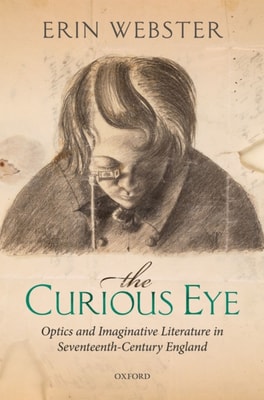
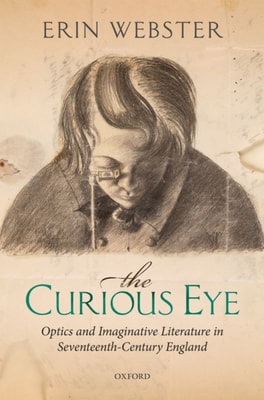
The Curious Eye explores early modern debates over two related questions: what are the limits of human vision, and to what extent can these limits be overcome by technological enhancement?
The Curious Eye explores early modern debates over two related questions: what are the limits of human vision, and to what extent can these limits be overcome by technological enhancement?
This book tells the human story of one of man's greatest intellectual adventures - how it came to be understood that light travels at a finite speed, so that when we look up at the stars, we are looking back in time.
The story of Isaac Newton's decades in London - as ambitious cosmopolitan gentleman, President of London's Royal Society, Master of the Mint, and investor in the slave trade.
The story of Isaac Newton's decades in London - as ambitious cosmopolitan gentleman, President of London's Royal Society, Master of the Mint, and investor in the slave trade.