A History of Mathematics: From Mesopotamia to Modernity covers the evolution of mathematics through time and across the major Eastern and Western civilizations.
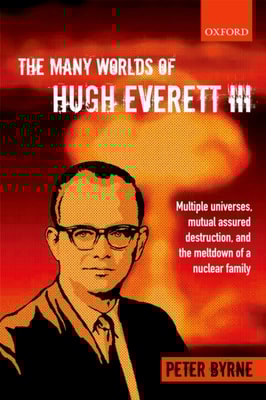
Peter Byrne tells the story of Hugh Everett III (1930-1982), whose "e;many worlds"e; theory of multiple universes has had a profound impact on physics and philosophy.
In recent years philosophers of science have urged that many scientific theories are extremely useful and successful despite being internally inconsistent.
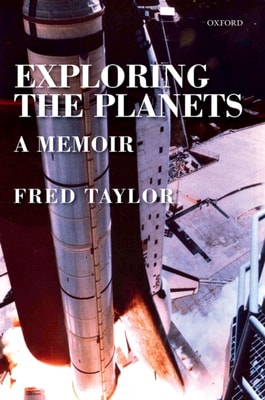
The planets fascinate us, and naturally we care about our own Earth, and things like how well we can forecast the weather and whether climate is really changing.
The planets fascinate us, and naturally we care about our own Earth, and things like how well we can forecast the weather and whether climate is really changing.
In the folklore of mathematics, James Joseph Sylvester (1814-1897) is the eccentric, hot-tempered, sword-cane-wielding, nineteenth-century British Jew who, together with the taciturn Arthur Cayley, developed a theory and language of invariants that then died spectacularly in the 1890s as a result of David Hilbert's groundbreaking, `modern' techniques.
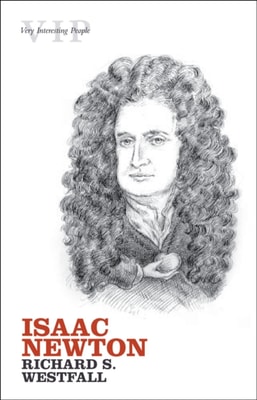
La Caille was one of the observational astronomers and geodesists who followed Newton in developing ideas about celestial mechanics and the shape of the earth.
La Caille was one of the observational astronomers and geodesists who followed Newton in developing ideas about celestial mechanics and the shape of the earth.
Our lives, states of health, relationships, behaviour, experiences of the natural world, and the technologies that shape our contemporary existence are subject to a superfluity of competing, multi-faceted and sometimes incompatible explanations.
In 1953 Watson and Crick discovered the double helical structure of DNA and Watson's personal account of the discovery, The Double Helix, was published in 1968.
During the 20th century, scientists discovered what the Universe is made of; as the 21st century begins, they are preparing experiments to find out how it came to be like this.
The popular stereotype of the scientist as mad boffin or weedy nerd has been peddled widely in film and fiction, with the implication that the world of science is far removed from the intellectual and emotional messiness of other human activities.
The mathematical genius Alan Turing, now well known for his crucial wartime role in breaking the ENIGMA code, was the first to conceive of the fundamental principle of the modern computer-the idea of controlling a computing machine's operations by means of a program of coded instructions, stored in the machine's 'memory'.
The book attempts to provide an introduction to quantum field theory emphasizing conceptual issues frequently neglected in more "e;utilitarian"e; treatments of the subject.
The introduction of the moving sphere as a model for understanding the celestial phenomena caused a great breakthrough in scientific thinking about the structure of the world.
This work is the only current, single volume coverage of the the latest EU energy legislation and its application on the context of the rules of the EU Treaties.
This work is the only current, single volume coverage of the the latest EU energy legislation and its application on the context of the rules of the EU Treaties.
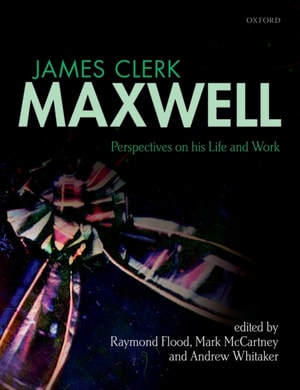
James Clerk Maxwell (1831-1879) had a relatively brief, but remarkable life, lived in his beloved rural home of Glenlair, and variously in Edinburgh, Aberdeen, London and Cambridge.
James Clerk Maxwell (1831-1879) had a relatively brief, but remarkable life, lived in his beloved rural home of Glenlair, and variously in Edinburgh, Aberdeen, London and Cambridge.
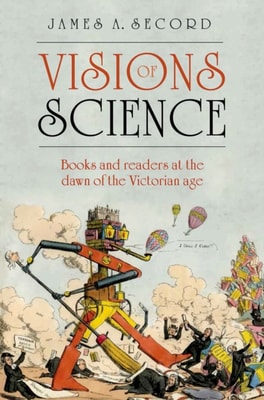
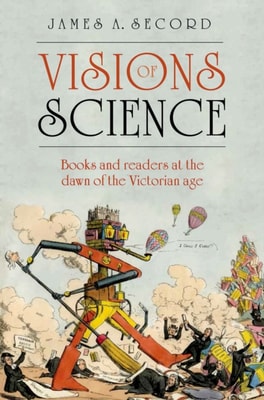
In Victorian Britain an array of writers captured the excitement of new scientific discoveries, and enticed young readers and listeners into learning their secrets, by converting introductory explanations into quirky, charming, and imaginative fairy-tales; forces could be fairies, dinosaurs could be dragons, and looking closely at a drop of water revealed a soup of monsters.
In Victorian Britain an array of writers captured the excitement of new scientific discoveries, and enticed young readers and listeners into learning their secrets, by converting introductory explanations into quirky, charming, and imaginative fairy-tales; forces could be fairies, dinosaurs could be dragons, and looking closely at a drop of water revealed a soup of monsters.
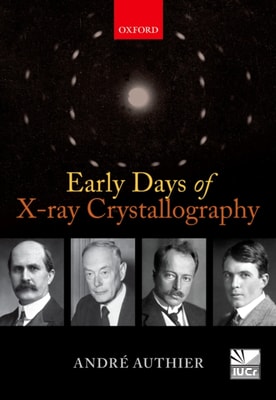
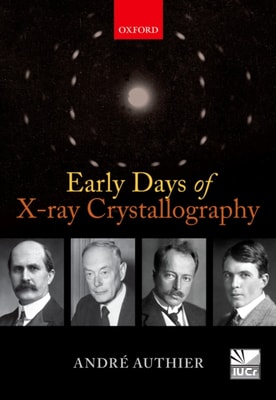
The year 2012 marked the centenary of one of the most significant discoveries of the early twentieth century, the discovery of X-ray diffraction (March 1912, by Laue, Friedrich and Knipping) and of Bragg's law (November 1912).
The year 2012 marked the centenary of one of the most significant discoveries of the early twentieth century, the discovery of X-ray diffraction (March 1912, by Laue, Friedrich and Knipping) and of Bragg's law (November 1912).