The 'Adaptive Landscape' has been a central concept in population genetics and evolutionary biology since this powerful metaphor was first formulated by Sewall Wright in 1932.
The 'Adaptive Landscape' has been a central concept in population genetics and evolutionary biology since this powerful metaphor was first formulated by Sewall Wright in 1932.
Niels Bohr and the Quantum Atom is the first book that focuses in detail on the birth and development of Bohr's atomic theory and gives a comprehensive picture of it.
Niels Bohr and the Quantum Atom is the first book that focuses in detail on the birth and development of Bohr's atomic theory and gives a comprehensive picture of it.
Our understanding of the physical universe underwent a revolution in the early twentieth century - evolving from the classical physics of Newton, Galileo, and Maxwell to the modern physics of relativity and quantum mechanics.
Containing many previously unpublished letters, this third volume of a six volume collection of the complete correspondence of John Wallis (1616-1703), documents an important period in the history of the Royal Society and the University of Oxford.
Our understanding of the physical universe underwent a revolution in the early twentieth century - evolving from the classical physics of Newton, Galileo, and Maxwell to the modern physics of relativity and quantum mechanics.
The mathematical genius Alan Turing, now well known for his crucial wartime role in breaking the ENIGMA code, was the first to conceive of the fundamental principle of the modern computer-the idea of controlling a computing machine's operations by means of a program of coded instructions, stored in the machine's 'memory'.
Primate Sexuality provides an authoritative and comprehensive synthesis of current research on the evolution and physiological control of sexual behaviour in the primates - prosimians, monkeys, apes, and human beings.
Asthma is a familiar and growing disease today, but its story goes back to the ancient world, as we know from accounts in ancient texts from China, India, Greece and Rome.
Galaxies are the building blocks of the Universe: standing like islands in space, each is made up of many hundreds of millions of stars in which the chemical elements are made, around which planets form, and where on at least one of those planets intelligent life has emerged.
Among all the great discoveries and inventions of the nineteenth century, few offer us a more fascinating insight into Victorian society than the discovery of anaesthesia.
In both science and philosophy, the twentieth century saw a radical breakdown of certainty in the human worldview, as quantum uncertainty and linguistic ambiguity destroyed the comfortable certitudes of the past.
In both science and philosophy, the twentieth century saw a radical breakdown of certainty in the human worldview, as quantum uncertainty and linguistic ambiguity destroyed the comfortable certitudes of the past.
In 1912 Lawrence Bragg explained the interaction of X-rays with crystals, and he and his father, William thereby pioneered X-ray spectroscopy and X-ray crystallography.
Michael Faraday's celebrated series of lectures,The Chemical History of a Candle, turned into one of the most successful science books ever published and was a classic work of Victorian popular science.
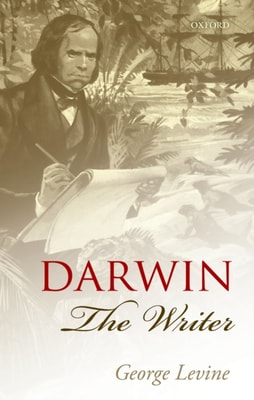
Charles Darwin's On the Origin of Species, arguably the most important book written in English in the nineteenth century, transformed the way we looked at the world.
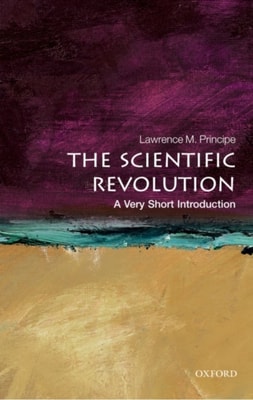
The sixteenth and seventeenth centuries witnessed such fervent investigations of the natural world that the period has been called the 'Scientific Revolution.
For 150 years, Down's Syndrome has constituted the archetypal mental disability, easily recognisable by distinct facial anomalies and physical stigmata.
Michael Faraday's celebrated series of lectures,The Chemical History of a Candle, turned into one of the most successful science books ever published and was a classic work of Victorian popular science.
Charles Darwin's On the Origin of Species, arguably the most important book written in English in the nineteenth century, transformed the way we looked at the world.
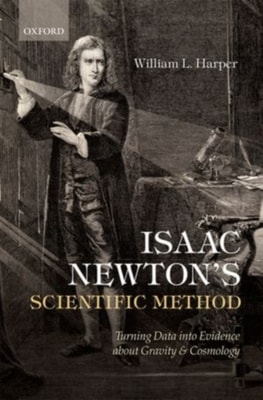
Isaac Newton's Scientific Method examines Newton's argument for universal gravity and his application of it to resolve the problem of deciding between geocentric and heliocentric world systems by measuring masses of the sun and planets.
The sixteenth and seventeenth centuries witnessed such fervent investigations of the natural world that the period has been called the 'Scientific Revolution.
Understanding the emergence of a scientific culture - one in which cognitive values generally are modelled on, or subordinated to, scientific ones - is one of the foremost historical and philosophical problems with which we are now confronted.
Russia's own Orient examines how intellectuals in early twentieth-century Russia offered a new and radical critique of the ways in which Oriental cultures were understood at the time.
This book covers the history of 'Big Ben', the great clock and bells at Westminster, from the origins of Westminster as the seat of government right up to the celebrations of the Great Clock's 150th anniversary in 2009.
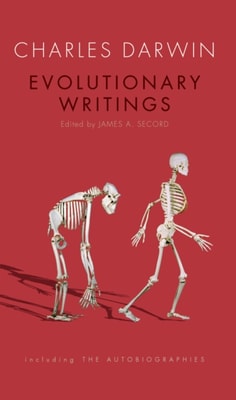
'Man still bears in his bodily frame the indelible stamp of his lowly origin' On topics ranging from intelligent design and climate change to the politics of gender and race, the evolutionary writings of Charles Darwin occupy a pivotal position in contemporary public debate.